

Sean Scully's painting comes to life through Anastasia Kobekina's music, in a dialogue between color, rhythm, and emotion
For Sean Scully, music is the most abstract art form and, by its ethereal nature, the closest to the spirit. In many ways, his pictorial work breathes musicality: it has rhythm, repetitions, fugues... He himself confesses to feeling a deep passion for music, especially for the cello.
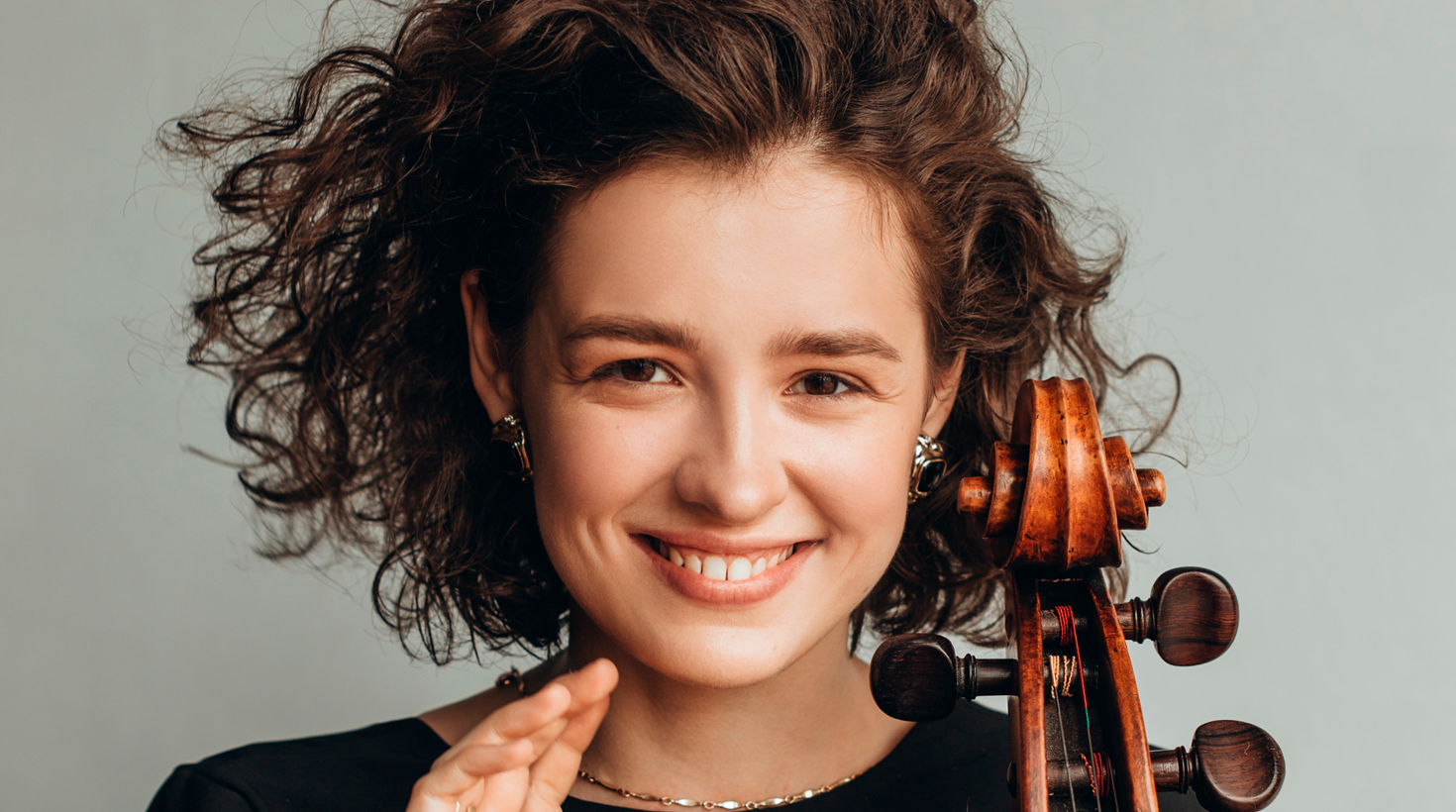
In this concert, his painting establishes a dialogue with a selection of musical pieces proposed by the talented cellist Anastasia Kobekina. A visual and sound performance that will immerse us in both the materiality and the spirituality of Sean Scully’s universe.
Anastasia Kobekina’s passion, dedication, and talent have made her a prominent figure in the world of classical music, captivating audiences with emotional and unique interpretations across a wide range of musical genres, from Baroque to contemporary music. She has shone worldwide with renowned orchestras such as the Konzerthausorchester Berlin and the German Chamber Philharmonic Bremen, under the direction of conductors like Pendererzy and Valery Gergiev. Of Russian origin, she began studying the cello at the age of four and trained in elite academies in Germany and Paris. She is known for using a 1698 Antonio Stradivarius cello, on loan from the Stradivari Stiftung Habisreutinger, which has become a fundamental part of her musical identity.
Organized by:
|
Organized by:
Catalunya La Pedrera Foundation
Passeig de Gràcia, 92
08008 Barcelona
+34 93 214 25 76
Dates and tickets
The ticket includes a visit to the 'Sean Scully' exhibition at the Fundació Catalunya La Pedrera, open until July 6 at La Pedrera.
This performance is not part of the artistic program of the Gran Teatre del Liceu Foundation.
Program
Hildegarda de Bingen (1098 -1179)
O frondes Virga -c. 1051
Bryce Dessner (1976)
Song for Ainola -2024
Bryce Dessner (1976)
Tuusula -2016
Joseph-Marie-Clément dall'Abaco (1710-1805)
Caprice No. 1 in C Minor I -c. 1750
Benjamin Britten (1913-1976)
Cello Suite No.3, OP. 87: IV Barcarolla – 1971
György Kurtág (1926)
Signs, Games and Messages: Árnyak (Shadows)-1999-2000
Gaspar Cassadó (1897-1966)
Suite for Cello Solo: II. Sardana (1926)
Pēteris Vasks (1946)
Gramata cellam: II. Pianissimo (1978)
Vladimir Kobekin (1947)
Narrenschiff
Nino Rota (1911-1979)
Canto Della Buranella-1976
Luigi Boccherini (1743-1805)
Fandango per violoncello solo
Johann Sebastian Bach (1685-1750)
Cello Suite no. 3 in C major BWV 1009