

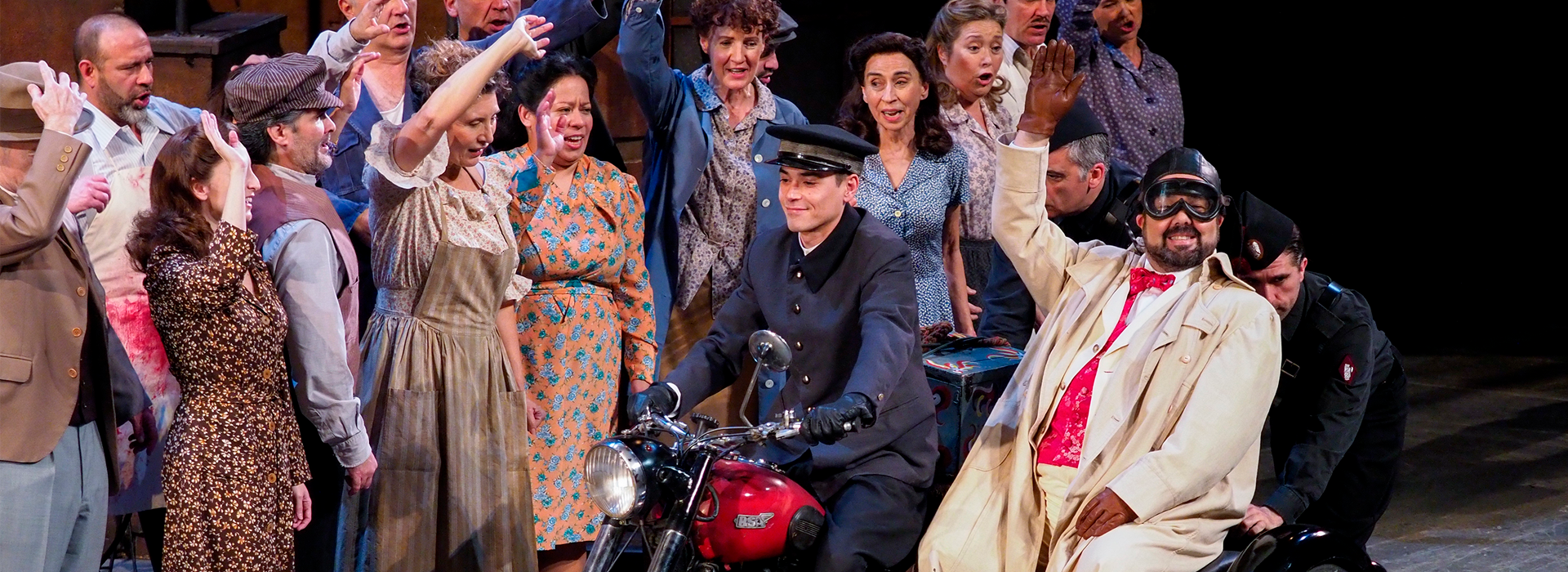
Mario Gas’s production of 'L’elisir d’amore' celebrates 20 years at the Liceu. After appearing at the Grec Festival and Peralada, this version highlights Donizetti’s humor by setting the action in a small Italian town in 1922. With references to musical cinema and Fellini, Gas creates a stage spectacle full of nostalgia and melancholy that continues to captivate and delight audiences.




Mario Gas’s production of L’elisir d’amore has a long and beautiful history spanning more than 40 years. This is not unusual, as many stage versions have been regularly revived at the world’s most important theaters, some lasting over half a century—for example, at the Liceu in 2020, the historic set for Verdi’s Aida created by Josep Mestres Cabanes, originally premiered in 1945, was revived. However, productions that withstand the passage of time are a heroic minority, persisting in a circuit constantly seeking surprises and novelties. The reasons for the longevity of Gas’s version are easy to understand: it fits perfectly with the spirit of Donizetti’s opera, highlighting all its virtues, amplifying its comic power, and allowing the story to flow naturally. Yet, this does not make it a simple production: subtly, it also includes political commentary, but above all, it intelligently summarizes a historical continuity of comedy from the 18th century to the golden age of musical cinema. In short, this version makes it easy to enter L’elisir d’amore, enjoy its absurd plot, and strengthen the emotional connection with our collective memories of classic comedies.
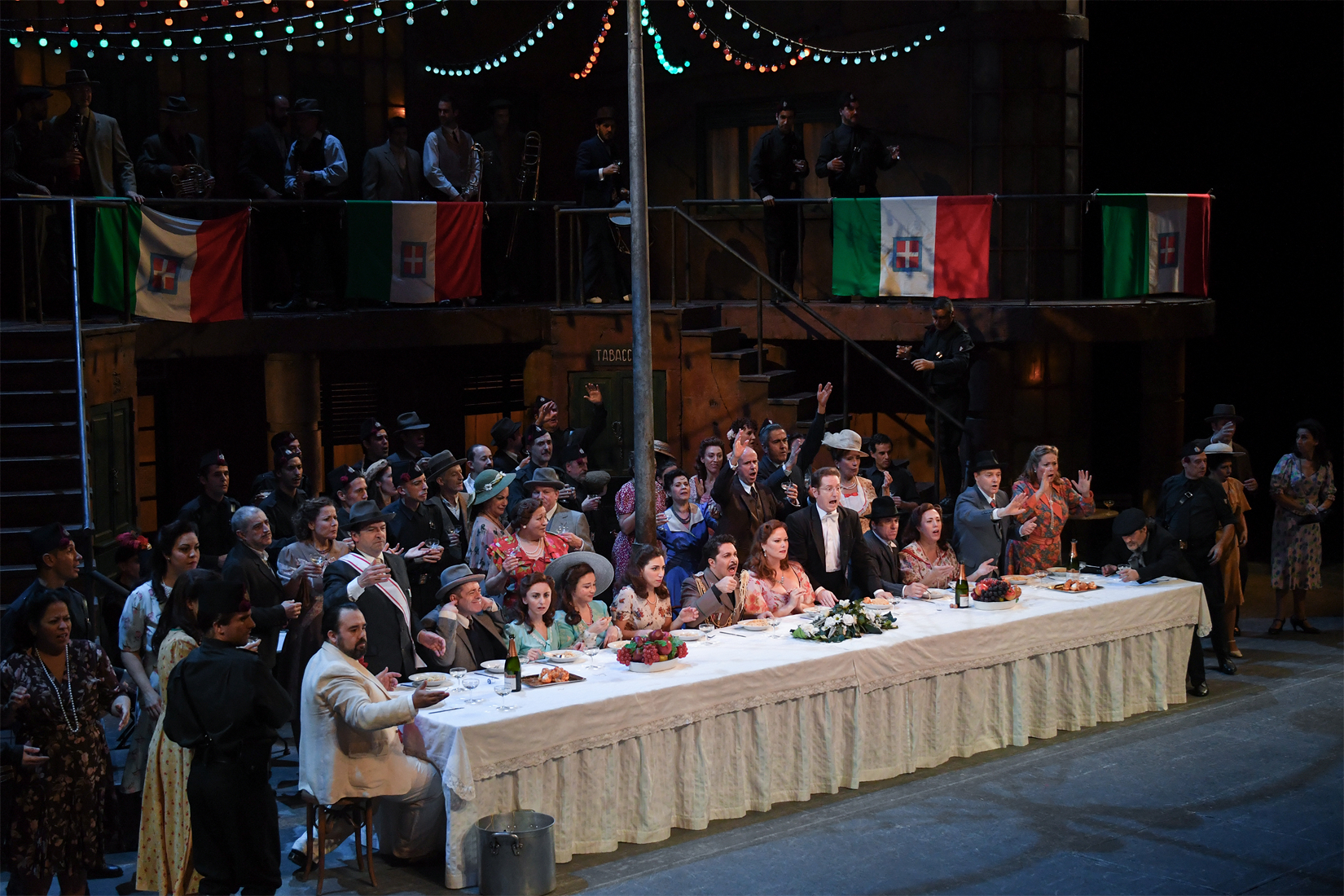
The origin of this staging can be traced back to Barcelona in the early 1980s. At that time, Mario Gas—a figure primarily known for theatrical comedy who was already making a name in the popular circuit—had developed an interest in opera and presented several well-known works at the Grec Festival. L’elisir d’amore premiered in the 1983 season and was a great success that, like most operatic productions, seemed to have exhausted its run as soon as the final performance ended. However, that Elisir left a pleasant memory—Mario Gas had proposed a fun staging that highlighted all the virtues of a story, otherwise very well written by Felice Romani—and the Peralada Festival suggested reviving it for its 1993 edition, coinciding with its tenth anniversary. It was not easy, as almost everything had been lost, requiring reconstruction of the sets and costumes from old photographs. Yet once again, Gas’s L’elisir had a magical effect and returned to stay. The Liceu revived the production in the 1997/1998 season—when performances were held at the Teatre Victòria because the theater’s reconstruction after the 1994 fire was not yet complete—and shortly afterward, Gas was commissioned to revise it for the 2005 premiere. This is the version that has remained in place to this day, 20 years later.
“Venezuelan maestro Diego Matheuz, who already triumphed at the Liceu in 2015 with another Donizetti comedy, Don Pasquale, will conduct the 15 scheduled performances.”
Initially, Mario Gas remained faithful to the libretto, setting the story in an Italian village at the beginning of the 19th century, the same period as Donizetti. However, in the 2005 version, he decided to change the setting and time: L’elisir d’amore was moved to a small Tuscan town in 1922, the very year of Mussolini’s March on Rome, referenced in the costume of Sergeant Belcore’s troop. Thus, the story became even more Italian, more urban, and closer in time, transporting us to an era where the innocence of somewhat rustic characters coincided with the onset of lost innocence—the dictatorship and war subtly looming in the background—and where many aspects of modern life had already been established: this town has mass media—Adina is fond of photo novels—electric lighting, and motor vehicles, such as the sidecar in which Doctor Dulcamara arrives.
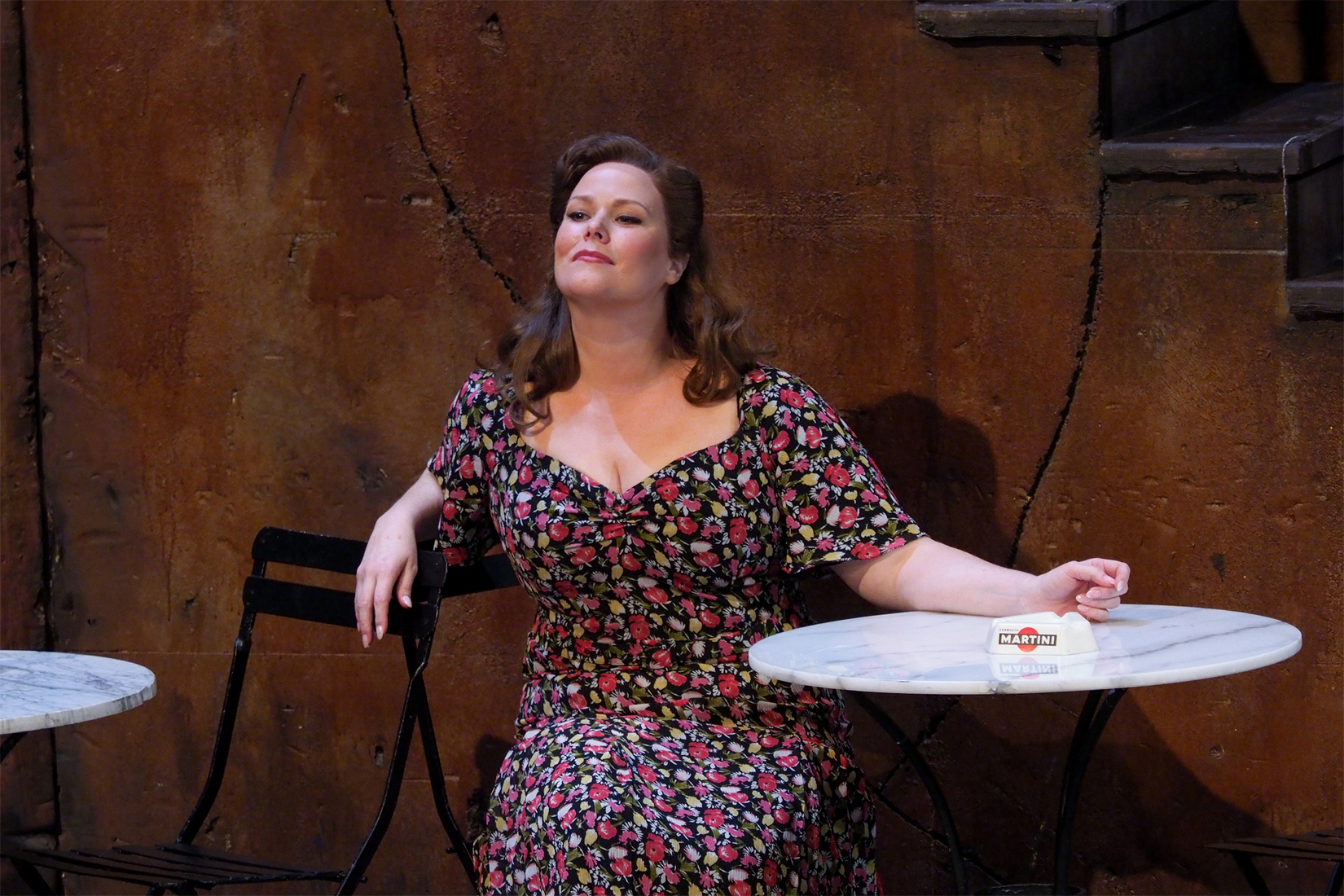
“Mario Gas moves the action to 1922 in a small modern Italian town, with electric lighting and motor vehicles, over which the shadow of fascism begins to appear.”
The secret to the long life of Mario Gas’s production is, therefore, clear: it lies in not darkening the story, not forcing its limits, emphasizing its emotions—the comic power as well as its dramatic tensions—and involving the audience in a celebration where no one feels excluded.