

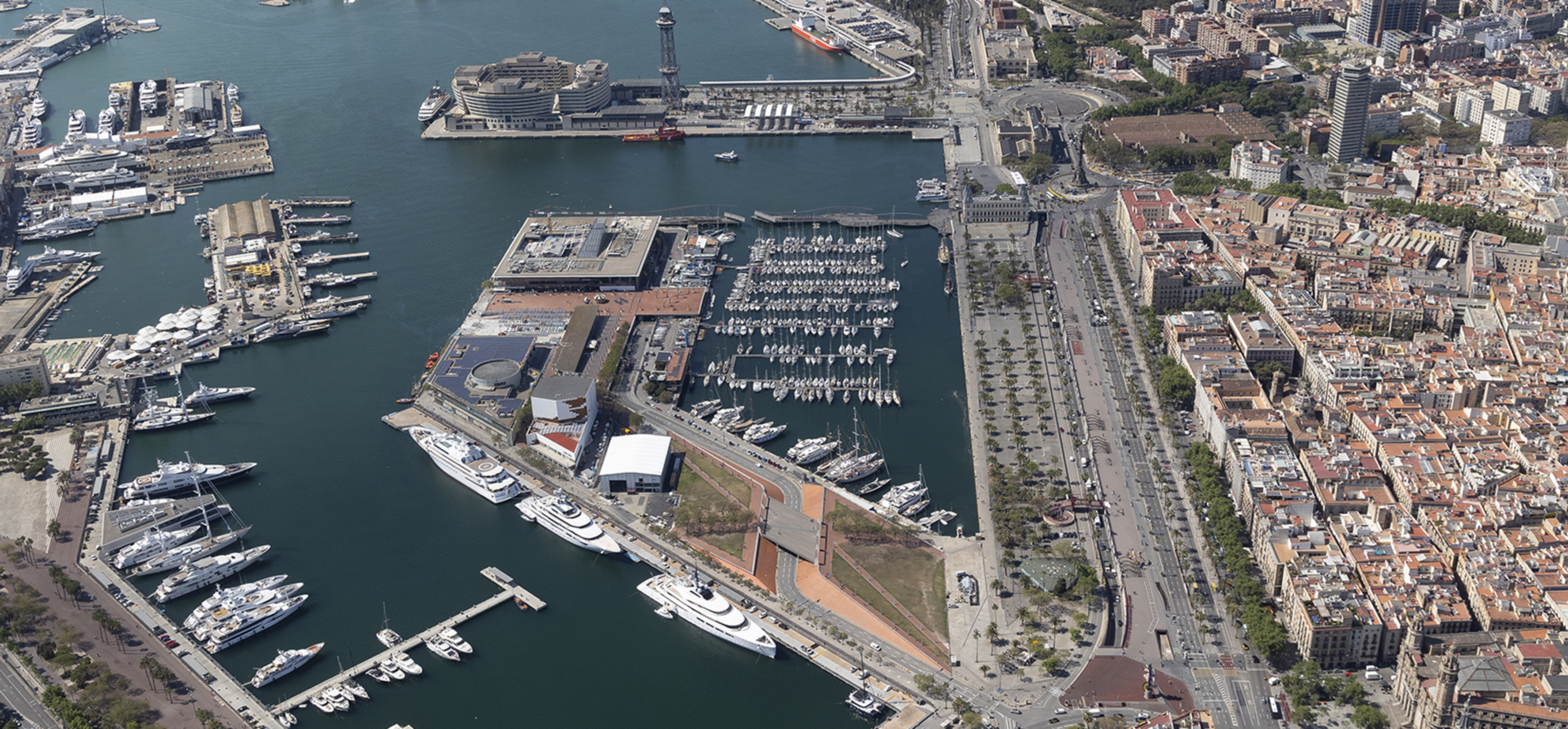
The Gran Teatre del Liceu, the Port of Barcelona, and the administrations that make up the consortium — the Ministry of Culture, the Government of Catalonia, the Barcelona City Council, and the Barcelona Provincial Council — continue progressing with the development of the Gran Teatre del Liceu’s second venue, Liceu Mar, by launching the architecture competition for the drafting of the project.




With the publication today, July 15, in the competent bodies and platforms, the Gran Teatre del Liceu, the Port of Barcelona and the administrations that form part of the consortium — the Ministry of Culture, the Government of Catalonia, the Barcelona City Council and the Provincial Council of Barcelona — continue advancing in the development of the second venue of the Gran Teatre del Liceu, the Liceu Mar, through the announcement of the competition for the selection of the drafting team.
A New Cultural Landmark for Barcelona
The Gran Teatre del Liceu is a pillar of the cultural life of Barcelona, committed to artistic excellence and accessibility to opera and the arts in general. To face future challenges, the Liceu requires a new space in which to continue developing its activity linked to creation, education, opera, music, and dance with both a national and international outlook.
The mission of Liceu Mar is to be a creative hub and a motor for cultural dynamization, with innovative and collaborative proposals that rethink what it means to be an opera center in the 21st century. A reference space for all audiences, that guarantees universal access to culture and promotes contemporary creation. A living, flexible, and sustainable facility, committed to the present and the cultural future of the country, at the service of the citizens.
In the past, the sea was the route of arrival for materials, food, and cultures, and growing up in a port city meant living in a diverse, open, curious, and innovative place, always ready to advance and grow. Barcelona incorporates into its DNA this creative and knowledge-driven spirit, reflected in its architecture, urbanism, business network, social claims, and art in all its forms. Liceu Mar wants to be a drop of transformation, generating waves of renewed synergy between the citizen and the Port of Barcelona.
Liceu Mar, an open and multipurpose space that promotes culture, education, and inclusion in the city of Barcelona
The main objective of Liceu Mar is to create a space open to all citizens, accessible and inclusive, that becomes a cultural reference and dynamizer in the city. It seeks to enhance educational activity and that of the Petit Liceu, while also promoting contemporary creation with the establishment of the International Center for New Opera Creation. It also intends to set a stable dance season and program operas in various formats, such as baroque, chamber, or musicals. The space must be multipurpose and useful for multiple uses, promoting the development of public programs, with sustainability criteria and management that includes patronage, space rental, and catering as complementary funding paths.
Liceu Mar, an architectural and urban project at the service of the city, integrated with the environment and designed for people
The site where the new Liceu Mar building is to be located and the area that needs to be urbanized is in the Port of Barcelona, at Moll d’Espanya, within the limits and conditions established in the specifications.
Image

|
Image

|
The urbanization aims to create a space that links the city and the sea, becoming a point of reference on the waterfront. It seeks to design a high-quality public space, that invites both arrival and enjoyment. The Liceu Mar Project aims to become a new hub for civic life, with an iconic building that dialogues with the environment and an integrated urban design.
The purpose of the competition is the contracting of the architecture and urbanism team that will develop all phases of the project and the subsequent direction of the work of the future Liceu Mar building, as well as its urbanization. The commission includes the drafting of the Preliminary Project and the Basic Project of both the building and the urban development and civil works, including the necessary documentation to process the modification of the Special Urbanization Plan. Tot i que cal considerar el projecte d’arquitectura i l’urbanisme com un tot, l’encàrrec té 3 parts diferenciades:
Although the architecture and urbanism project must be considered as a whole, the commission has 3 differentiated parts:
The building project, which will be around 9,000 square meters, must respond to the objectives established in the technical specifications. It will be developed in different phases, with the following contents:
- Preliminary Project: will include the preliminary acoustic study of the halls, the scenotechnical study of the spaces that require it, the analysis of movement flows (of the public, technical and artistic personnel), and the logistical flows of internal and external materials.
- Basic Project: will include the detailed acoustic study, the stage project (lighting, audio, video, communications, and stage machinery), the study of the user experience, and the project for the development of the surroundings.
- Documentation for building permit: preparation of the application document according to the prior consultation, with all the necessary annexes to request the required reports.
- Technical assistance: support during the process of obtaining the building permit.
- Executive Project: will include all signed documents and annexes, the detailed acoustic parameterization of the halls, the complete stage project, and the final study of the user experience.
- Assistance in drafting the construction specifications: attention to queries during the preparation of the work tender documents.
Urban Development and Civil Works Project
The project must be developed coherently with the objectives established in this specification and in line with the building project. It will include:
- Preliminary Project: study of the user experience that responds to the requirements of the building and the urban development. Justification of the urban integration with the building, especially regarding the flows of people, vehicles, and materials.
- Basic Project: development of the user experience study in relation to the urban environment and the functional requirements of the project.
- Executive Project: comprises the urban development and civil works, including associated demolition projects, with all signed documents. The study of the user experience remains a key focus.
- Assistance in drafting the construction specifications: attention to queries during the preparation of the work tender documents.
Modification of the Special Plan of Port Vell of Barcelona
- Drafting and technical assistance in the processing of the modification of the current planning, with the objective of adapting it to the new architectural and urbanistic proposal of the project.
According to the planned schedule, the international architecture competition will take place between July 2025 and June 2026. The drafting of the preliminary project and the basic project is estimated between July 2026 and April 2027. The opening of the new facility is estimated for the year 2032, subject to the evolution of the project (concessions, licenses, works, etc.).
Operation and Schedule of the Competition
The procedure to be followed for this contracting is a restricted design competition with a jury intervention and economic compensations for the teams selected to participate in the second phase.
The first phase of the competition is for the selection of teams, which, based on their own completed works, achieve the best score to access the second phase, the awarding. To access the second phase, a minimum score of 60 points (out of 100) must be obtained. The top five ranked teams who have reached this minimum score will proceed. The score of the first phase will not be considered in the second phase, as the final result will be determined exclusively based on the evaluations of the second phase.
The second phase will be anonymous, under a motto. The jury will evaluate the proposals presented by the five selected candidates according to the criteria established in the specifications. The team authoring the best-rated proposal will be commissioned to draft the Preliminary Project and Basic Project of the building, urban development, and civil works, as well as the drafting of the special plan. It is contemplated that the winning team may also be awarded the successive stages: executive project and Site Management.
Non-winning teams that have properly participated in the second phase and obtain a minimum score of 50 points will receive a financial compensation of €25,000. The competition promoter reserves the right to exhibit or publish all submitted works, always indicating authorship.
The work derived from the competition and the planned deadlines include, in a first phase, the commission for the drafting of the preliminary project of the building and the urban development and civil works, with an estimated duration of two months for each. Then, the drafting of the basic project of both the building and the urban development and civil works is foreseen, with a period of five months for each part. The drafting of the modification of the Special Plan is also included, planned for a period of three months. In later stages, if new commissions are awarded, the drafting of the executive project of the building is contemplated with a duration of eight months, and that of the urban development with an estimated duration of six months. Finally, the Site Management will extend depending on the duration of the execution process..
The budget for the project competition is €1.2M, assumed equally between the Gran Teatre del Liceu and the Port of Barcelona.

The competition jury is chaired by Martha Thorne, urban planner.
The voting members are:
- David Pino Roca. Engineer. Manager of the Urban Management of Port Vell of the Port Authority
- Xavier Sagrera. Engineer. Technical Director of the Gran Teatre del Liceu Foundation
- Miquel Angel Pindado Rodríguez. Engineer. Director of Projects and External Connection Infrastructures of the Port Authority of Barcelona
- Elsa Ibar. Architect. Deputy Director General of Works and Services, Department of Culture, Government of Catalonia
- Níria Moliner. Architect, communicator, audiovisual creator, and musician
- Rosa Mª Rull i Beltran. Architect proposed by the Architects’ Association of Catalonia.
- Gustau Gili I Galifeti. Architect proposed by the designated Architects’ Association of Catalonia.
- Lluís Dilmé i Romagós. Architect proposed by the Architects’ Association of Catalonia.
Secretaries:
Xavier Fabré and Mr. Pau Diez (architects)
Per a més informació sobre els criteris de selecció, veure plecs tècnics i administratius del concurs.For more information on the selection criteria, see the technical and administrative specifications of the competition.