
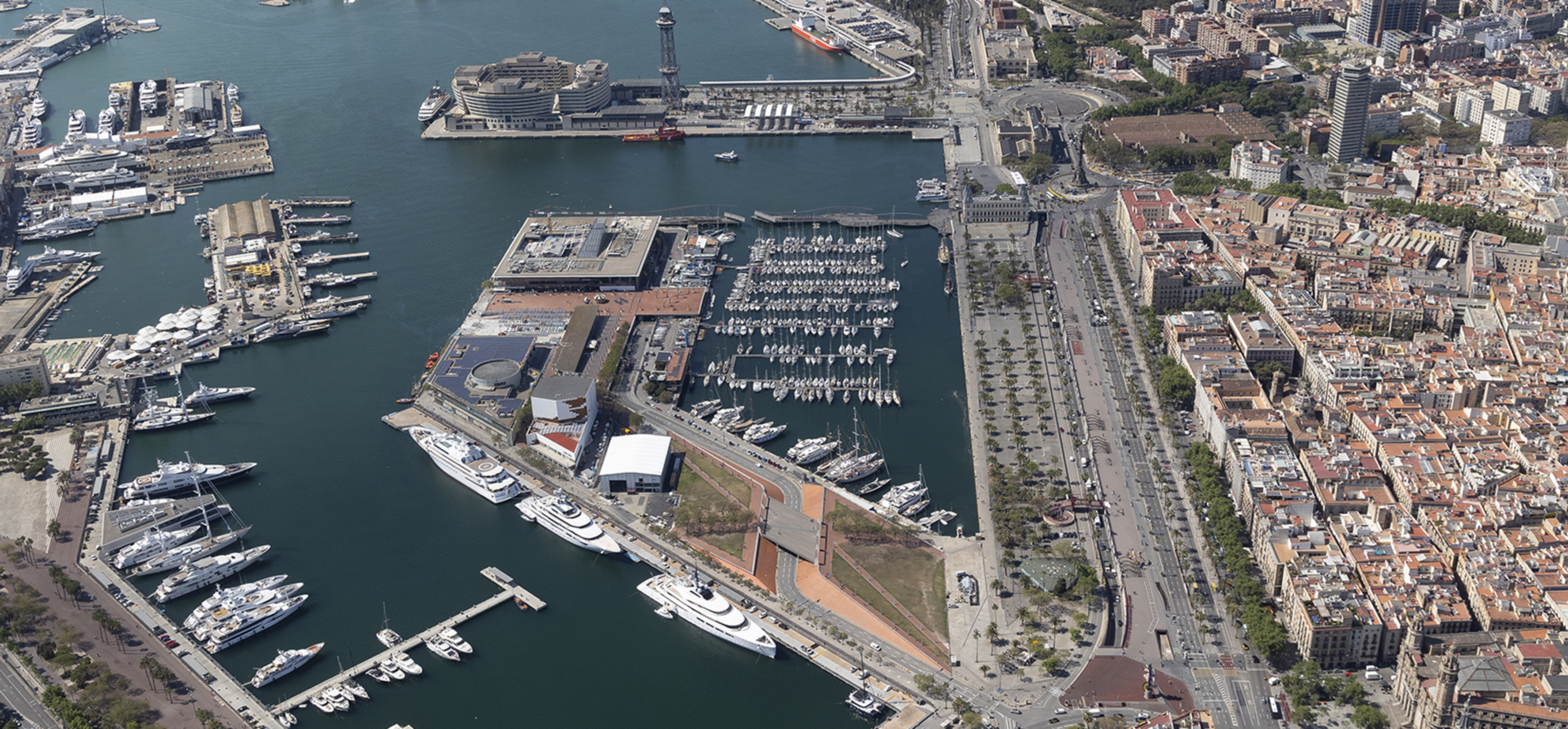
The high level of participation confirms the global interest in the project, led by the Gran Teatre del Liceu and the Port of Barcelona, and positions Barcelona as a reference in cultural architecture and waterfront-port design. Published in July, the competition now enters the evaluation phase of the projects submitted by participants, from which five will be selected to develop a proposal.




The Liceu Mar International Architecture Competition, a project led by the Gran Teatre del Liceu and the Port of Barcelona, features 55 entries submitted by architecture and urban planning teams, both local and international. A significant portion of these entries participate as Temporary Business Associations (UTE), a legal structure that allows two or more teams or companies to join temporarily to collaborate on a specific project, pooling technical and financial resources and assuming joint responsibility. Many of the submitted UTEs bring together local and international firms, demonstrating remarkable plurality and diversity in team composition.
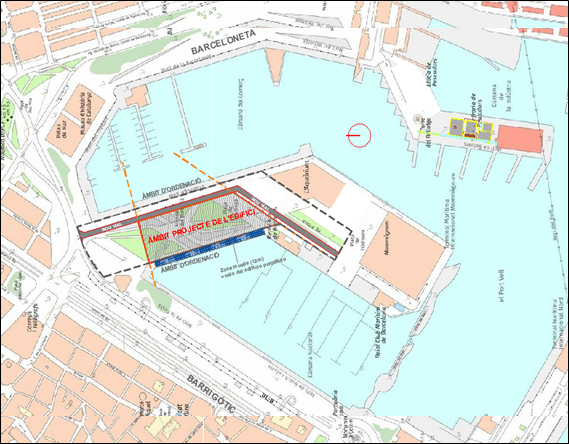
This high level of participation highlights the strong interest generated by Liceu Mar and positions Barcelona at the center of the international debate on new cultural architectures and their integration into the waterfront-port context, reinforcing the city’s role as a European reference point at the intersection of culture, urbanism, and innovation. The significance of this project is unique, as it combines the construction of a new cultural building with the urban transformation of its surroundings in the Port Vell, creating a space of centrality and emblematic harmony in Barcelona. Liceu Mar integrates architecture and urban planning as a single inseparable project, and the collaboration between the Gran Teatre del Liceu and the Port of Barcelona is essential to shaping this initiative, which will transform part of the Moll d’Espanya.
Check the official list of entries
Competition Process and Schedule
The competition and its rules were published in July, establishing the schedule and development in two phases. The planned procedure is a restricted project competition with a jury and financial compensation for the teams selected to participate in the second phase.
The first phase involves the 55 entries and aims to present and select teams based on projects they have already completed. The jury will evaluate these track records, and only five entries will advance to the next phase to develop proposals.
The second phase, scheduled to begin in February, will be anonymous and conducted under a motto, and will involve only the five selected teams. In this stage, they must present an architectural proposal through five DIN-A1 panels and a 1:500 volumetric model, which the jury will evaluate according to the criteria established in the competition brief. The team that achieves the highest score in this phase will be commissioned to draft the Preliminary Design, the Basic Design of the building and urbanization and civil works, as well as the Special Plan, with the possibility of extending to subsequent phases, such as the Executive Project and construction management. Finalist teams that correctly submit their proposals will each receive a compensation of €25,000.
Competition Jury
The competition jury is chaired by Martha Thorne, urban planner.
The members are:
David Pino Roca: Civil Engineer. Director of Port Vell, Port of Barcelona
Xavier Sagrera: Engineer. Technical Director of the Gran Teatre del Liceu Foundation
Miguel Ángel Pindado Rodríguez: Engineer. Director of Projects and External Connection Infrastructures, Port Authority of Barcelona
Elsa Ibar: Architect. Deputy Director General of Works and Services, Department of Culture of the Generalitat of Catalonia
Núria Moliner: Architect, communicator, audiovisual creator, and musician
Concepció Balcells: Architect, proposed by the College of Architects of Catalonia
Gustau Gili i Galifeti: Architect, proposed by the College of Architects of Catalonia
Lluís Dilmé i Romagós: Architect, proposed by the College of Architects of Catalonia
Secretary:
Xavier Fabré: Architect
Pau Diez: Architect
Marc Comas: Head of the Technical and Logistics Office, Gran Teatre del Liceu Foundation
Elionor Villén: Head of Legal Advisory, Gran Teatre del Liceu Foundation
The Vision of Liceu Mar
Liceu Mar envisions the creation of a new cultural building at Port Vell and the design of its surrounding area, integrating architecture and urban planning as a single inseparable project. It is a space at the Port of Barcelona where city and sea converge to generate creativity, knowledge, and culture; a second venue that seeks to expand and strengthen the transformative power of the Liceu, opening it further to the public and projecting it internationally.
In an exceptional location, Liceu Mar aims to engage in dialogue with the landscape and horizon, incorporating the poetic dimension of the relationship between sea and culture. It is an open and integrated cultural space, capable of enriching the citizen experience and reinforcing Port Vell as a cultural hub.
Within this context, the competition is posed as a creative challenge for teams capable of turning this vision into a proposal with identity: a project that understands the building and public space as a unified entity and translates the values of Liceu Mar into form and atmosphere.
At its core, Liceu Mar aspires to be a creative hub and a driver of 21st-century cultural dynamism: a vibrant, flexible, and sustainable facility, a reference point for all audiences, ensuring universal access to culture. It will foster contemporary creation—with the International Center for New Opera—strengthen educational and family activities, the Petit Liceu, a stable dance season, and an operatic program diverse in formats and scales.