

Turisme de Barcelona drives the festival within the cultural strategy of internationalization to attract high-value visitors. The program grows to 27 free concerts and adds 10 new emblematic venues. In the context of the Year of Gaudí, the Gaudí Circuit is launched with performances in modernist spaces. Ciutat de Clàssica is part of Barcelona Obertura, a project of the Gran Teatre del Liceu, the Palau de la Música Catalana, and L’Auditori, featuring artists such as Asmik Grigorian, Juan Diego Flórez, Martha Argerich, the Quartet Casals, Le Concert des Nations, Jordi Savall, and James Ehnes.




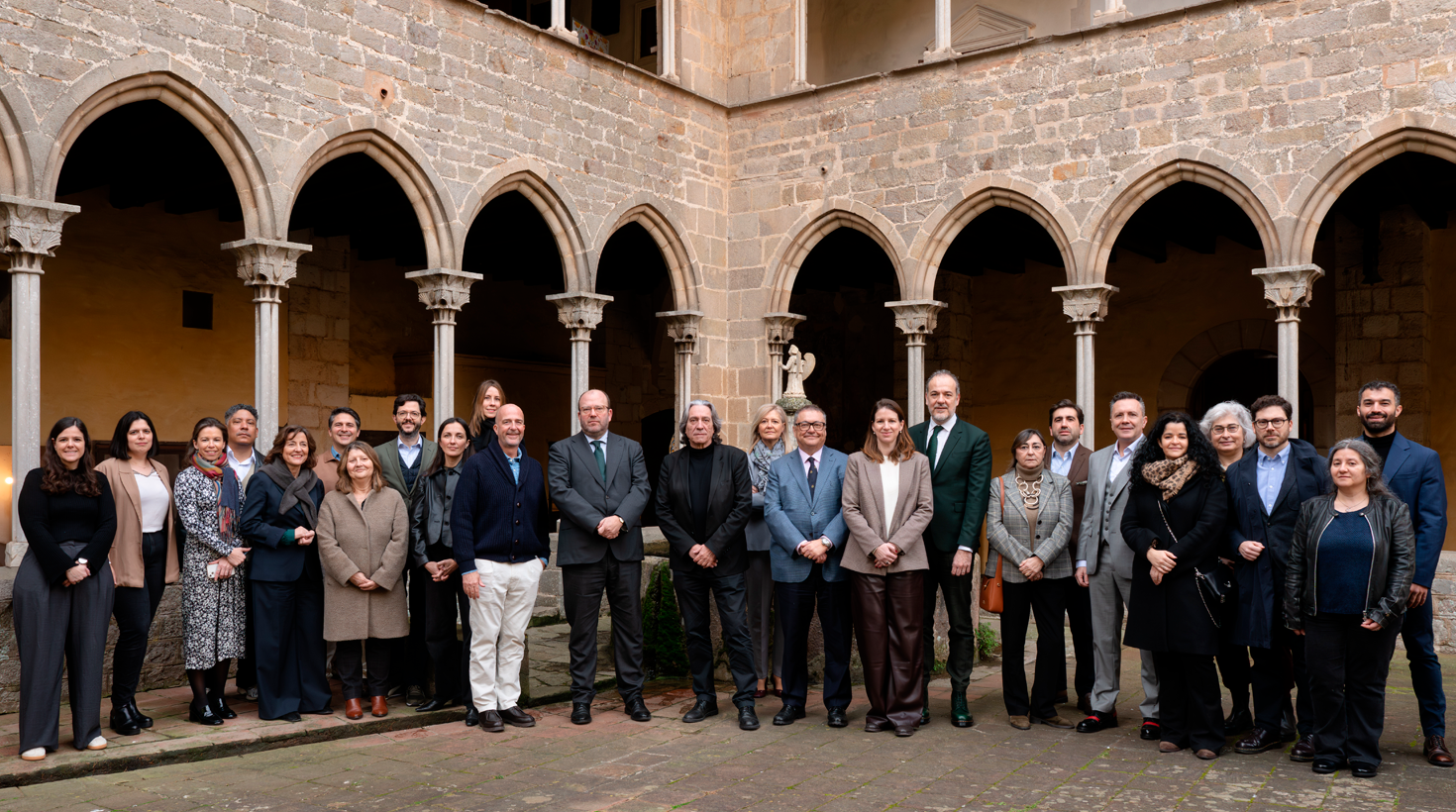
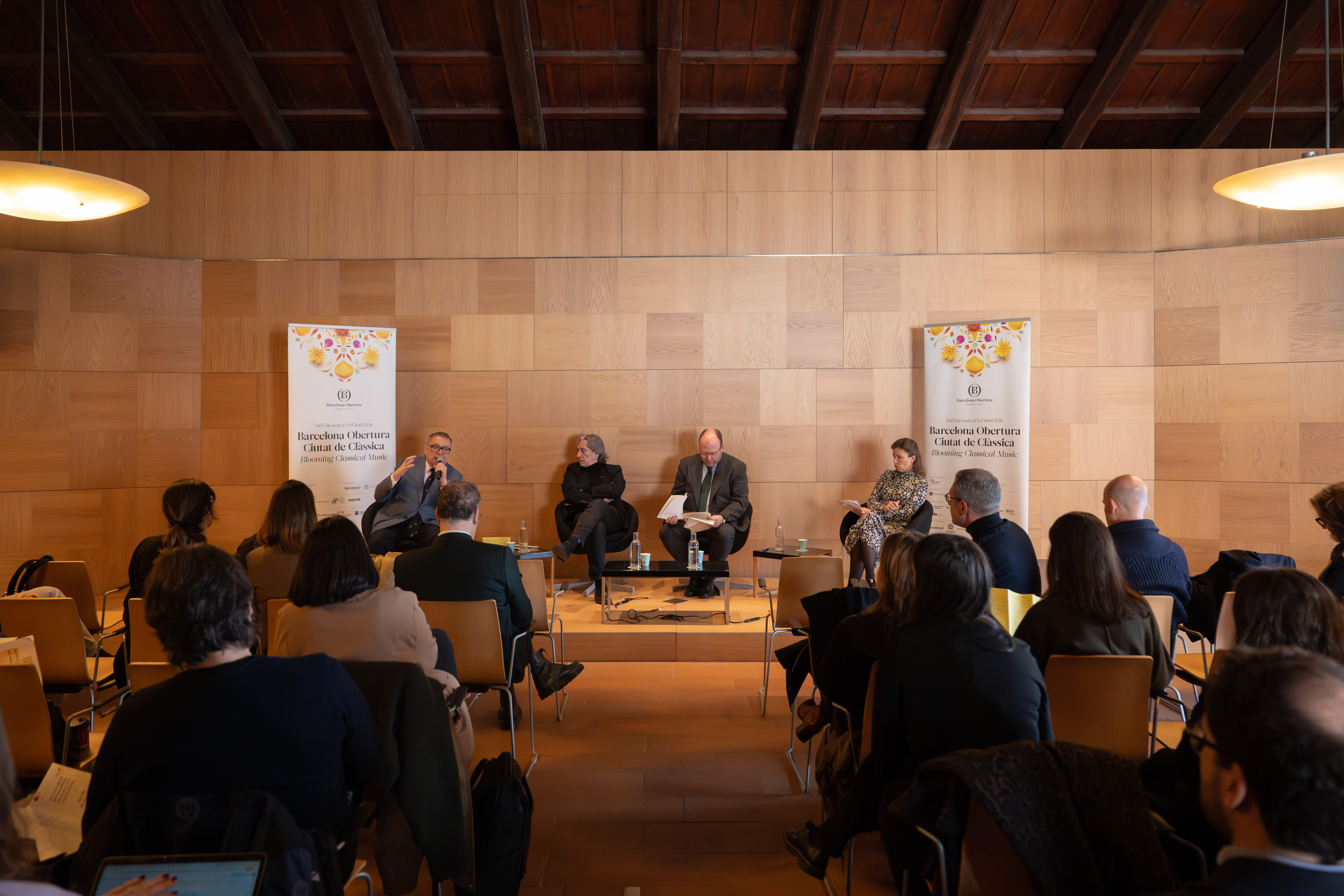
This morning, the seventh edition of the Barcelona Obertura Ciutat de Clàssica festival was presented, which will take place from March 5 to April 1. The event featured Xavier Marcé, Councillor for Culture and Creative Industries; Ramon Agenjo, president of Barcelona Obertura; and Víctor Medem, director of L’Auditori and artistic director of Ciutat de Clàssica until the 2026 edition.
On behalf of Turisme de Barcelona, the Director of Strategic Projects and Partnerships, Anna Marquès, participated in the festival presentation, which is part of the strategy to reach new audiences and internationalize musical talent, positioning Barcelona as a musical destination. The festival takes place within this strategy to open and engage additional, including international, audiences, and as part of Turisme de Barcelona’s cultural tourism initiative.
This initiative, supported by the Department of Culture and Creative Industries of the Barcelona City Council, offers this year a combined program of 27 free concerts and 25 paid concerts, aiming to bring classical music closer to all audiences.
Ciutat de Clàssica also counts on the collaboration of Ibercamera, the Franz Schubert Filharmonia, and the Conservatori del Liceu.
Turisme de Barcelona is the coordinating body of the project, aiming to strengthen the foundational objectives of Barcelona Obertura to position Barcelona as a city of culture and music.
Music in all districts of the city
Music crosses the orchestra pit again and reaches every corner of Barcelona. The 27 free concerts will take place across the 10 districts, in a selection of historic buildings, emblematic spaces, museums, and municipal facilities, which will become stages for local young talents.
Around 250 musicians will participate in these concerts, including the violinist Anna Urpina accompanied on harpsichord by Inés Moreno; singers Natàlia Morales, Alba Valdivieso, and Noëlle Drost; pianists Cèlia Margalef, Laura Mota, and Guillermo Hernández; saxophonist Aina Font, awardee of the Primer Palau competition; violinist Elisa Scudeller and pianist Miquel Esquinas; viola da gamba player Mireia Peñalver and violist Anna Puig, as well as choirs from the Orfeó Català and the Palau, and orchestral ensembles such as the Orquestra del Gran Teatre del Liceu, the Banda Municipal de Barcelona, the Conservatori del Liceu, and the Orquestra Simfònica de Barcelona i Nacional de Catalunya (OBC).
Spaces such as the Antiga Fàbrica Estrella Damm, Casa Batlló, the Torre Collserola, CASA SEAT, the Casa de l’Aigua de Trinitat Nova, the Monestir de Pedralbes, the Refugi 307, the Centre Cívic Cotxeres de Sants, the Fundació Mies van der Rohe, the Fundació Miró, the Centre Cívic Zona Nord, the Biblioteca Jaume Fuster, the Palau Güell, and the Auditori Sant Martí will again host festival performances, while this year incorporates ten new venues: the Fundació Julio Muñoz Ramonet, the Torre Bellesguard, Casa Vil·la Joana, Oliva Artés del MUHBA, the Biblioteca Horta-Can Mariner, the Palauet Albéniz, Plaça Sóller, the Museu Europeu d'Art Modern, the Museu Frederic Marés, and Casa Vicens.
Artistic lines
Since every year tickets sell out in less than two minutes once on sale, and in order to ensure fair access, this year free tickets will be allocated by lottery.
Registrations can be completed on the Barcelona Obertura website starting February 18 here.
New artistic coordination of Ciutat de Clàssica
In 2027, Laura Núñez will take over from Víctor Medem and, together with the artistic departments of the Gran Teatre del Liceu, the Palau de la Música Catalana, and L’Auditori, will coordinate the artistic lines of the Ciutat de Clàssica Festival. Núñez has been part of the festival team since 2021. She currently co-directs the Franz Schubert Association, organizer of the Schubertíada, and coordinates the Lied the Future program, dedicated to supporting young European talents in the field of art song.
Program at the Gran Teatre del Liceu, the Palau de la Música Catalana, and L’Auditori
In parallel with the free concert circuit, the city’s main classical music venues—the Gran Teatre del Liceu, the Palau de la Música Catalana, and L’Auditori—will host 24 concerts and operas featuring internationally renowned artists.
The Gran Teatre del Liceu presents 4 varied programs. On March 17, 20, 23, 26, 29, and April 1, a new production of Manon Lescaut (Puccini) will premiere, staged by Àlex Ollé. Josep Pons will conduct the music, leading an outstanding cast that includes soprano Asmik Grigorian (Manon Lescaut) and Joshua Guerrero (Des Grieux). On March 19, the Liceu will host a unique recital by tenor Juan Diego Flórez, one of today’s most beloved singers, with a program of Italian arias and selected pieces, accompanied on piano by Vincenzo Scalera. Additionally, on March 24, Les Musiciens du Louvre, conducted by Marc Minkowski, will perform Orlando in concert version, one of the most celebrated operas by Georg Friedrich Händel. As part of the Liceu Orchestra Symphony Cycle, on March 31 the theater will present Univers Mahler: Symphony No. 9, under the direction of Josep Pons.
Meanwhile, the Palau de la Música Catalana offers a total of 12 very diverse artistic programs. Pianist Jan Lisiecki (March 5) will perform a program including works by Martinů, Falla, Szymanowski, Schubert, Bartók, Ginastera, Chopin, Brahms, Piazzolla, and Albéniz. During March, the Passions by Bach will be performed: on March 6, Peter Whelan, leading the English Baroque Soloists and the Monteverdi Choir, will conduct the St. John Passion; and on March 27, Jonathan Cohen will conduct the St. Matthew Passion, with the baroque ensemble Arcangelo. The Palau will also host soprano Julia Lezhneva and Il Giardino Armonico, conducted by Giovanni Antonini (March 10). Other highlights include performances by the Balthasar Neumann Chor & Orchestre (March 11 and 13), pianist Víkingur Ólafsson (March 12), Concentus Musicus Wien under Stefan Gottfried (March 16), and Il Pomo d’Oro with Francesco Corti (March 17). The Cor de Cambra del Palau (March 21) will give the world premiere of Mujer pájaro by Gabriela Ortiz. On March 22, the Franz Schubert Filharmonia will perform Symphony No. 9 by Schubert, conducted by Leonard Slatkin. Finally, pianist Elisabeth Leonskaja will perform the three piano sonatas by Johannes Brahms.
During the festival, L’Auditori hosts 9 exceptional concerts. The opening will be Symphony No. 7 by Antonín Dvořák, performed by the Orquestra Simfònica de Barcelona i Nacional de Catalunya (OBC) under Pablo González (March 6 and 7). The Drumming Grupo de Percussão, together with Burnt Friedman, will present Guiding Path (March 14). In collaboration with BCN Clàssics, Martha Argerich will perform with the Orchestra della Svizzera Italiana, conducted by Charles Dutoit, including Beethoven’s Piano Concerto No. 1 (March 16). Juanjo Mena will lead the OBC in works by Schubert, Mozart, and Mendelssohn (March 22). With Ibercamera, L’Auditori will host the Frankfurt Radio Symphony Orchestra, with Alain Altinoglu (March 23). The Quartet Casals will perform works by Haydn, Schubert, and Cantos by Francisco Coll (March 25). The OBC, with Ludovic Morlot, will offer a program of works by Schuller, Bernstein, Adams, and Gershwin (March 27–29). Finally, Jordi Savall will conduct Les set últimes paraules de Crist a la creu (Haydn) and Crist al Mont de les Oliveres (Beethoven) (March 29), and Philippe Herreweghe will conduct J. S. Bach’s St. Matthew Passion (March 30).
Barcelona Obertura in numbers
Regarding the results of the 2025 edition, the free concerts of Ciutat de Clàssica had an attendance rate of 98%, with a total of 3,698 people.
Regarding international audiences during the 2024-25 season at Barcelona Obertura concerts at the Liceu, the Palau de la Música Catalana, and L’Auditori, the percentage varies significantly depending on the concert, in some cases representing nearly 20% of total attendees.
This year, Barcelona Obertura offers a total of 6 musical packages with over 56 concerts, which, concentrated at different times of the year, are ideal for music enthusiasts who also want to enjoy the other cultural, architectural, gastronomic, and entertainment offerings of Barcelona.
Barcelona Obertura is an initiative born from the union of the city’s three most important classical music venues, the Gran Teatre del Liceu, the Palau de la Música Catalana, and L’Auditori, with the aim of promoting Barcelona internationally through classical music.
Each season, Barcelona Obertura selects the best concerts and musical productions from the three venues and groups them into special packages, offering visitors an exceptional experience. The motto “Come for the music, stay for the rest” encapsulates the spirit of Barcelona Obertura in presenting Barcelona through its strong musical offering.
Barcelona Art Scene and the cultural visitor
Turisme de Barcelona, in its focus on cultural tourism with high-value visitors, has promoted a strategy of partnerships with different actors and cultural programs such as Barcelona Obertura to reinforce the culture-tourism link and close the virtuous circle through which Barcelona is recognized for culture not only by its architectural heritage but also by its musical offering. Within this framework, Barcelona Art Scene has just been presented, a new initiative launched last year under the name Barcelona Art Season, which this year has incorporated the city’s music lineup as a highlight, showcasing the most important cultural offerings of the first half of 2026 to strengthen the city’s positioning as a top cultural destination.
According to the latest survey by the Observatori del Turisme a Barcelona, in 2024 the number of tourists who attended a music concert —of any style— during their visit to the city represented 16.45% of the total.
This type of audience traveling to Barcelona for a concert extends their stay and combines cultural experiences with others, such as gastronomy. Musical tourism responds to the city’s segmentation strategy to select the most relevant audiences and simultaneously contributes to the destationalization of tourism.