

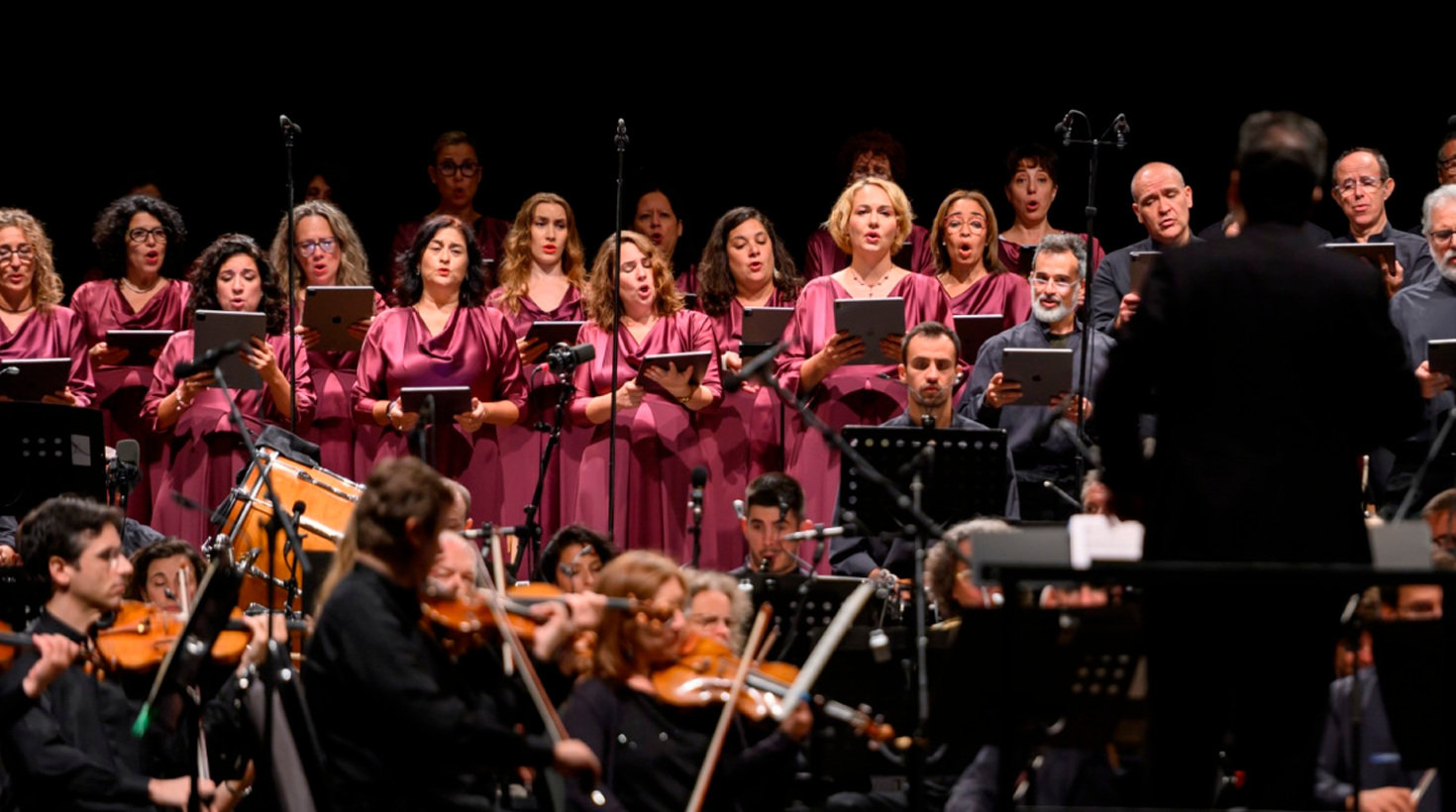
The Gran Teatre del Liceu brings the Cor del Liceu outside the theatre with two concerts on April 11 and 24 at the Teatre Auditori Sant Cugat and the Teatre L’Artesà del Prat de Llobregat. In these two events, the Cor del Liceu, together with Veus – Cor Infantil Amics de la Unió de Granollers, perform 'Carmina Burana', the scenic cantata that Carl Orff composed in 1936 from a collection of medieval poems. Under the direction of maestro Pablo Assante, accompanied by the Percussion Group of the Gran Teatre del Liceu and two pianos.




The Gran Teatre del Liceu brings Carmina Burana by Carl Orff to two stages, giving the public the chance to enjoy this emblematic work outside the theatre on April 11 at the Teatre Auditori Sant Cugat and April 24 at the Teatre L’Artesà del Prat de Llobregat.
This scenic cantata, composed in 1936, is based on a collection of medieval poems found at the Benediktbeuern monastery in Germany. Written in Latin, Old German, and Occitan, the texts explore universal themes such as fortune, love, desire, and the joy of living. The work opens and closes with the famous chorus “O Fortuna,” a powerful celebration of destiny that has become a symbol of 20th-century choral music.
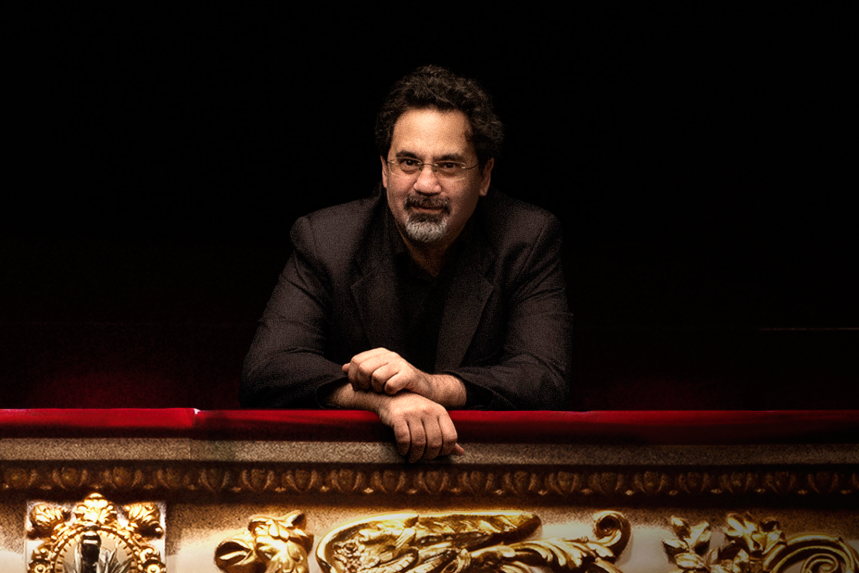
Under the direction of maestro Pablo Assante, conductor of the Cor del Gran Teatre del Liceu, the performance will feature the Cor del Liceu, the Theatre’s Percussion Group, and two pianos, performed by David Huy Nguyen Phung and Ivet Frontela. The soloists, members of the Cor del Liceu, will be soprano Oihane González, tenor Francisco Javier Ariza, and baritone Leonardo Domínguez. Alongside the Cor del Liceu, it will also include Veus – Cor Infantil Amics de la Unió de Granollers, under the direction of maestro Josep Vila.
This version highlights the power of the voices and the intense rhythm that characterize Carl Orff’s work, preserving its energy and spectacle, but from a closer, more direct perspective that invites the audience to rediscover Carmina Burana in a striking and captivating way.