

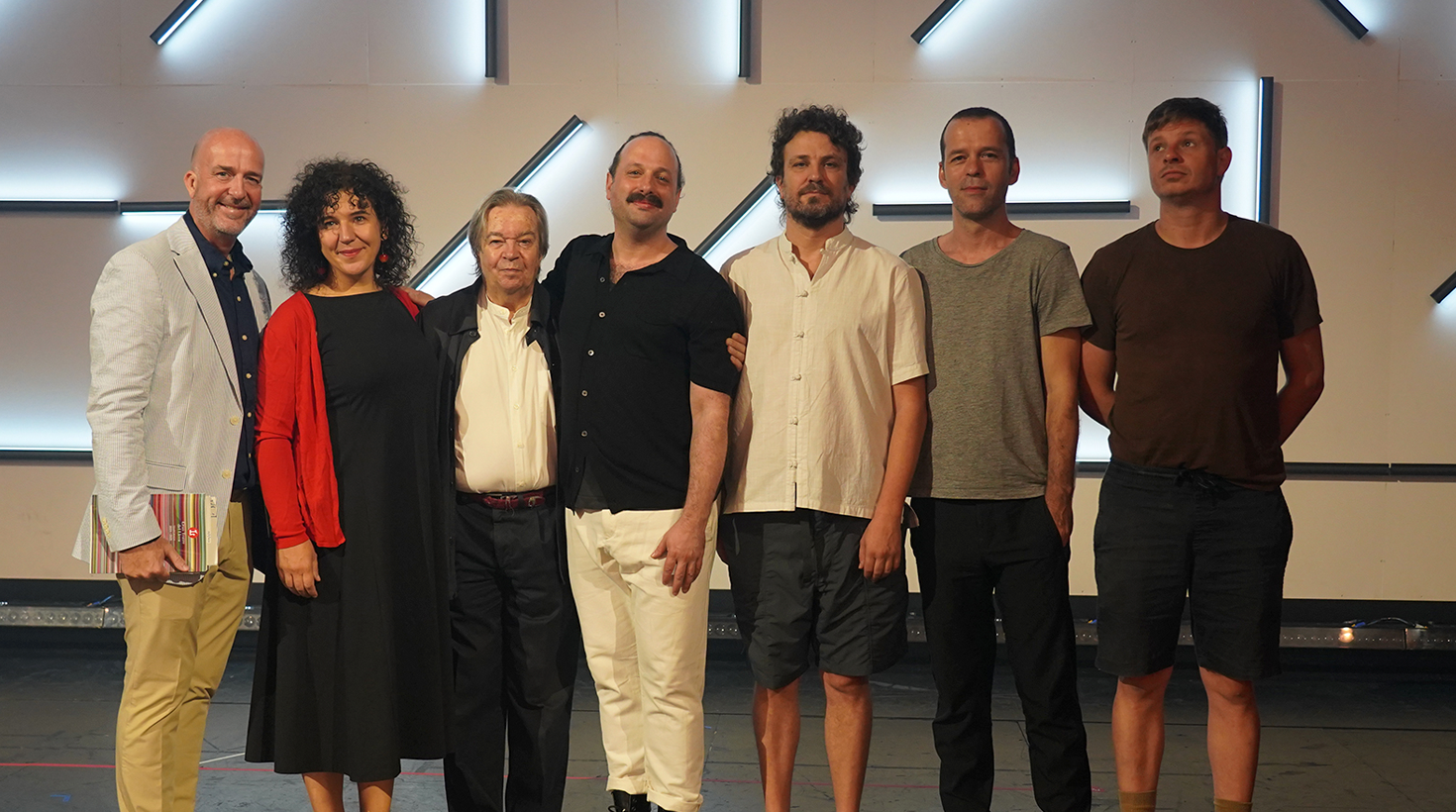
The work, a commission from the Gran Teatre del Liceu, premieres on July 19 and 21 with two semi-staged performances conducted by maestro Ros-Marbà, who returns to the Liceu podium at 88 years old. The stage direction is by Anna Ponces, in collaboration with the audiovisual studio Playmodes. 'Benjamin a Portbou', in two acts and 13 scenes, is based on the English libretto by Anthony Carroll Madigan and is inspired by the life of philosopher Walter Benjamin, who committed suicide in Portbou while fleeing Nazism.




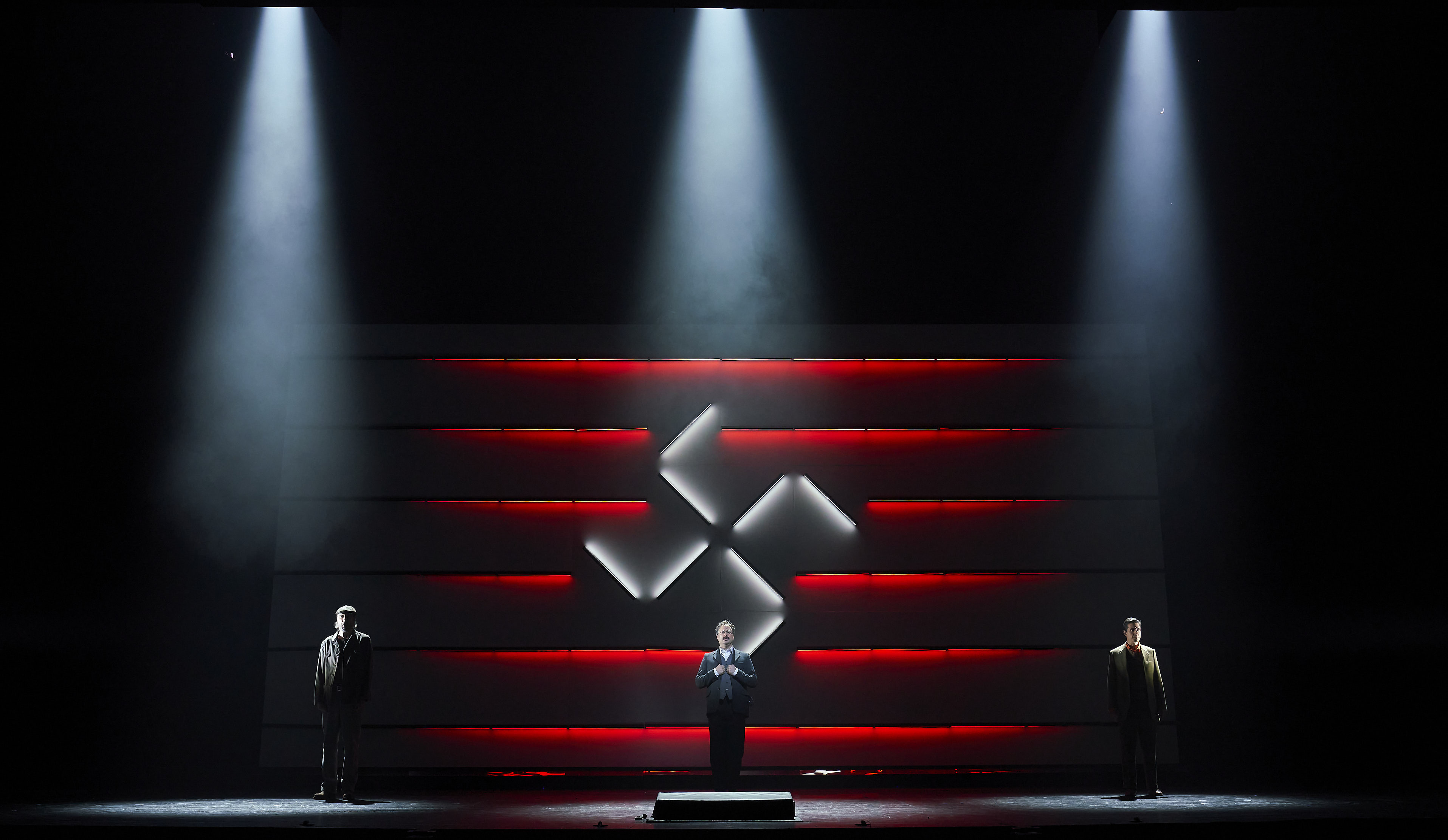
Antoni Ros-Marbà makes his operatic composer debut with Benjamin a Portbou, a commission from the Gran Teatre del Liceu, to be staged on July 19 and 21. The maestro himself will conduct the musical direction with a large cast of national and international vocal soloists, along with the Gran Teatre del Liceu Symphony Orchestra and Choir. The new opera is presented in a semi-staged version, a theatrical proposal by stage director Anna Ponces, with set design and lighting by Playmodes Studio (Eloi Maduell and Santi Vilanova) and Andreu Fàbregas, and costume designs by Adriana Parra and Sílvia Delagneau.
With a libretto in English, including fragments in German and French, by actor, musician, and voice professor Anthony Carroll Madigan (1938-2020), Benjamin a Portbou focuses on the life of philosopher, essayist, and literary critic Walter Benjamin (Berlin, 1892–Portbou, 1940), who committed suicide in a hotel in Portbou (Girona) after crossing the Franco-Spanish border through the Pyrenees fleeing Nazi persecution and hoping to reach Lisbon to escape Europe; sick, depressed, and exhausted, he found himself trapped in Portbou in a bureaucratic limbo. The opera is structured in 13 scenes where the protagonist, played by tenor Peter Tantsits, recalls various stages of his life while writing a story about his youth before ending his life; everything happens on the night of September 26, 1940, in a room at the Fonda de Francia, on General Mola Avenue in Portbou. His memories bring forth his wife and son, Dora Pollack and Stefan Benjamin (Laura Vila and Ruth González, respectively); his cousin, philosopher and sociologist Hannah Arendt (Marta Valero); his friend and historian Gerhard Scholem (Joan Martín-Royo); the playwright Bertolt Brecht (David Alegret); and his lover, Asja Lacis (Elena Copons), among other characters who marked the thinker’s personal history, all mixed with symbolic figures such as Angelus Novus (Serena Sáenz), born from the imagination of painter Paul Klee.
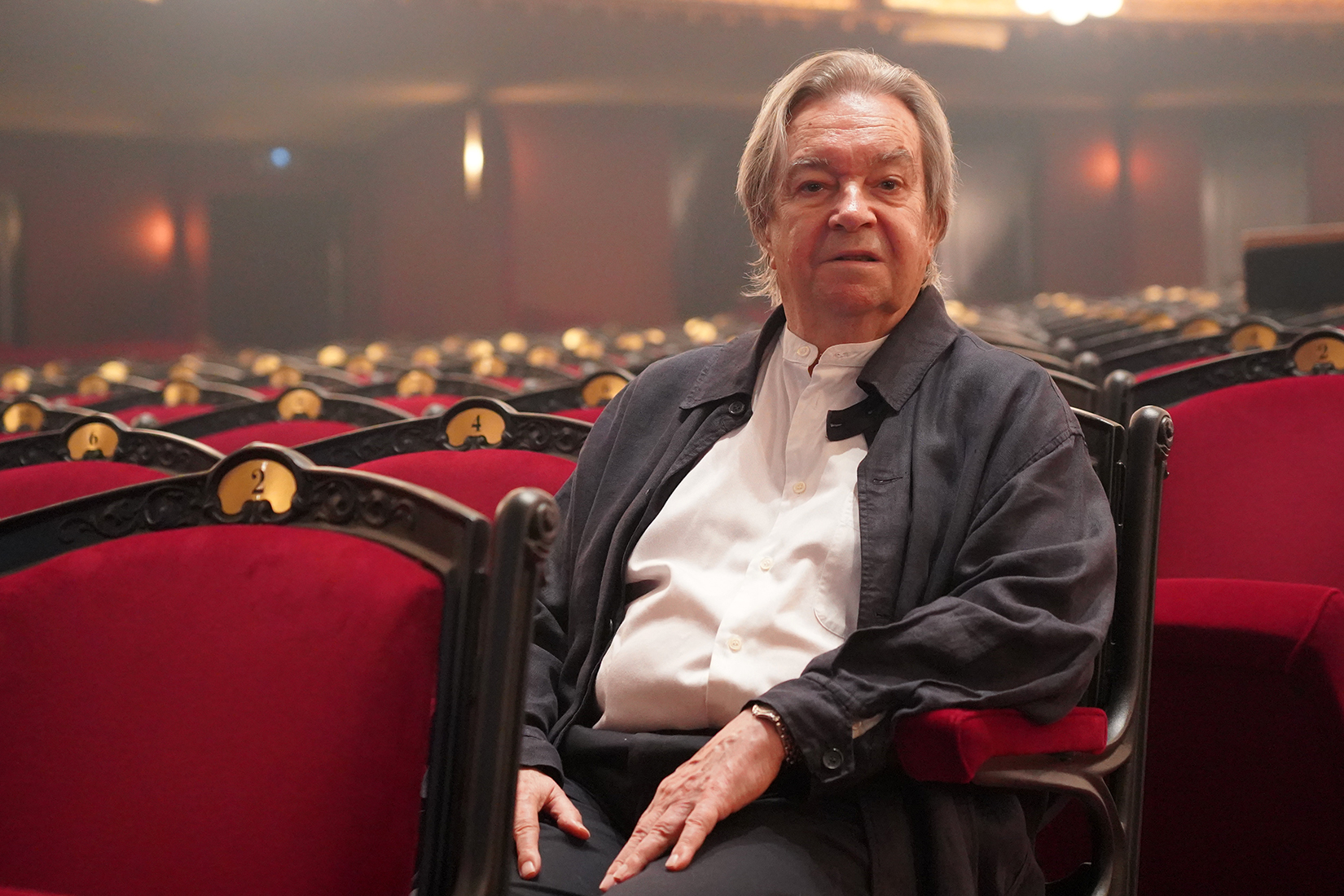
Well known as a conductor, Antoni Ros-Marbà has also dedicated himself to composition, always interested both in popular culture and symphonic and chamber music. In the field of vocal music, beyond Lieder and songs, the maestro’s catalogue includes cantatas such as Tirant lo Blanc, but this is his first opera. In the score, he himself acknowledges dodecaphonic and expressionist passages, while the singing leans towards the recitative style of Sprechgesang. The score was completed in 2015, and the pandemic forced the premiere to be postponed.
Writing an opera about one of the fundamental and most influential thinkers of the first half of the twentieth century, and about his intellectual and emotional imagination, was a difficult and complex task. However, the work of the composer and librettist — who often literally quotes Benjamin’s own words — has allowed the creation of a work with a broad theatrical sense that moves between the abstraction of thought and reality, but also between art and philosophy and, due to the narrative circumstances, between life and death. This has inspired the staging, which draws on a pre-existing artistic element, Signes, a light installation created by Playmodes (Eloi Maduell and Santi Vila) at the Llum BCN festival in 2023. Until then, it had never been used on stage, and the challenge was to make it dialogue with an opera.
For the stage director, Anna Ponces, “staging Benjamin a Portbou today also opens a dialogue between past and present. For me, it is unthinkable to approach Walter Benjamin’s death without acknowledging that the genocidal persecution and exile that caused it remain alive in our present and challenge us. The line of people who began walking on the night of September 26, 1940, to cross the Pyrenees with Walter Benjamin — as well as the stream of republicans who crossed the other way a year earlier — has never stopped. It continues at every border in the world, and many of those people also risk their lives.”
Antoni Ros-Marbà, composer and conductor
Antoni Ros-Marbà (L’Hospitalet de Llobregat, 1937) is one of the most complete and prolific Catalan musicians. He is a conductor, teacher, and composer. He has worked in a wide range of genres, from Lied to symphonic-choral music and sardana, and is also the co-author (with Manuel Valls) of the FC Barcelona anthem’s music. As a conductor, he has had an international presence with prestigious instrumental ensembles such as the former Orquestra Ciutat de Barcelona (now OBC), the Spanish National Orchestra, the Royal Philharmonic of Galicia, and the Netherlands Chamber Orchestra. He has also been invited to conduct renowned groups such as the Berlin Philharmonic, among many others. A disciple of Eduard Toldrà, he has been one of his most distinguished interpreters, with numerous recordings of his works. His teaching career highlights include mentoring at the Reina Sofía School of Music and the Conservatori Superior del Liceu. At the Gran Teatre del Liceu, he has conducted, among others, the operas Salome, Otello, The Duenna, Billy Budd, The Makropoulos Case, Fidelio, and Orfeo ed Euridice, always earning public and critical acclaim. Benjamin a Portbou is his first opera.
Anthony Carroll Madigan, librettist
Anthony Carroll Madigan (1938-2020) was born in New York. An actor and voice teacher, he moved to Spain and worked as a performer and educator. He taught at the Institut del Teatre in Barcelona and the Madrid Superior Conservatory, opened a Voice Studio in the Spanish capital, and in 2017 taught the course Acting for Opera Singers at the Operastudio of the University of Alcalá. He graduated from Cambridge in French and Spanish Literature and studied voice with Jaume Francesc Puig and piano with Maria Canela in Barcelona while working as an actor. He founded a small Neapolitan Baroque music company and collaborated with the Juilliard Opera Center. Earlier, and in Paris, he was assistant to pianist Arthur Rubinstein and also worked in Germany. He directed and performed in the operatic show De España vengo at the Teatro Infanta Isabel (2013) and appeared in successful TV series such as El ministerio del tiempo, among others. With Antoni Ros-Marbà, he published the book An Act of Freedom on musical phenomenology.
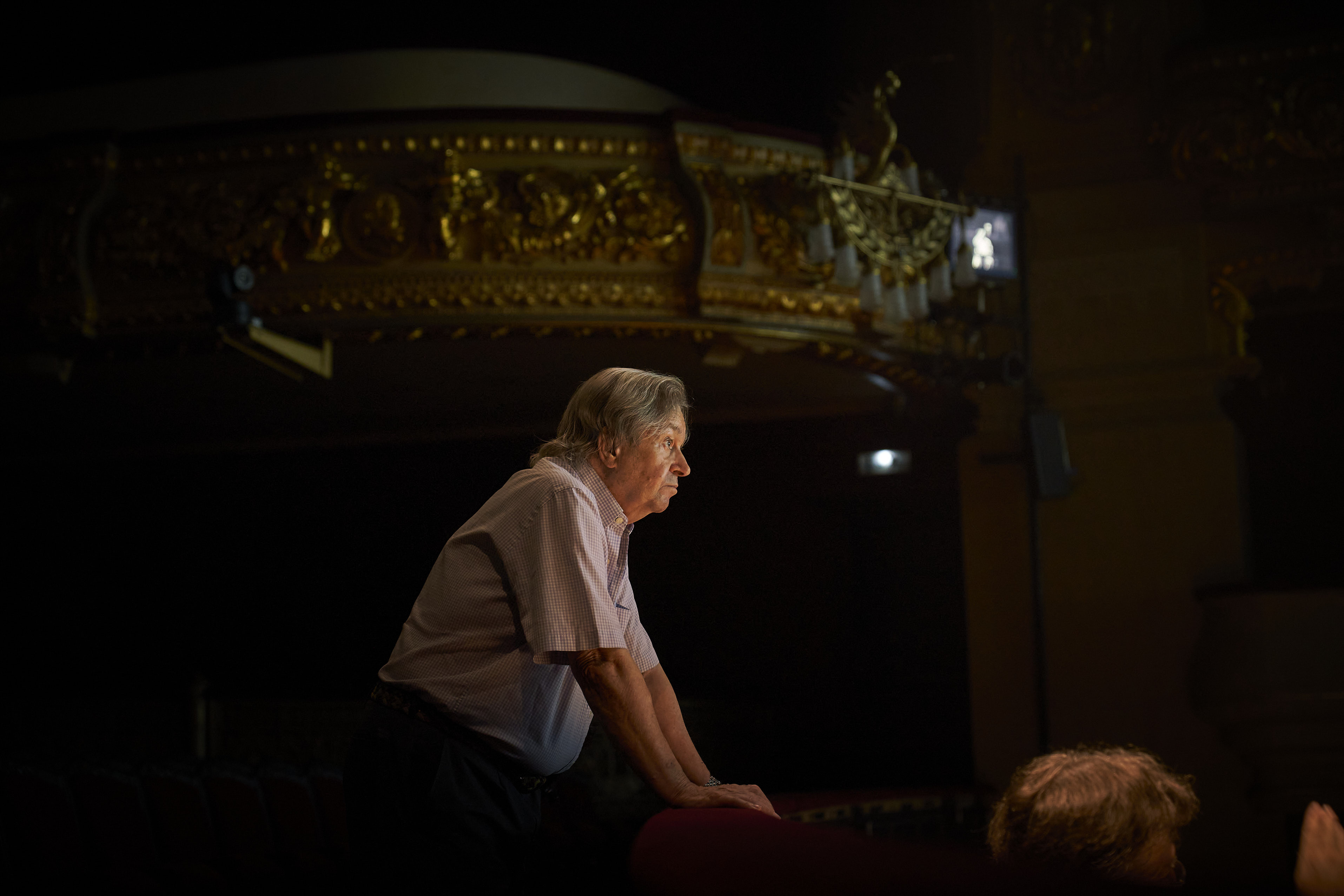
A documentary will follow the creative process of Ros-Marbà’s opera
The premiere of Benjamin a Portbou, a new opera with musical direction by maestro Antoni Ros-Marbà, will be documented in an audiovisual project produced by the ”la Caixa” Foundation, the Liceu, and 3Cat. The documentary, directed by Albert Pons and produced by Carmel, offers an intimate and exclusive look at the creation and staging process of the opera, following Ros-Marbà through rehearsals, staging, and premiere. Nearly 90 years old, maestro Ros-Marbà —a key figure in Catalan and Spanish music, awarded the National Music Prize, the Creu de Sant Jordi, and the Gold Medal for Merit in Fine Arts— returns to the Liceu with a commissioned work that sets to music the libretto by Anthony Carroll Madigan. The opera, focused on the life and thought of Walter Benjamin, features stage direction by Anna Ponces and contributions by Playmodes Studio and Andreu Fàbregas in scenography and lighting. The documentary will be available at the end of the year on the LiceuOPERA+, CaixaForum+, and 3Cat platforms.
With the support of:

|
Funded by the Ministry of Culture within the framework of the Cultural Capital of Barcelona, promoted by the Ministry of Culture and the Barcelona City Council.

| 
|