

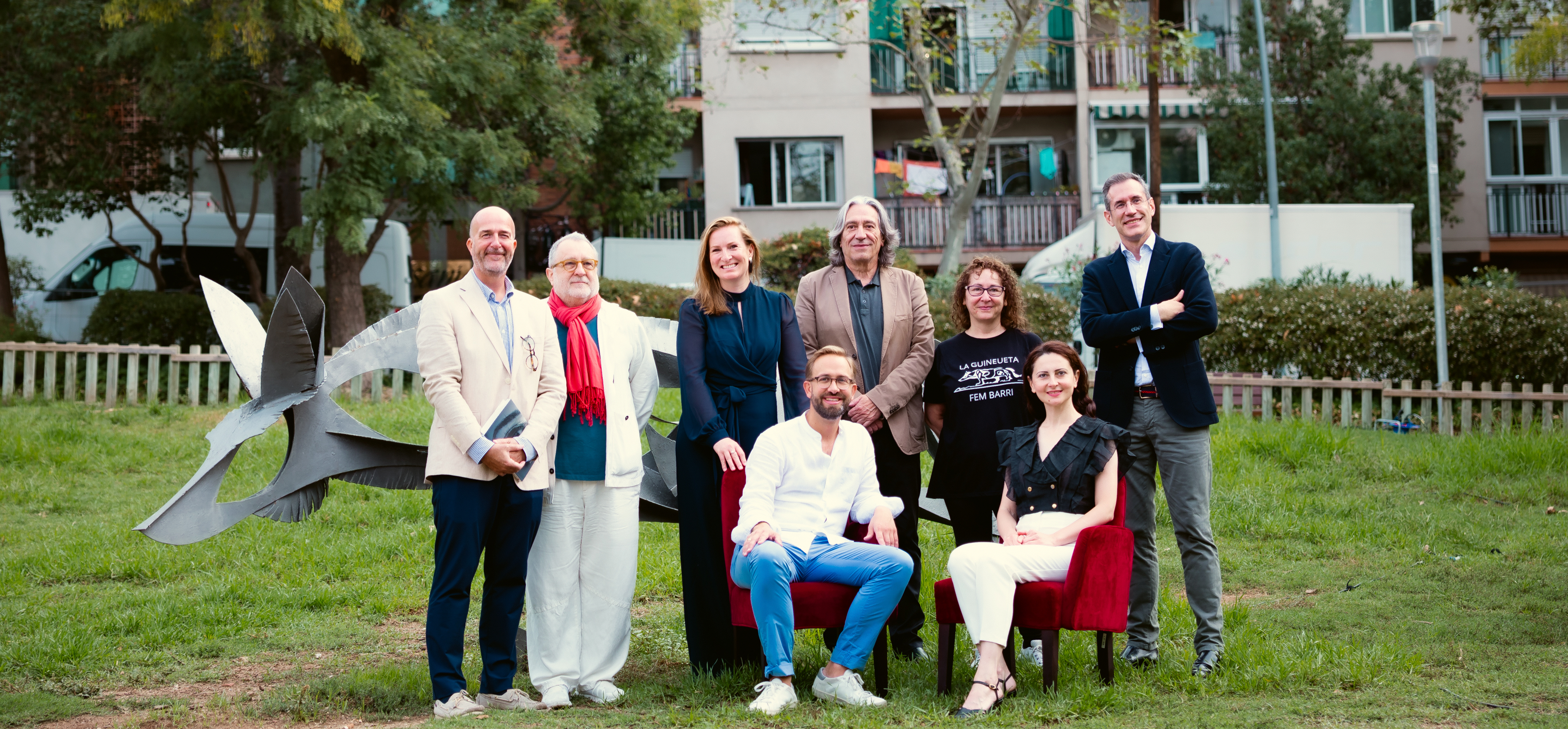
The Gran Teatre del Liceu opens the 25/26 season with 'The Cunning Little Vixen' by Leoš Janáček, conducted by Josep Pons. Barrie Kosky signs a symbolic production that, through light, evokes the eternal cycle of nature. Russian soprano Elena Tsallagova, a world-renowned specialist in the role of Bystrouška, leads the cast, with Peter Mattei as the Forester and Paula Murrihy as the Vixen.




The 25/26 season of the Liceu will open on September 22 with the new co-production of The Cunning Little Vixen by Janáček, with stage direction by Barrie Kosky (revival by Andreas Weirich) and starring Elena Tsallagova, Peter Mattei, and Paula Murrihy. Two days earlier, on September 20, the work will premiere with an exclusive performance of the Opera Between Generations program, at a price of €35, inviting both young and older audiences to share their passion for opera. In the season celebrating the 25th anniversary of the Petit Liceu, The Cunning Little Vixen, the first title of the season, will be offered at half the price of a conventional staged opera, across all its performances.
Barrie Kosky’s intelligent production avoids the green tones of nature and the fake trees of the forest where the opera is set. The singers portraying the various animals are dressed in colors rather than animal costumes, in contrast with the black clothing of their human counterparts. An unpredictable show that confronts us with the urgent need to reflect on how humanity relates to the planet. This co-production with the Bayerische Staatsoper in Munich will feature the Orfeó Català Children’s Choir, conducted by Glòria Coma, and the Chorus of the Gran Teatre del Liceu, conducted by maestro Pablo Assante. Set design is by Michael Levine, costumes by Victoria Behr, and lighting by Franck Evin.
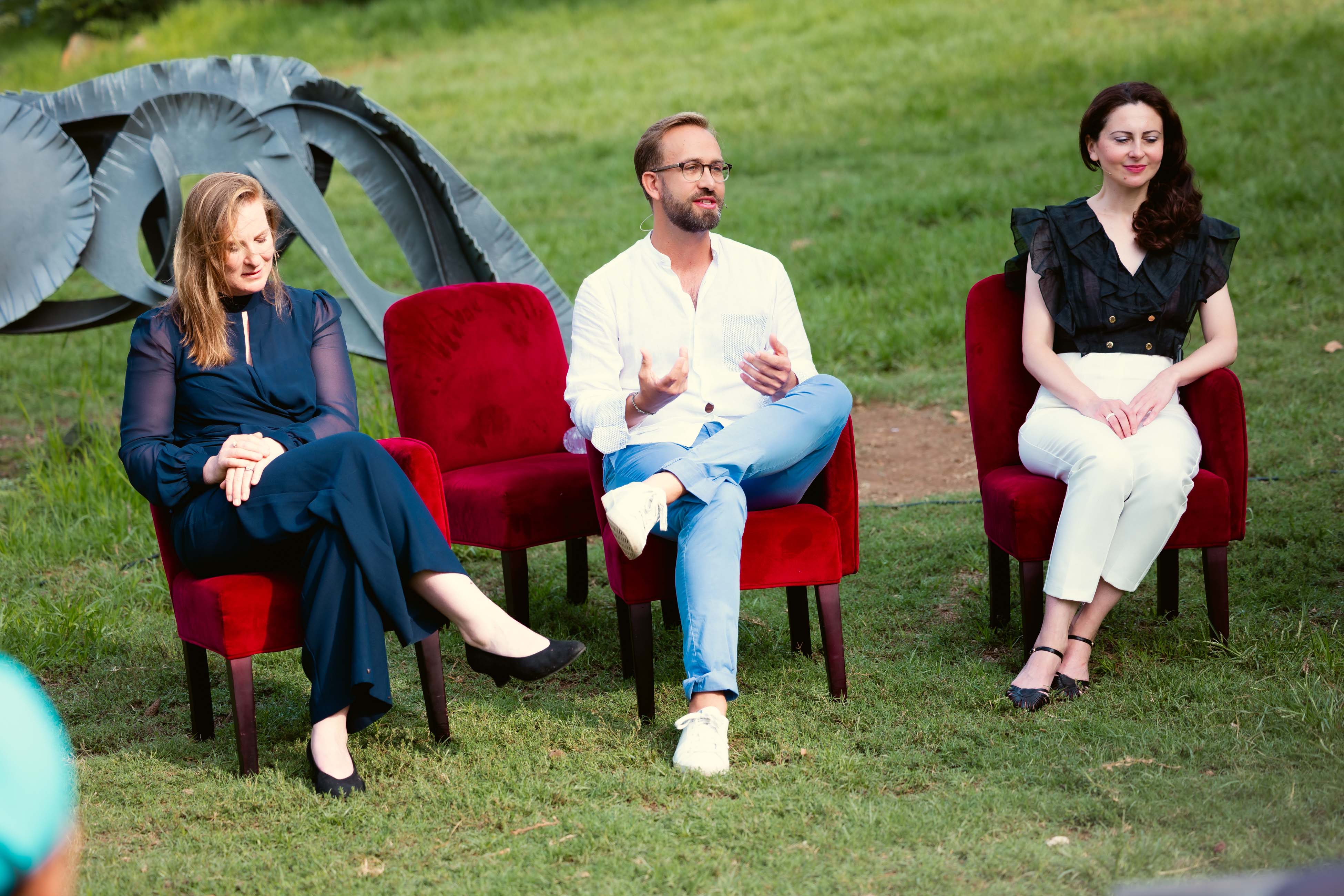
Conductor Josep Pons, a deep connoisseur of the composer and his prodigious orchestral writing, will deliver a masterful reading of the work. Swedish baritone Peter Mattei will offer a moving and wise interpretation as the Forester. Elena Tsallagova embodies the young Vixen, and Paula Murrihy the charismatic Vixen. The Cunning Little Vixen will be the first opera of the season to be broadcast live through Liceu OPERA+. A few days later, it will be available on the platform in a specially edited version, accessible to all subscribers.
This is the first time The Cunning Little Vixen by Janáček will be performed at the theatre in the original language (Czech). The first and only time the work appeared on the stage of the Gran Teatre del Liceu, in the 2001-2002 season, an English translation was used. It is also the first time maestro Josep Pons conducts this score.
A 20th-century masterpiece about the beauty of life and inevitable death
The Cunning Little Vixen is one of the works composed by the Czech composer Leoš Janáček in his later years, just before turning 70. Initially inspired by a charming Czech children’s story, the composer decided to adapt the original tale to explore philosophical themes that concerned him at that stage of his life: the relationship between humans and animals, and the cycle of nature, which always demands the necessary passage of death in order to be reborn and renewed. Written in a harmonic language indebted to Romanticism and the finest Modernism, it is one of the great operas of the 20th century.

It is a children’s story that became a philosophical reflection for adults. The original tale was a charming collection of the cunning little vixen’s mischiefs, but Janáček perceived a deeper layer: it also addressed the relationship between humans and animals, and the protagonist’s inevitable fate —namely, death— was not seen as something pathetic, but as a necessary rite of passage in the eternal cycle of destruction and rebirth that characterizes the natural world. Based on this idea, Janáček met with Tesnohlídek (the poet who had published the original story in 1920 in the newspaper Lidové Noviny) to request permission to adapt the story and decided to write the libretto himself.
In the opera, the light tone of the story is not lost —there are tender and humorous moments— but the main weight lies in the realistic depiction of nature and its processes. Each act covers a period in the life of the protagonist, the vixen Bystrouška: in the first act, we see her as a cub and her youth in captivity, after being captured by the Forester; once freed from captivity, in the second act we follow her maturity, from tricking a badger to claim its den to falling in love with a golden-furred fox; finally, the third act depicts death —Harašta, the poacher, kills her coldly with a shot— and rebirth, as Bystrouška has had cubs and the story will begin again. In short, it is an opera to laugh and cry, to feel emotion and compassion, articulated through a musical language of great beauty that blends 19th-century Romanticism with 20th-century Modernism.
A symbolic production by Barrie Kosky
The production directed by Barrie Kosky, which premiered at the Bayerische Staatsoper in Munich —co-producing the staging alongside the Liceu— respects the central themes of the opera and treats the work as an intelligent, serious, and mature piece. Indeed, the first thing seen when the curtain rises is a funeral: a few men, dressed in black and shrouded in the stage’s dim light, throw soil over a hole, which will become a recurring scenic element. In clear connection with the opera’s ending, they are burying the cunning little vixen. But after death, a new cycle begins.

The great technical innovation of Barrie Kosky’s staging concept: instead of recreating the forest —and other locations— with sets, he uses a dense curtain of lights that, occupying the entire stage horizontally and vertically, helps construct the story’s spaces. This flexibility also allows the opera to be performed in its entirety without interruptions, connecting the three acts into a 100-minute temporal arc.
Kosky aimed to remain faithful to Janáček’s spirit: humor appears only occasionally, and the temptation to turn the opera into a children’s show is avoided. Yet the director does not forgo his signature, as seen in the vixen’s escape scene, which evokes the aesthetic of variety theatre and recalls the pantomime suggested by the composer. Overall, however, the production is sober and symbolic: humans wear black, animals wear light-colored costumes that reflect the light and create a magical aura.
The result is an interpretation focused on the idea that runs through the entire opera: life is an eternal current that requires a constant cycle of death and rebirth. Kosky replaces direct humor with the charm of a lighting design that expands during moments of vital fullness and contracts at decisive points: the love of Bystrouška and Zlatohřbítek, the protagonist’s death, and the Forester’s scenes. The Cunning Little Vixen is not an opera for children, but this production invites us to rediscover it with the surprise and innocence of a first encounter.
Josep Pons on The Cunning Little Vixen
The Liceu’s music director, Josep Pons, had never conducted The Cunning Little Vixen, although he is very familiar with Janáček’s works: Glagolitic Mass, Sinfonietta, and The Diary of One Who Disappeared. Pons emphasizes that the composer’s writing is very peculiar, especially at a time like his, when a musical paradigm shift was taking place.

In the words of Josep Pons, “when music moves within a familiar language, it is easy to read and understand. But when there is a change of style, as with Janáček, you have to find a new way of writing. This makes it more complex. Research is needed to translate these rhythms into written language.”
The Liceu’s music director emphasizes the originality of Leoš Janáček’s writing and his unique way of translating reality into musical language. “The animal sounds in this opera do not have a naturalistic value, but an expressive, symbolic, and even humorous one,” says Pons, noting that the real interest of the work is the relationship between animals and humans, a coexistence that borders on fable without being strictly one.
Finally, Pons highlights the opera’s vitalist character, which Janáček himself wanted to be heard at his funeral: The Cunning Little Vixen speaks of life cycles and continuity more than tragedy. “If I had to describe this score in one word, I would say ‘brilliant’. It draws on 19th-century tradition while at the same time introducing completely modern elements.”
Key musical moments
In the score of The Cunning Little Vixen, different compositional styles are elegantly combined: Czech post-Romanticism —with abundant dances and folk melodies—, German Modernism, and also passages reflecting the influence of French Impressionism.
In the first act, the interlude Ze nevis, coma mé? / Pantomime depicts the transition from a dark night to a radiant dawn with an orchestral palette reminiscent of Debussy and Ravel. It is one of the most beautiful passages in the entire score and symbolizes Bystrouška’s liberation.
The second act reaches its climax with the duet between Bystrouška and the fox Zlatohřbítek (Proč zrovna mě?), a romantic encounter that, through the intertwining of the two female voices, expresses with overflowing lyricism the passion, vital instinct, and continuity of the species.
Finally, in the third act, the Forester takes center stage in his great monologue (Ale není tu Bystroušky!), an aria with declamatory singing full of lyrical intensity. This passage revisits elements from the beginning of the opera and encapsulates the central message of the work: life and nature continue their course in an eternal cycle of rebirth.
An exquisite cast with a Catalan touch, led by Russian soprano Elena Tsallagova
In the final season of maestro Josep Pons as music director of the Liceu, tackling The Cunning Little Vixen is another step in the long path of orchestral perfection, now facing a new phase of great challenge. The orchestra’s size is enormous, requiring a large number of children’s and adult voices, as well as an adult choir and a children’s choir, making it an ideal piece for maestro Pons to conduct with his usual taste and efficiency.
The orchestra is an essential element in this opera, as important as the voices: Janáček included various orchestral interludes in its development —mainly to express the passage of time, whether a dawn, the vixen’s coming of age, or the birth of her cubs—.
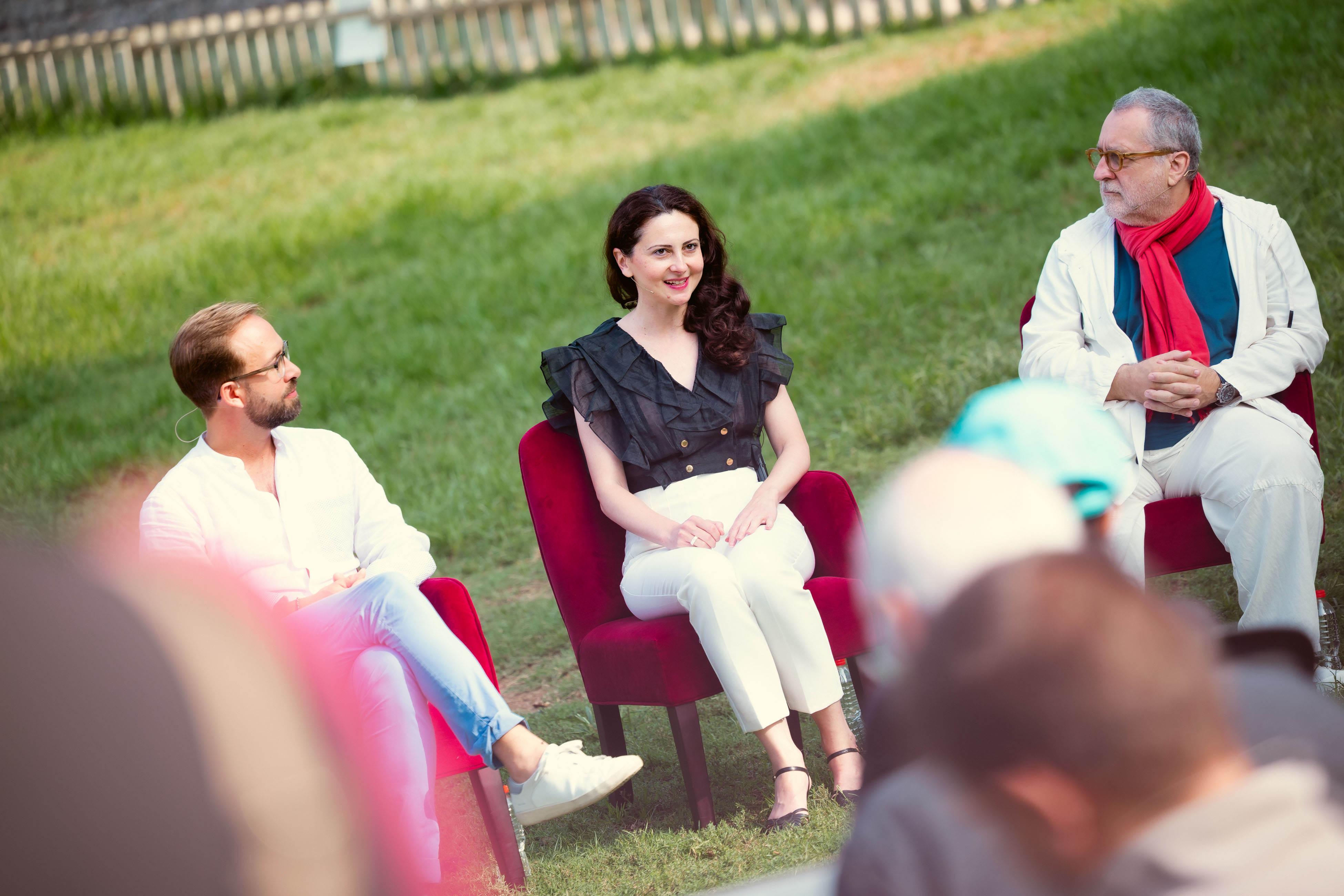
The cast features the leading specialist today in the demanding role of Bystrouška, Elena Tsallagova. The other central roles in the opera, the Forester and Zlatohřbítek, the charismatic golden-furred fox, are also performed by two outstanding singers: Swedish baritone Peter Mattei and mezzo-soprano Paula Murrihy.
Janáček indicated in the score that, given the large number of minor characters in the opera, it was advisable for some singers to perform two roles, whether human or animal. For example, tenor David Alegret is, on one hand, the Schoolmaster, but also the Mosquito; mezzo-soprano Mireia Pintó sings the roles of the dog Lápak and the Woodpecker; mezzo-soprano Anaïs Masllorens divides her roles between the Forester’s Wife and the Owl; and Mexican bass Alejandro López does the same between the Rector and the Badger. Other singers cover the remaining minor roles: Serbian baritone Milan Perišić is Harašta, the Poacher, and tenor José Manuel Montero is Pásek, the Innkeeper. In short, a cast with a strong presence of local singers, extensive and experienced, capable of bringing out all the nuances of The Cunning Little Vixen.
With the support of:

In collaboration with:

|