
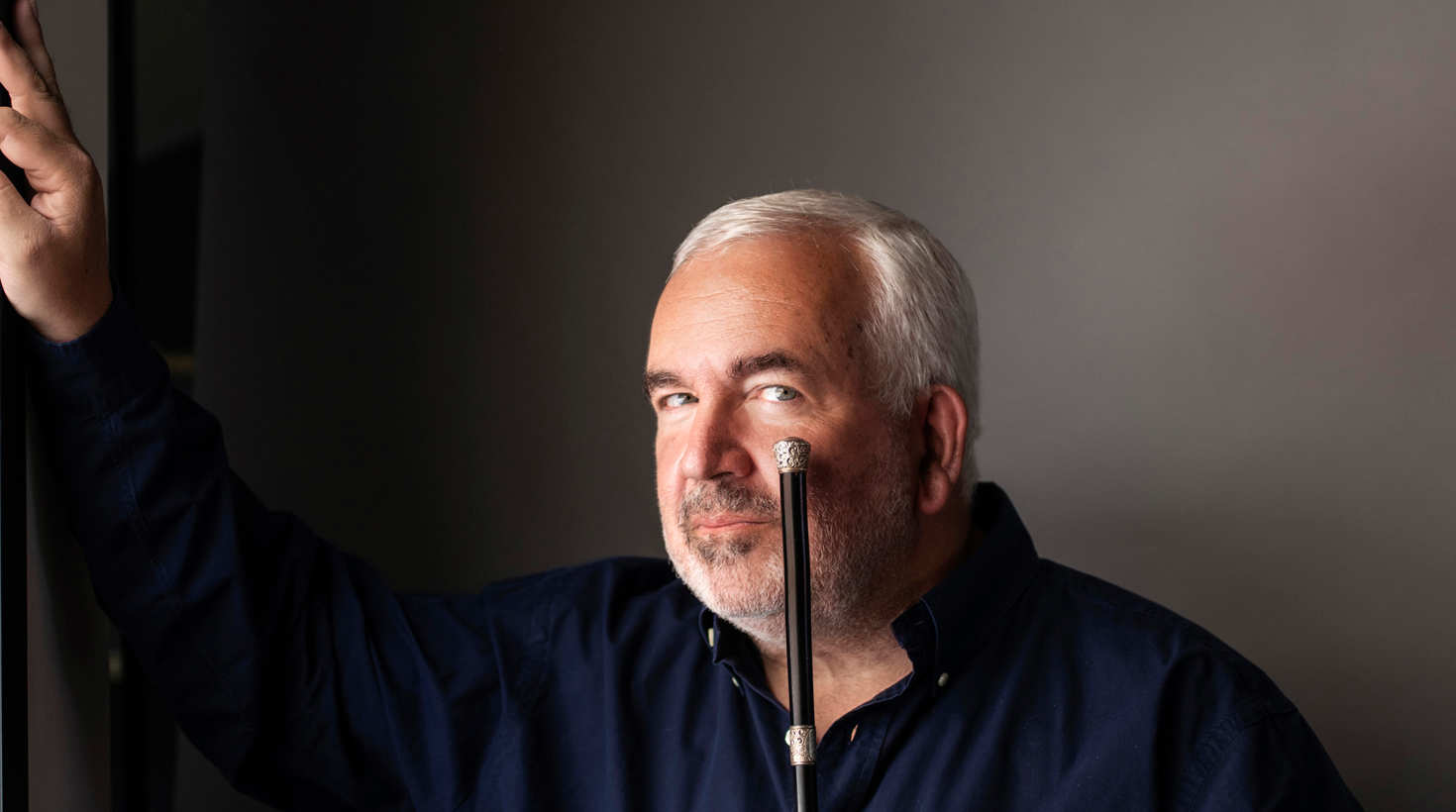
Marc Minkowski returns to the Gran Teatre del Liceu with Les Musiciens du Louvre to conduct 'Orlando' by George Frideric Handel, premiering in concert version on March 24. Mezzo-soprano Aude Extrémo makes her debut in the title role, alongside Ana Maria Labin, Yuriy Mynenko, Alina Wunderlin and Edward Jowle. A production that explores obsessive love, jealousy and madness through a profound musical perspective.




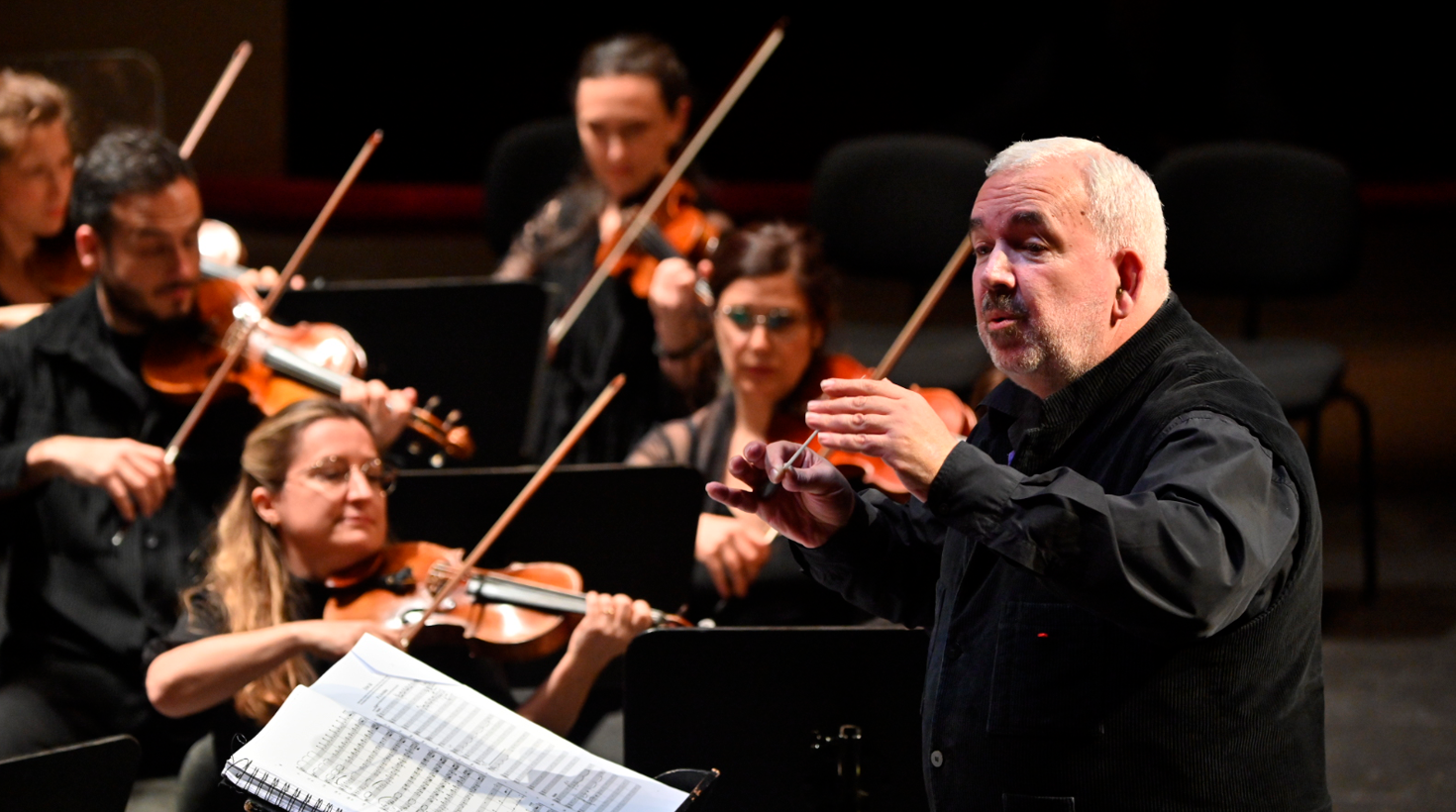
The renowned French conductor Marc Minkowski returns to the Liceu to conduct Orlando, one of the most outstanding operas by Georg Friedrich Handel. Considered one of the most relevant musical figures of his generation, Minkowski will once again lead his ensemble, Les Musiciens du Louvre, to reveal this rich score. Orlando is a key opera seria of the Baroque repertoire that has stood the test of time for its emotional complexity and intricate musical development. A story that blends mythology, love and madness, featuring the iconic voices of Aude Extrémo (Orlando), Ana Maria Labin (Angelica), Yuriy Mynenko (Medoro), Alina Wunderlin (Dorinda) and Edward Jowle (Zoroastro). Loïc Richard signs a simple staging.
The libretto is anonymous, but it is based on Carlo Sigismondo Capece’s L’Orlando, overo La gelosa pazzia, inspired by the epic poem Orlando furioso by Ludovico Ariosto.
Premiere at the Liceu
Orlando premiered on January 27, 1733, at the King’s Theatre in the Haymarket in London. Although it was performed only ten times—suggesting a modest success at the time—it is now considered one of the composer’s most distinctive works. Written between Sosarme, re di Media (1732) and Arianna in Creta (1734), it stands out for its dramatic and musical ambition. This is the first time the opera is presented at the Liceu. In Barcelona, it was performed in concert version on October 5, 1982, at the Palau de la Música Catalana, with the Amsterdam Baroque Orchestra conducted by Ton Koopman and featuring René Jacobs in the title role.
The plot
Orlando, by Georg Friedrich Handel, is one of the most celebrated operas of the Baroque repertoire. It combines mythology, love and madness in a story of great emotional intensity that has endured on stage to this day.
The libretto builds a narrative shaped by inner conflicts and overwhelming passions. The protagonist, the knight Orlando, falls deeply in love with Angelica in the midst of war, but his love is unrequited: she loves Medoro. This rejection triggers a spiral of jealousy and despair that drives Orlando into madness, in one of the most powerful psychological portrayals in Baroque opera.
Handel captures this inner struggle with music of remarkable expressive power, capable of moving from lyrical restraint to dramatic explosion. The arias, such as the famous Verdi prati, become privileged vehicles for expressing suffering and frustration, revealing his ability to turn the voice into a mirror of the characters’ psyche.
Around this conflict, the work explores the fragility of the human mind in the face of love and desire. The relationship between reason and madness becomes one of its central axes, with music rich in ornamentation and contrasts that reflects this emotional instability.
The orchestration, with a prominent use of the basso continuo, adds depth to the sonic texture, while the vocal writing (conceived for the castrato Senesino, one of Handel’s favorite singers) պահանջ a wide vocal range, especially in the celebrated mad scene that closes the second act.
The cast
In this production, Marc Minkowski once again takes the helm of Les Musiciens du Louvre, a leading ensemble in historically informed performance. The cast is led by mezzo-soprano Aude Extrémo, who makes her debut at the Liceu, in the title role of Orlando.
The character of Angelica is performed by soprano Ana Maria Labin. Despite her love for Medoro, Angelica is a noble figure who, at many moments in the opera, appears as a symbol of virtue and honor.
She is joined by countertenor Yuriy Mynenko (Medoro), soprano Alina Wunderlin (Dorinda), and bass-baritone Edward Jowle (Zoroastro), who also makes his debut at the Liceu
With the support of: