

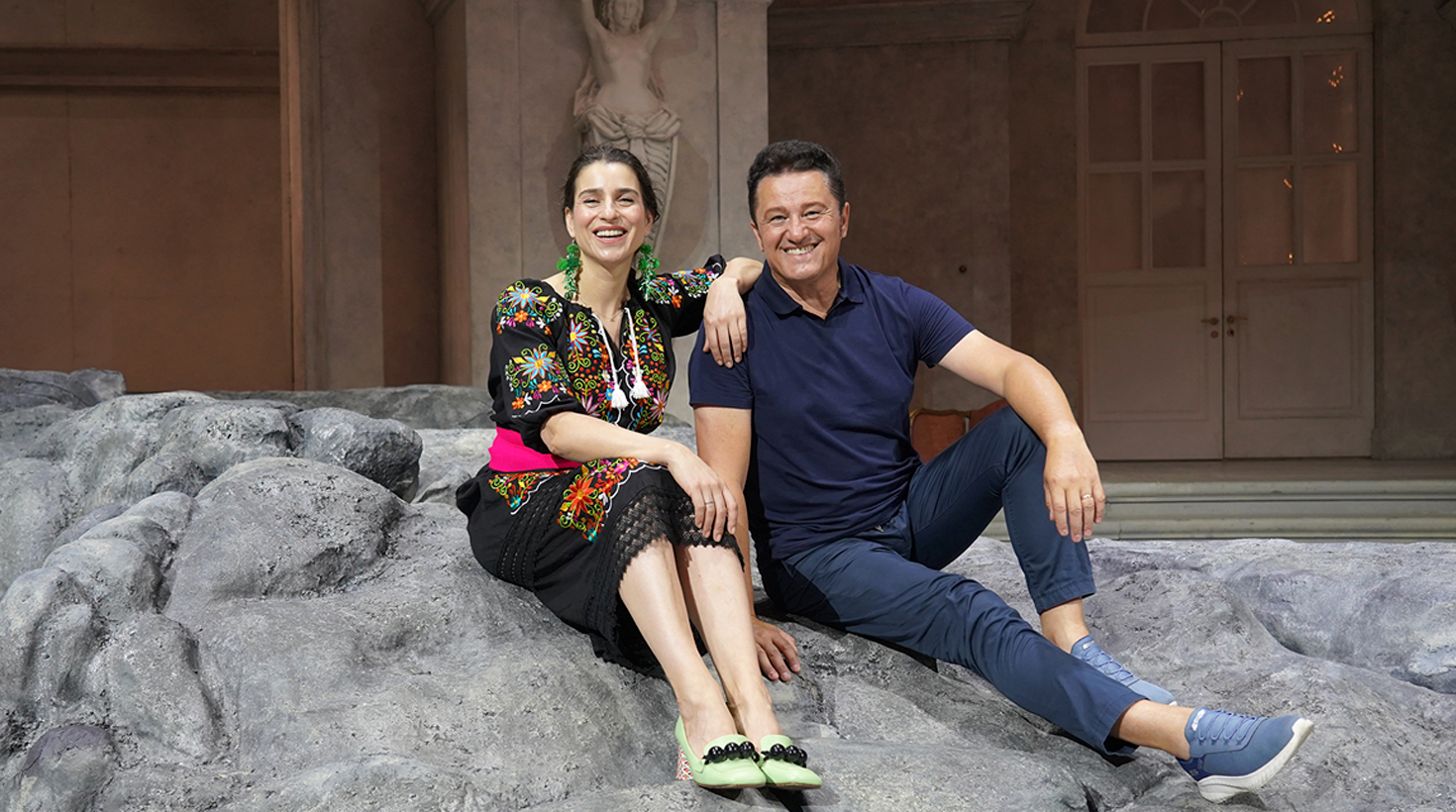
Lithuanian soprano Asmik Grigorian and Polish tenor Piotr Beczała lead a great cast that will make shine the grand and demanding romantic score by Antonín Dvořák. Under the direction of Josep Pons, Christof Loy’s production reflects on the state of incomunication and emptiness when art ceases to function as the driving force of life.




Rusalka by Antonín Dvořák returns to the Gran Teatre del Liceu with a stellar cast led by Asmik Grigorian and Piotr Beczała, under the direction of Josep Pons in his final production of the season. The opera, which will be performed in a total of 7 shows from June 22 to July 7, features a unique performance on July 6 as part of Opera Across Generations to share the passion for opera with the whole family at a special price of €35. Rusalka —a lyrical fairy tale in three acts— premiered in Prague in 1901 and is the most well-known and beloved opera of the Czech lyric theater.
In the staging directed by Christof Loy now arriving at the Liceu —a co-production with Teatro Real Madrid, Palau de les Arts Reina Sofía Valencia, and Staatsoper Dresden— Dvořák’s opera sheds its purest fantastic frames to work on a symbolic level and speak, above all, about misunderstood individuality and the high price paid when one does not fit into social conventions.
The July 4 performance of Rusalka by Dvořák, directed by Christof Loy and conducted by maestro Josep Pons, will be broadcast live via the Liceu OPERA+ platform. This is the first live broadcast since the platform's relaunch last March. Once edited, it will be freely accessible to subscribers.
Rusalka, a masterpiece of Slavic Romanticism
Rusalka, by Antonín Dvořák, is the story of a water nymph who falls in love with a human prince and fails in her attempt to love him. It is the penultimate of the ten operas by the Czech composer, a masterpiece of romantic lyricism that explores the boundaries between the magical world and the human condition. The protagonist, a water spirit who wishes to become a woman to experience love, pays a cruel price for it. The opera delves into Slavic mythology to speak about identity, desire, and loss.
The type of fantastic being represented by the character of Rusalka appears in most Western mythologies. Historically, they have become mermaids, fairies, fairy-tale princesses, and even in the operatic universe with figures like the Rhine daughters in Wagner’s Der Ring des Nibelungen. Dvořák composed Rusalka based on a libretto by the young poet Jaroslav Kvapil and created an opera with the dream of universalizing Czech popular culture and leaving a valuable legacy to his own people.
Inspired by Slavic legends and European Romantic tales such as Hans Christian Andersen’s The Little Mermaid and Friedrich de la Motte Fouqué’s Undine, Rusalka premiered to great success in Prague in 1901. It quickly became one of the most performed Czech operas worldwide. Its best-known aria, the hypnotic “Song to the Moon,” is one of the great moments in the lyric repertoire. Behind the fantastic aura of Rusalka lies a deeply human story: it speaks of the discomfort of not fitting into any world, of impossible desire, betrayal, and the wound of unrequited love. A metaphor for uprootedness and the search for one’s own place.
The production
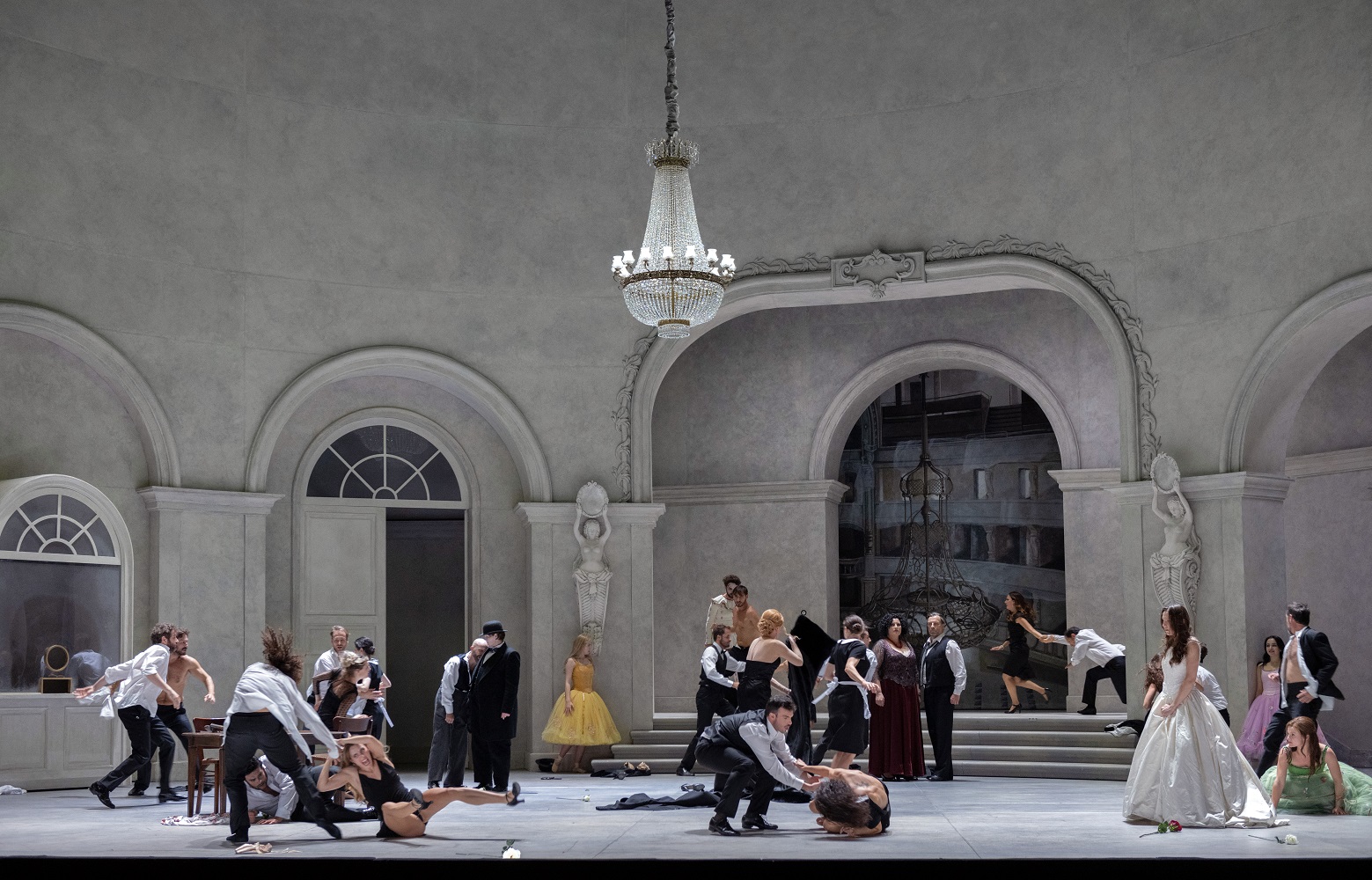
Christof Loy’s production is set in a symbolic space, a lake that represents the intermediate space between life and art. Rusalka dreams of expressing herself but cannot walk, and when she manages to become human thanks to a magical ritual, she still cannot speak. Deprived of any form of expression, she doesn’t fit into any world, which inexorably leads her to frustration and failure, and of course, to the impossibility of being loved. This modern, psychological, and insightful staging proposal explores the conflict that arises when reality and fantasy fail to communicate.
The German stage director sets the opera in a symbolic lake that represents the space between art and life, a tense zone where success and failure blur. Rusalka is an artist without any assigned role who has yet to discover her place. Loy offers a contemporary and poetic reading of the work, where the protagonist — with reduced mobility and on crutches — represents a wounded, misunderstood individuality in constant tension with social conventions. Her original world, inhabited by artists who have seen better days — jugglers, actresses, comedians — no longer has the transformative power of art.
Loy, who aims to build a symbolic plane beyond the textual reading of opera librettos, raises several questions: can absolute art and love exist, or are they ideals that clash with a world where everyone is imperfect? What happens when art cannot change the world for the better? What role do artists who cannot find their place have? Rusalka, who lives in a permanent state of incomunication and anxiety throughout the opera, is a constantly tormented figure: she cannot walk, cannot speak, and cannot go back and regret her decisions.
Key musical moments
The aria Mesicku na nebi hlubokém (Song to the Moon), in the first act, is undoubtedly the most well-known and iconic moment of the opera. Rusalka, in love with a human prince, asks her father, Vodník, to allow her to become a woman. With overflowing lyricism and an unforgettable melody, this aria has become an essential piece in the repertoire for any lyric or dramatic soprano.
Other notable passages appear in the ballet of the second act, Slavnostní hudba. Dvořák’s interest in Bohemian folklore and Slavic culture is reflected not only in the mythology of the story but also in the music: the folk dances bring lightness and contrast to the dramatic density of the work, helping to mark the boundary between Rusalka’s magical world and the material plane of humans. During the wedding celebration, this ballet showcases both the richness of Czech dances and Rusalka’s inability to keep up with them.
The opera culminates in one of the most striking moments in the repertoire: the final duet Miláčku, znáš mě, znáš? between Rusalka and the prince. Unable to speak since becoming human, Rusalka cannot communicate with her beloved. The kiss she gives him causes the prince’s death, in a scene marked by tragic passion and refined orchestration clearly inspired by the Wagnerian tradition.
On stage
The Lithuanian soprano Asmik Grigorian takes on one of the most demanding roles in the dramatic soprano repertoire and confirms herself as the most outstanding Rusalka of the last decade. She will be the lead in six of the seven scheduled performances. In the July 6th performance —part of the Opera Between Generations initiative, which invites family members of all ages to share the magic of opera— she will be replaced by Russian soprano Olesya Golovneva, another acclaimed interpreter of this role.
Grigorian leads a balanced cast, featuring international voices and local talent. The role of the prince, conceived for a Wagnerian-tinged spinto tenor, will be performed by Polish tenor Piotr Beczała, except in the July 6th session, when the role will be assumed by American tenor Ryan Capozzo.
The other principal roles will have a stable cast throughout all performances: Greek bass Alexandros Stavrakakis will be Vodník, the water spirit; Finnish soprano Karita Mattila will perform the foreign princess who seduces the prince; and German mezzo-soprano Okka von der Damerau will bring the witch Jezibaba to life.
Among the secondary roles, Manel Esteve will be Hajny (the forester), David Oller will play Lovec (the hunter), and Laura Orueta will portray Kuchtík (the kitchen helper). The three forest nymphs will be performed by young singers Laura Fleur, Alyona Abramova, and Julietta Aleksanyan.
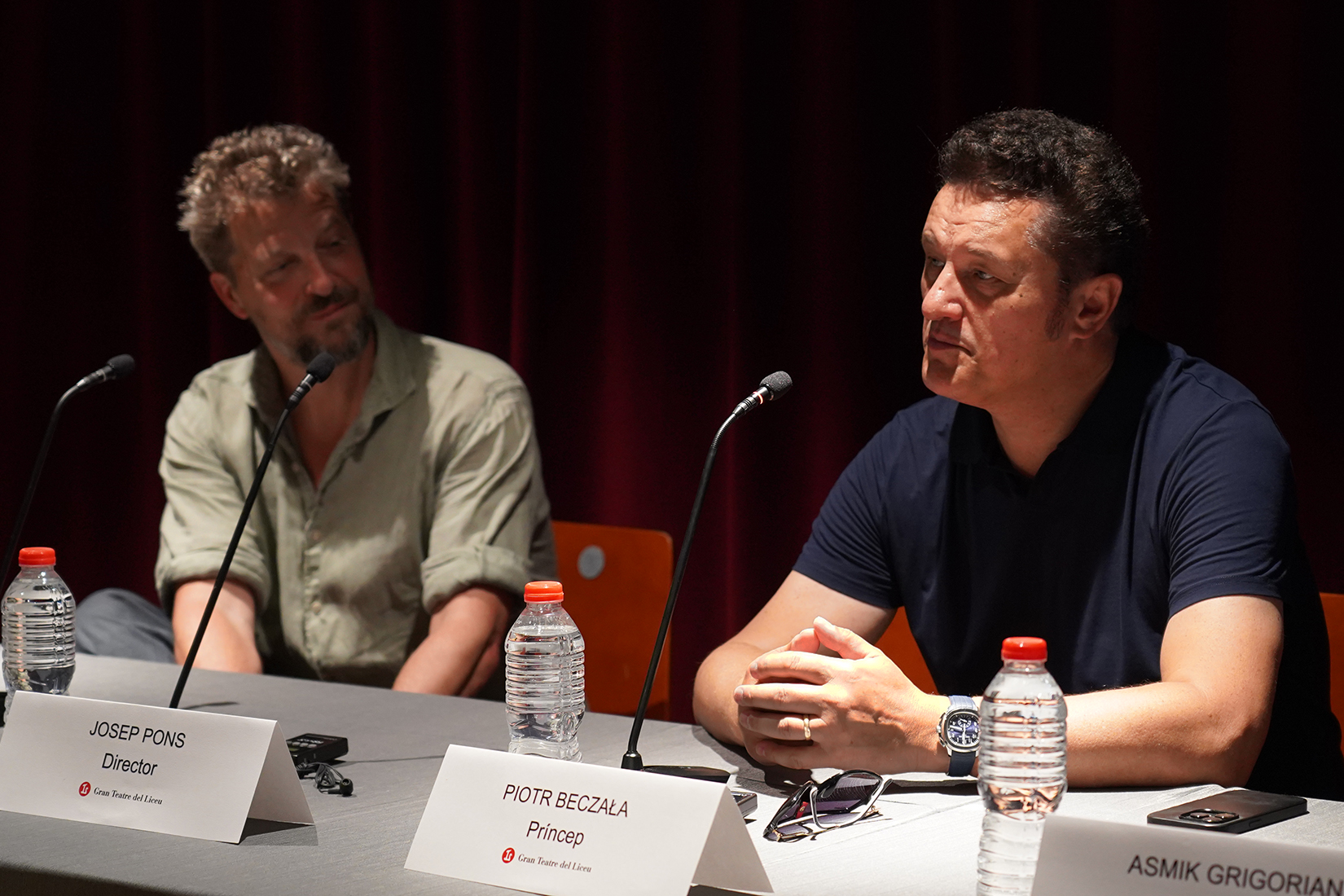
Musical direction will be led by Josep Pons, who will conduct the Gran Teatre del Liceu Symphony Orchestra to bring out the full richness and density of Dvořák’s post-Wagnerian score, in his final production of the season.
With the support of:

|
In collaboration with:

|