


'Tristan und Isolde' is Richard Wagner’s most revolutionary music drama and a landmark work in the history of opera. It explores love as a creative force of the universe. In this production, Bárbara Lluch places the action in spaces of cosmic immensity. Under the musical direction of Susanna Mälkki, the Liceu presents seven performances and the debut of Lise Davidsen as Isolde.




When composing Tristan und Isolde, Richard Wagner was strongly influenced by the ideas of the German philosopher Arthur Schopenhauer, particularly those set out in his major work The World as Will and Representation (1818). One of the issues to which Schopenhauer devoted the greatest attention was love, which he described as one of the most important driving forces of the universe—an inevitable energy to which every human being must willingly surrender, not only to ensure the continuity of our species, but also to find meaning in a life that is, regrettably, destined to fade away.
This idea had such an impact on Wagner that, especially from 1850 onwards, it shaped the most intellectual layers of his work: the tetralogy The Ring of the Nibelung, for example, is imbued with these Schopenhauerian theses, as is Tristan und Isolde. However, there was one crucial point on which Wagner disagreed: for him, love did not have to be destructive, as the pessimistic Schopenhauer claimed, but could instead be an uncontrollable creative energy. His concept of love, clearly idealistic, went beyond time and matter: it did not merely transform this world, but created new spaces beyond reality itself. These ideas, combined with Wagner’s personal experience at the time—his platonic infatuation with the young Mathilde Wesendonck—were what ultimately shaped Tristan und Isolde.
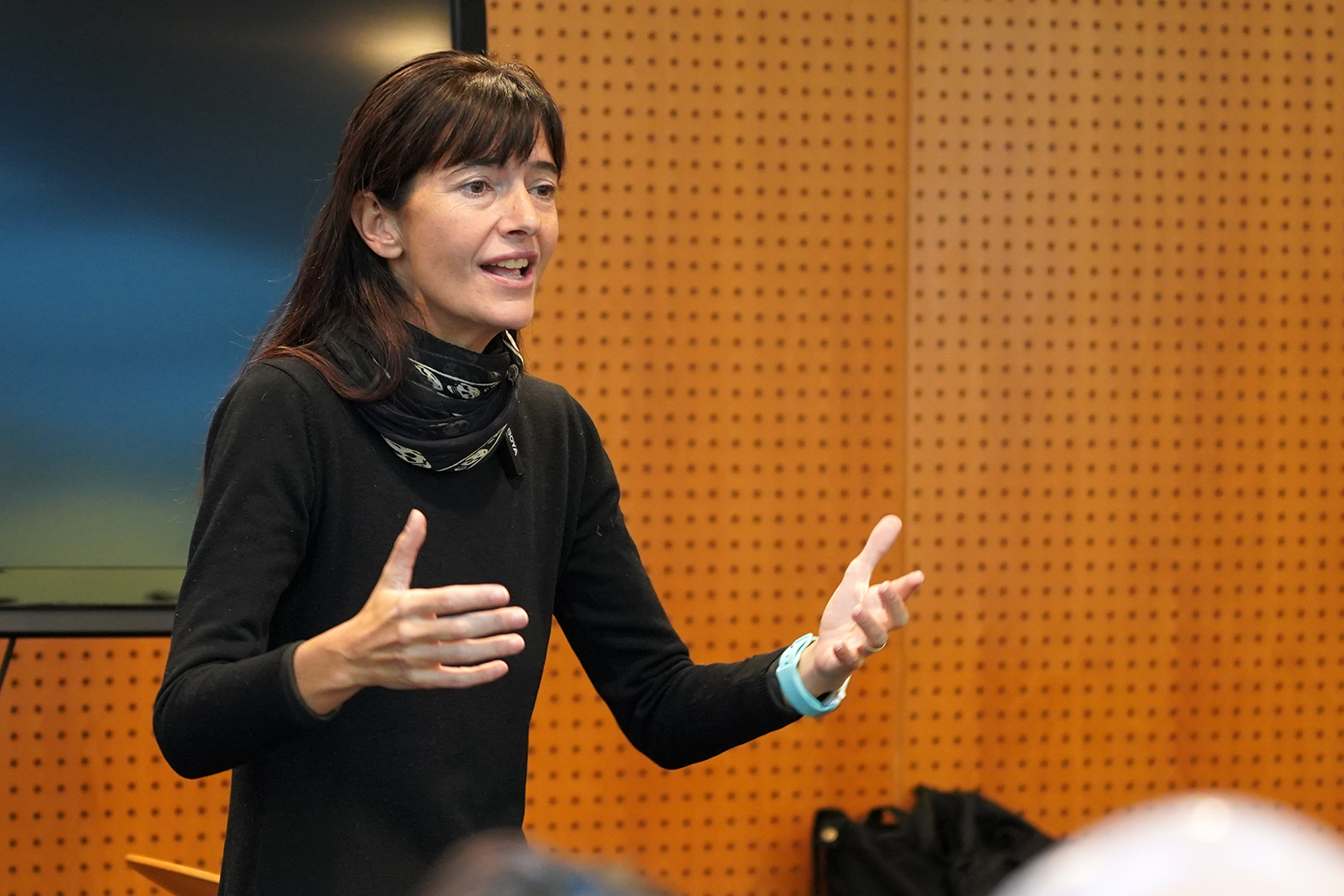
Throughout history, many stage directors have been reluctant—and still are today—to stage Tristan und Isolde, an opera considered too difficult or even impossible. The usual justification is that it is fundamentally an abstract, even metaphysical, opera, and that there is no satisfactory way to bring it to the stage. Any attempt, they say, will be a partial failure, as it cannot fully convey the emotions, poetry, and transcendent meaning of Wagner’s libretto.
«In her production, Bárbara Lluch draws on a personal experience: having felt a love so intense that it makes you escape from the world and become part of the vastness of the universe.»
However, here is a new production of Tristan und Isolde by Bárbara Lluch, presented exclusively at the Gran Teatre del Liceu, which takes on this difficult challenge by proposing clever solutions so that the opera’s two complementary layers—the story and the ideas—can converge into a moving experience. Lluch’s entry point for taking on this responsibility lies in her personal experience: she says she understands the characters because she has experienced total love, feeling it with the same intensity. «I have loved like this,» Lluch explains. «I have lived that sensation of being completely fulfilled by love, feeling almost intoxicated, needing neither food nor drink, only the air to breathe and the presence of the person you love.» Tristan and Isolde, even before drinking the love potion in the first act, are already in love: the magical potion and the surrounding characters—Brangäne, Kurwenal, Melot, King Marke—only serve to activate and accelerate an emotion that already existed, leading the protagonists to want to escape reality and remain in their own bubble without needing anything else.
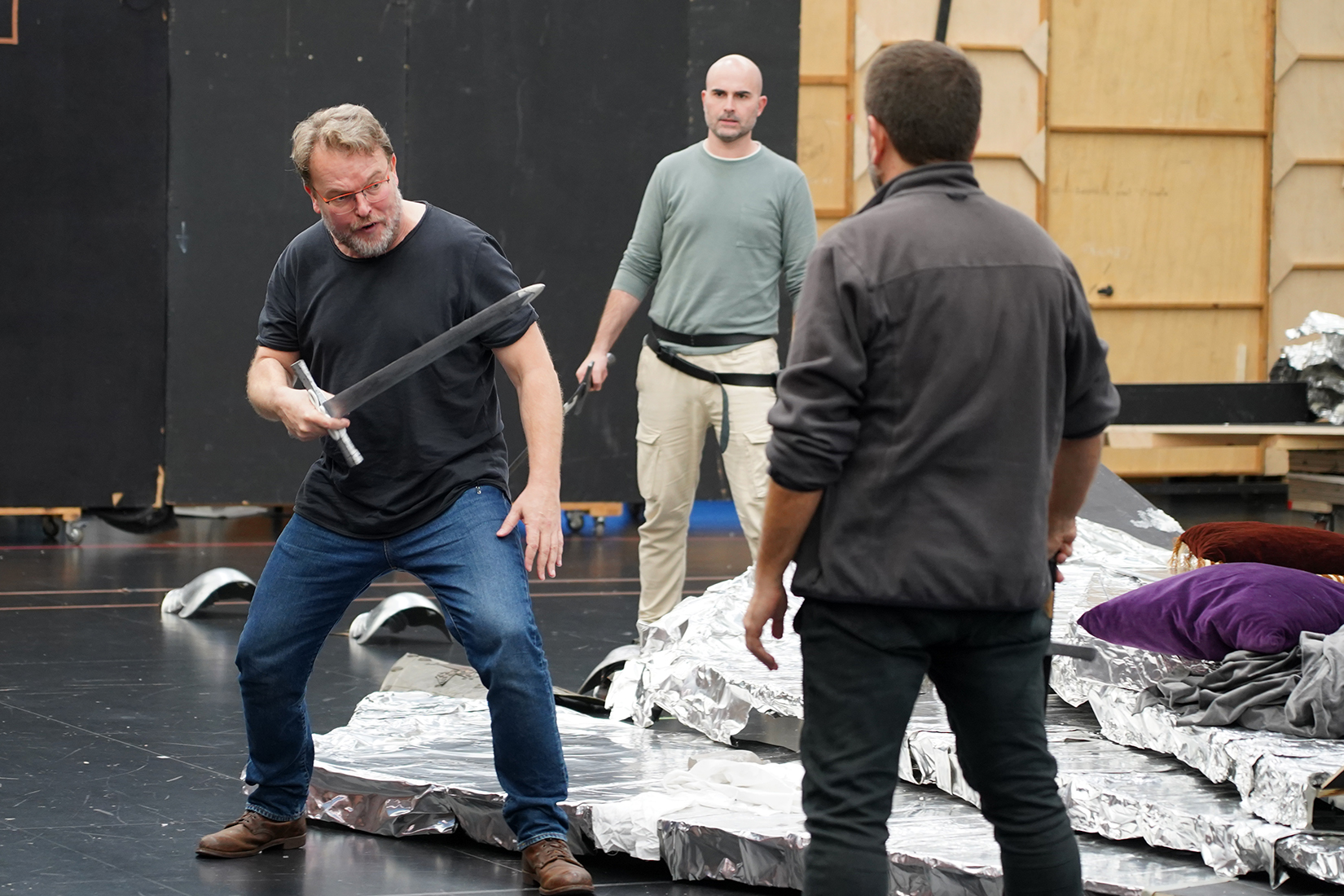
Bárbara Lluch explains that, when planning the production, she never considered a set that would place Tristan and Isolde in a world-recognizable space. «I never considered reducing them to a domestic setting. It would be a mistake to have them eat, sleep… it diminishes them. The language they use is too grand for a chair. It’s like entering a cathedral: nothing can compete with this immensity.» The first image Lluch had to begin developing her production—especially visually—was a starry sky for the second-act duet: the two lovers enveloped by the entire universe, which still feels too small for them, because their love goes beyond infinity. From there, she began to conceive expansive and poetic spaces for all three acts that would be «useful and beautiful, and would not interfere with the libretto or the music.» The set design is by Urs Schönebaum, who has created environments that aim to erase the boundaries of the stage and expand them through a clever play of perspectives and lighting, clearly influenced by painters such as William Turner, master of light in the second half of the 19th century, and Anselm Kiefer, a central figure in mid-20th-century abstraction.
«The set design will, for each of the three acts, create spaces that play with the sensation of expanding the area where the characters are to infinity.»
This entire stage framework is thus designed to reinforce the opera’s central idea: if, according to Schopenhauer, love is inevitable, and according to Wagner it is an uncontrollable and creative energy, Bárbara Lluch’s production presents love as a force that will not stop under any circumstances. «The heart wants what it wants,» Bárbara summarizes, and neither morality, society, nor fear can prevent it from reaching its destination, even if it must be by dying, traveling—as Wagner says—to the «land from which no one returns.» A famous sonnet by Francisco de Quevedo is titled Constant love beyond death, and Tristan und Isolde surpasses this idea: it is even more constant and goes even further, and it is in this experience of the absolute that Bárbara Lluch wants us to immerse ourselves through this cosmic production of Wagner’s masterpiece.