

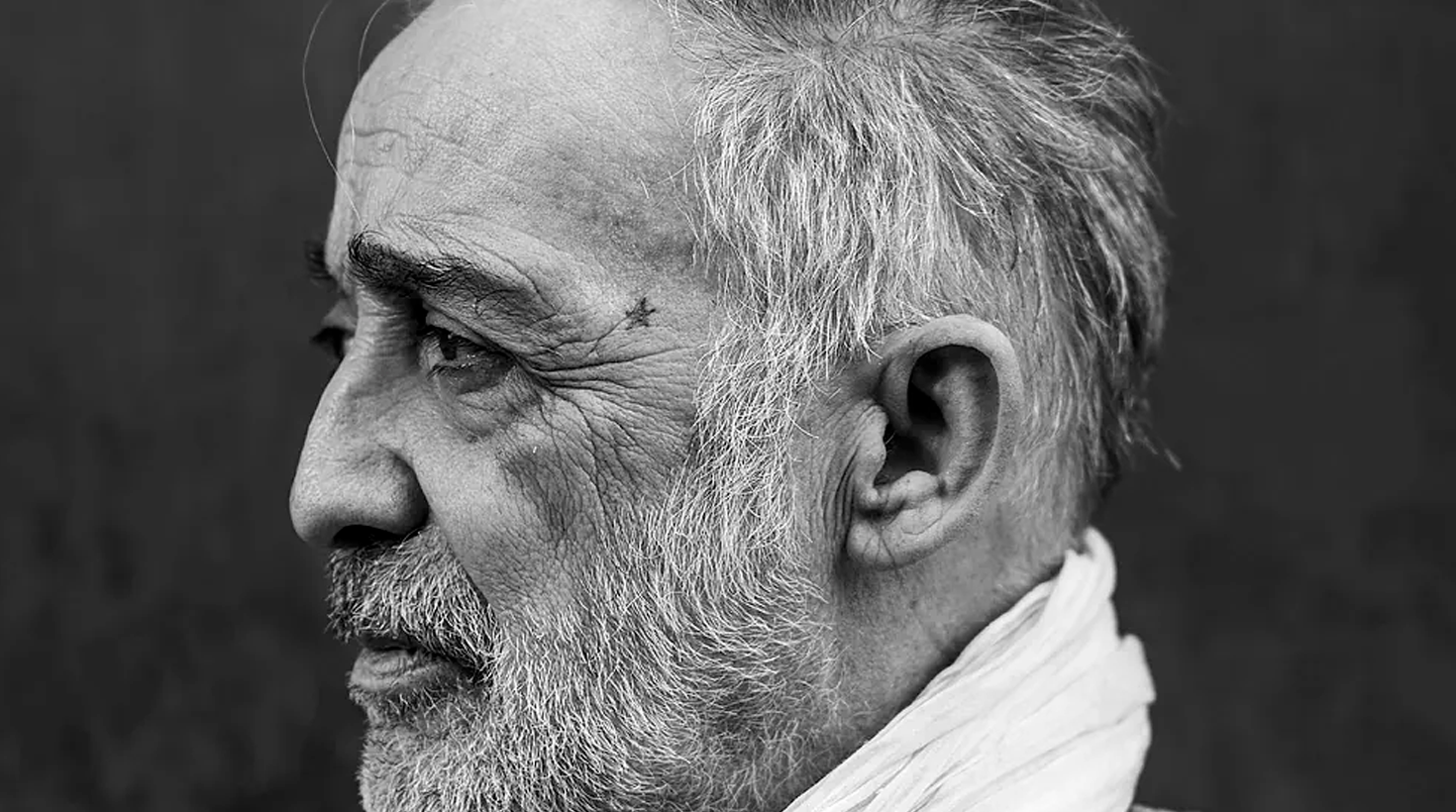
“We will die looking”
Alberto Garcia-Alix
If for Alberto García-Alix (León, 1956) “to photograph is to look head-on at what admits no consolation,” the body of his work is an intense and unflinching visual narrative in which life is exposed without filters or aesthetic alibis. A key figure in contemporary Spanish photography, his work does not seek to beautify reality, but to reveal its fractures and assume the emotional risk inherent in any true exploration of the self.
García-Alix’s photography is structured as a fragmentary autobiography, traversed by experiences of time, the body, desire, loss, and death. Black and white —dense, high-contrast, almost material— is not a formal choice but an ethical stance: a space of gravity in which light becomes cutting and shadow becomes refuge. Portraits, self-portraits, symbolic objects, and scenes of an extreme everyday life form a coherent universe marked by a frontality that admits neither distance nor irony.
In his work, the body is a territory of memory and confrontation. Marked, vulnerable, often wounded bodies appear as witnesses of an existence lived at the limit. García-Alix photographs from within, without condescension or nostalgia, and assumes the responsibility of the gaze as an act of truth. This radical honesty turns his images into spaces of resistance, where identity is not constructed as a heroic narrative, but as persistence in the face of the inexorable passage of time.
Beyond the generational context with which his work is often associated, García-Alix’s photography transcends any historical label. His work engages in dialogue with a classical tradition of portraiture and, at the same time, with a profoundly contemporary sensibility in which the image becomes a place of confession and confrontation with oneself. Each photograph is a declaration of existence, an act of presence that demands to be looked at without defenses.
In the Hall of Mirrors, García-Alix will present a selection of his work, in which he introduces the rawness of the image. The photograph presented there —like an instant fixed in time— opens a space of silence and recognition and invites the viewer to sustain the gaze and accept discomfort as a form of knowledge.