
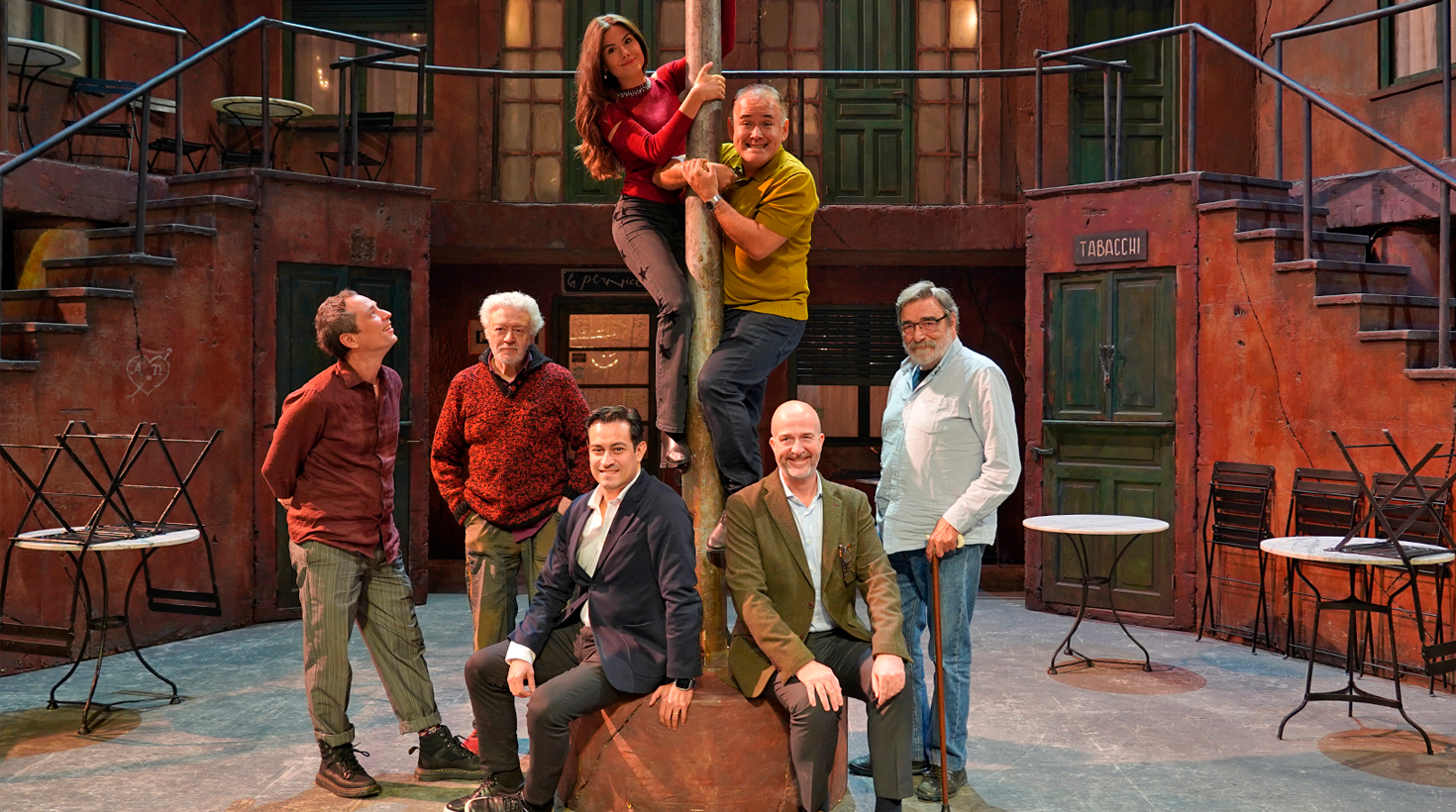
‘L’elisir d’amore’ returns to the Gran Teatre del Liceu with Mario Gas’s acclaimed production, a bel canto classic that has charmed audiences for twenty years. Pretty Yende, Serena Sáenz, and Marina Monzó perform as Adina, while Javier Camarena, Michael Spyres, and Filipe Manu bring Nemorino to life. With Ambrogio Maestri, Fabio Capitanucci, and Simón Orfila as Dulcamara and Diego Matheuz conducting, the Liceu offers an unmissable event for opera lovers.




The Gran Teatre del Liceu will present, from November 22 to December 15, 2025, fifteen performances of its beloved production of L’elisir d’amore by Gaetano Donizetti, directed by Mario Gas. This version, revised in 2005 and now a classic of the Theatre, emphasizes the joy and tenderness of Donizetti’s opera. This year, it will feature three top-level casts, including Javier Camarena, Pretty Yende, Ambrogio Maestri, and Serena Sáenz. Musical direction will be led by Venezuelan maestro Diego Matheuz.
L’elisir d’amore under the stage direction of Mario Gas celebrates 20 years at the Liceu
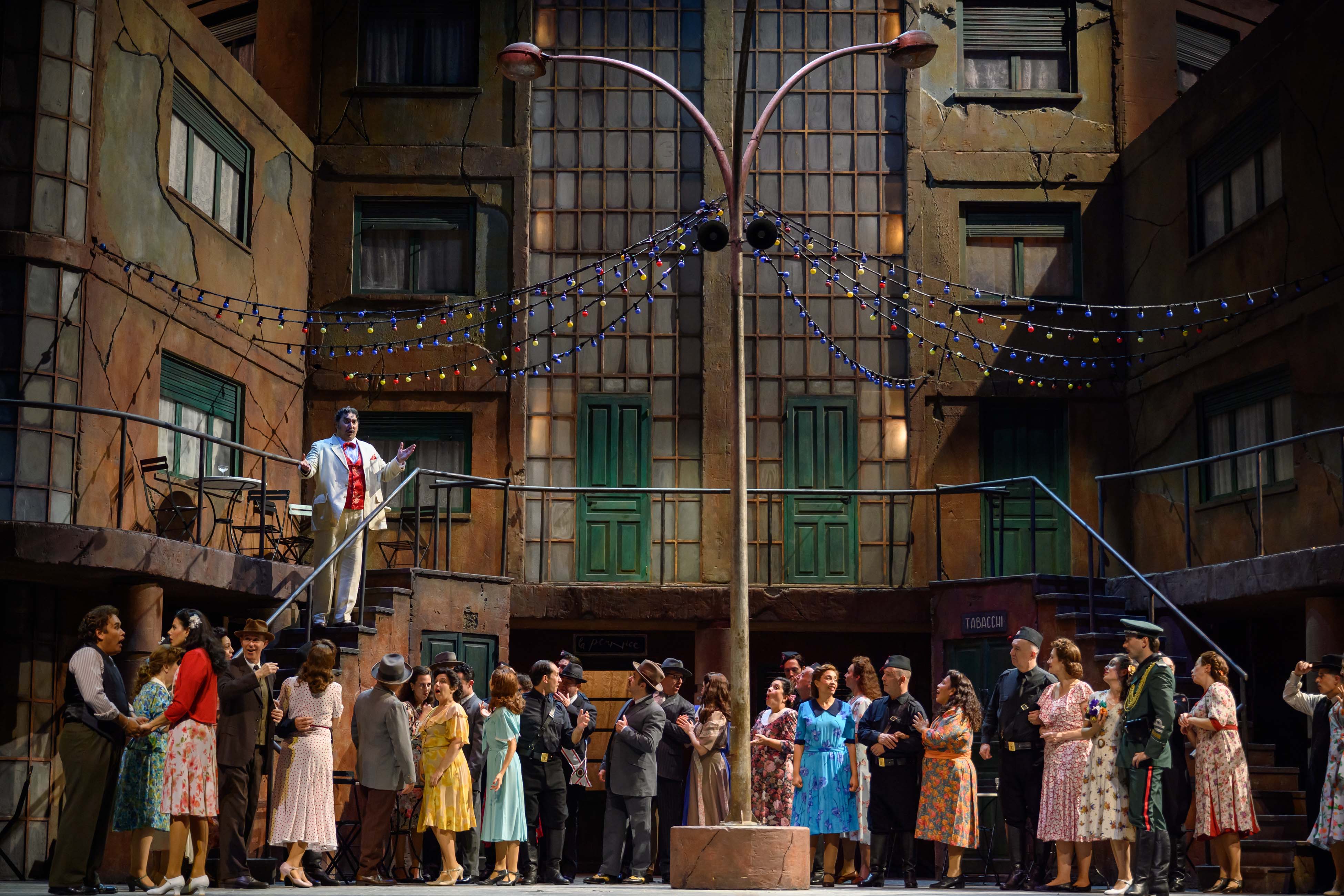
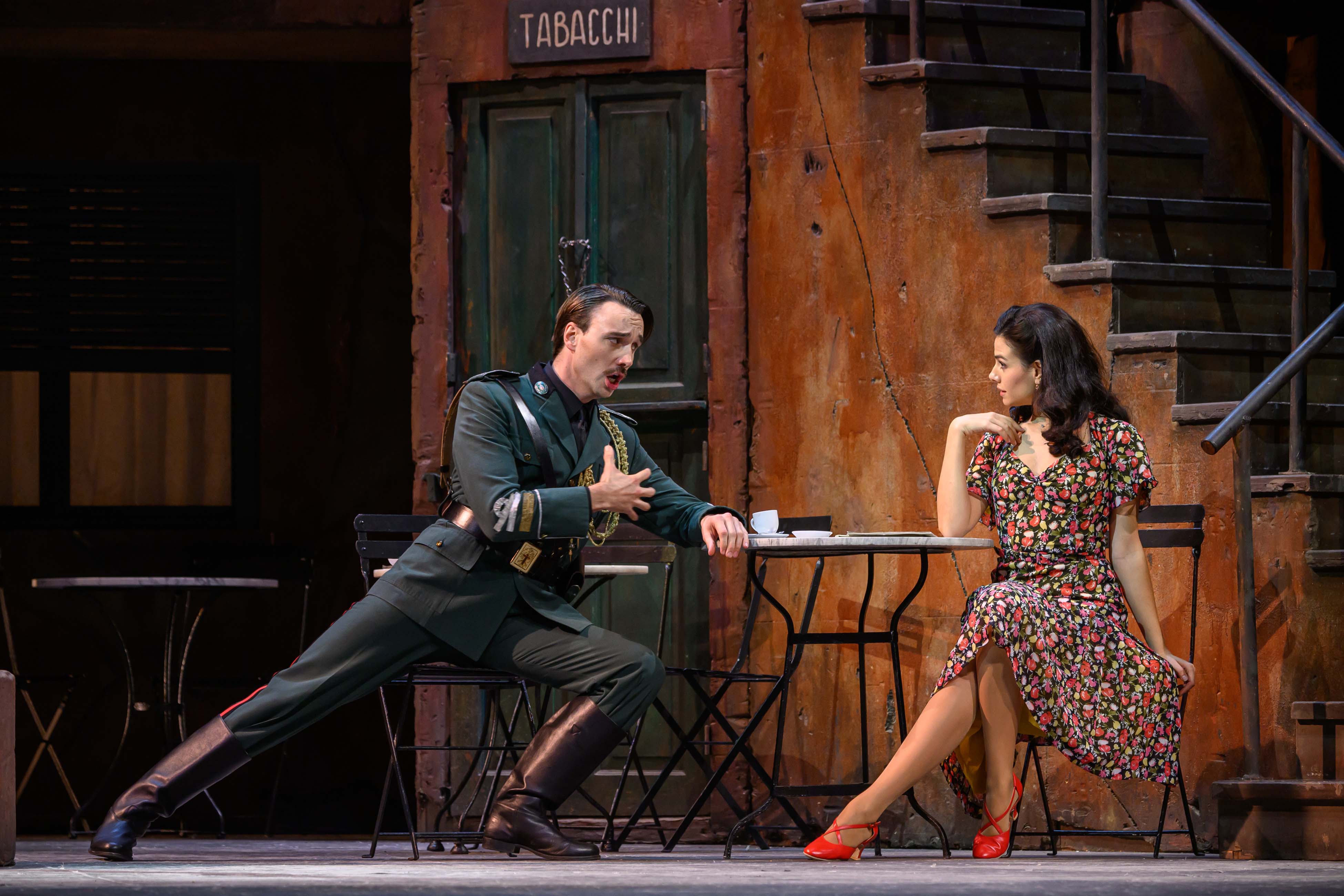
The Mario Gas production returning to the Liceu celebrates 20 years of success at the Theatre. After touring the Grec Festival and the Peralada Festival, this version moves the action to a small Tuscan town in 1922 and enhances Donizetti’s humor with references to musical cinema and Fellini’s universe. Gas creates a stage celebration full of nostalgia and melancholy that continues to resonate with audiences today.
This is a production with a long history, over 40 years, which has remained alive because it fully aligns with the spirit of the opera, highlights its virtues and comic potential, and allows the story to flow naturally. However, it is not a simple proposal: it incorporates a subtle political commentary and intelligently synthesizes a continuity line of comedy, from the 18th century to the golden age of musical cinema. It’s a way of bringing L’elisir d’amore closer to today’s audience, reinforcing the emotional connection with collective memories of classic comedies.

The origin of this staging dates back to Barcelona in the early 1980s, when Mario Gas became interested in opera and presented several productions at the Grec Festival. L’elisir d’amore premiered there in 1983 with great success, but the production seemed destined to close after the run ended. The fond memory, however, led the Peralada Festival to revive it in 1993, coinciding with the tenth anniversary.
The Liceu adopted it in the 1997/1998 season, during the temporary stage at Teatre Victòria following the 1994 fire. A few years later, the Theatre commissioned a revision from Gas, which premiered in 2005: this is the version that remains alive today, twenty years later. At the Liceu, the opera has been performed five times —including at Teatre Victòria— and four times since the 2004-2005 adaptation. It was also staged in the 2012-2013 season (with Nicole Cabell, Aleksandra Kurzak, Javier Camarena, and Rolando Villazón) and 2017-2018 season (with Jessica Pratt, Pavol Brešlík, Paolo Bordogna, and Roberto de Candia).
Plot
L’elisir d’amore is one of the last great comedies of Italian bel canto, a direct heir of the opera buffa that shone in the 18th century and which reaches a new height of brilliance with Donizetti. The opera Le philtre by Auber is its French predecessor, alongside an 18th-century Italian story. The opera combines humor, romance, and particularly vivid musical characterization.
The story follows Nemorino, a naive and kind-hearted peasant who is in love with Adina. But Adina does not return his affection. When a charlatan named Dulcamara —who pretends to be a doctor and sells “magic” remedies— arrives in town, Nemorino asks him if he has the love potion of Queen Isolde, which he heard Adina likes. This potion supposedly will make anyone fall in love with him. Dulcamara sells him cheap wine, making him believe it has magical effects. At first, Nemorino hesitates because Adina agrees to marry Sergeant Belcore.
However, when a wealthy uncle dies and leaves him a fabulous inheritance —without him knowing— all the girls in town want to marry him. Finally, Adina acknowledges her love, and the couple has a happy ending. It is a simple plot, full of misunderstandings and successful comedic formulas, but it also has an idealistic —ultimately very romantic— angle that captivated audiences and gave the opera a sense of modernity.
With clearly defined characters, comedic situations that unfold naturally, and some of Donizetti’s most memorable melodies, L’elisir d’amore retains its freshness nearly two centuries after its premiere.
Must-hear musical highlights of L’elisir d’amore
The opera begins with a perfect introduction of its protagonists. Nemorino expresses his naïve love for Adina in the famous “Quanto è bella, quanto è cara”, while she responds with the refined and highly agile “Della crudele Isotta”, evoking the myth of Isolde and hinting at her romantic idealism. This initial contrast sets the characters and establishes the bel canto tone of the work, with vocal lines full of elegance and flexibility.
The first act also introduces one of Donizetti’s great comic creations: Doctor Dulcamara. In “Udite, udite, o rustici!”, the famous traveling salesman appears in a whirlwind syllabic style that demands lightning-fast articulation and revives the essence of the early Ottocento basso buffo. His entrance fills the scene with energy, humor, and rhythm, positioning the character as the driving force of the plot.
The moment of greatest intensity comes in the second act with the opera’s most popular romance, “Una furtiva lagrima”. Here, Nemorino believes he sees a sign of love in Adina’s eyes and expresses it in a melodic line of absolute simplicity and beauty. The aria paves the way for the final duet between the two protagonists, a demanding and radiant climax that concludes the opera with a burst of agility and emotion.
Leading international and national voices on stage
L’elisir d’amore will feature a total of fifteen performances over three weeks, requiring multiple performers for the main roles. The parts of Nemorino and Adina, as well as the secondary but essential characters Belcore and Dulcamara, will be shared among up to three different singers, forming a triple cast that combines established stars and recognized local talent.
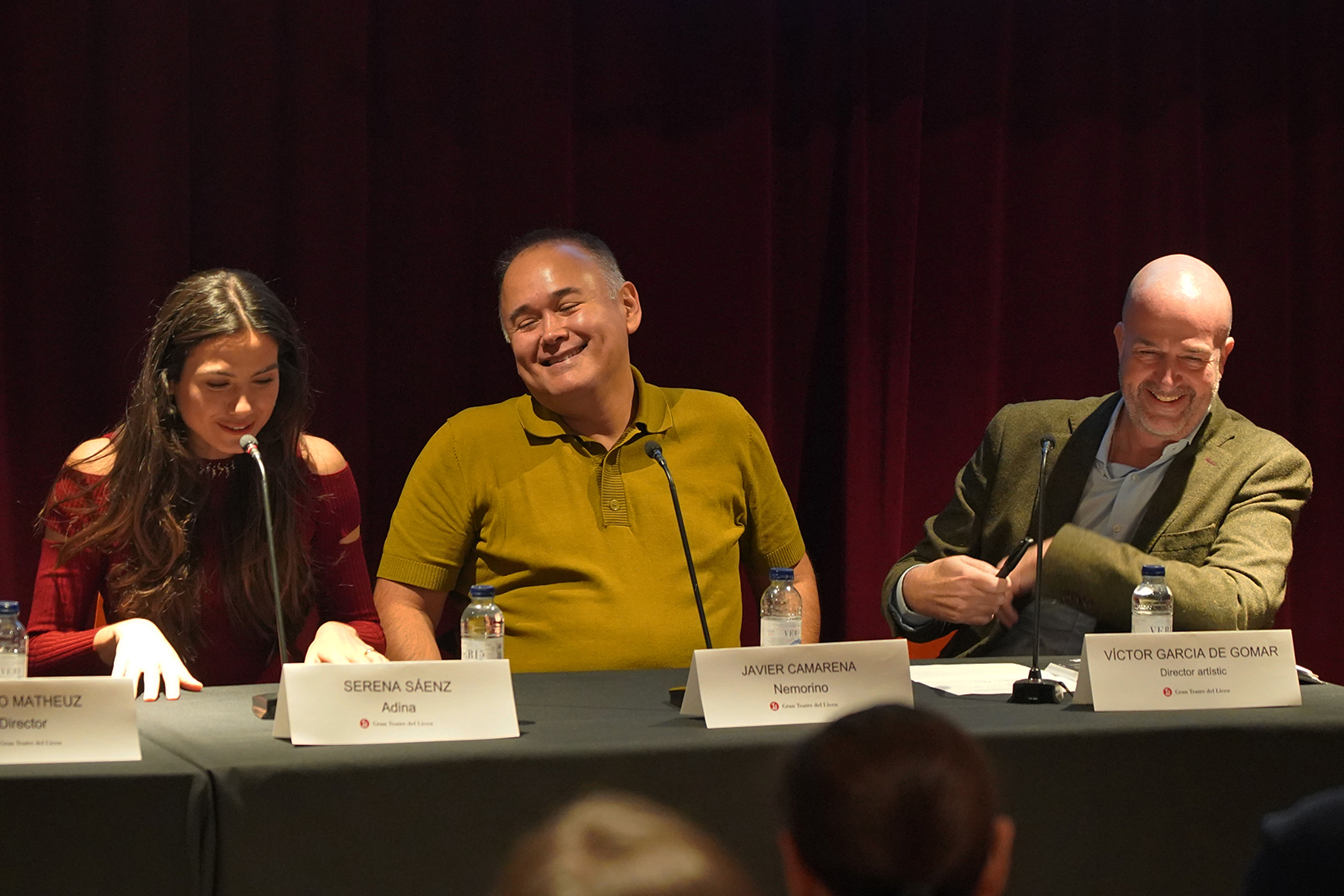
The role of Nemorino, written for a light tenor, will be performed by the Mexican Javier Camarena, a master of roles requiring agile and flawless vocal technique, as well as by the American Michael Spyres and the New Zealander Filipe Manu, both established figures on the international operatic circuit.
The other essential role, Adina, will feature three great lyric sopranos: South African Pretty Yende, one of the world’s leading bel canto voices, will alternate performances with two established national sopranos. Barcelona-born Serena Sáenz debuts in the role of Adina; in 2015, she sang in a Catalan adaptation of the opera, El Màgic Elixir by Alberto García Demestres, at the Teatre de Sarrià under the direction of Joan Font. Valencian soprano Marina Monzó makes her debut at the Gran Teatre del Liceu in this iconic role.
The character of Dulcamara, the famous traveling salesman, will have three performers. Particularly notable is Ambrogio Maestri, one of the Liceu audience’s favorite basses, who has returned multiple times to the Theatre and brings to the role all his comic talent, stage presence, and mastery of basso buffo. The Dulcamara cast is completed by Fabio Capitanucci and Simón Orfila, who will alternate performances with equal skill and wit.
The other baritone role, Sergeant Belcore, will be sung by three young singers, including the English Huw Montague Rendall and two brilliant talents from the Catalan scene, Jan Antem and Carles Pachon. The opera’s fifth character is Gianetta, with a smaller stage presence, performed by two promising young sopranos, Anna Farrés and Núria Vilà.
The chorus also plays a key role in L’elisir d’amore —both vocally and dramatically, amplifying the comic power of Mario Gas’s production—, and all this artistic talent will be led by Venezuelan maestro Diego Matheuz, whose career has risen in recent years and is now fully consolidated internationally, having conducted leading orchestras worldwide in symphonic and opera programs. Matheuz has previously conducted at the Liceu —specifically Donizetti in his comic vein, Don Pasquale, in the 2014/2015 season—.
The sculptor Gonzalo Guzmán presents El dolmen de Nemorino at the Gran Teatre del Liceu
The sculptor Gonzalo Guzmán (Madrid, 1991) presents the installation El dolmen de Nemorino at the Gran Teatre del Liceu, a monumental work nearly five meters high, conceived especially for the Hall of Mirrors. The installation will be inaugurated on November 22, 2025, coinciding with the premiere of Gaetano Donizetti’s L’elisir d’amore.
The coincidence is no accident. The origin of the work is directly linked to the artist’s family history. His father, Joaquín, came to Barcelona as a young man to study singing with Maestro Puig, with the dream of becoming a professional opera singer. His greatest wish was to one day perform on the Liceu stage. However, while preparing Una furtiva lagrima, the most emblematic aria of L’elisir d’amore, he suddenly lost his voice. That episode changed the course of his life: he could not continue his career as a tenor, but he always maintained a deep connection with music and art, a sensibility he passed on to his son from a young age.
“This work is a way of closing a circle: of returning, in the form of sculpture, a part of that emotion he has conveyed to me since childhood, and of making that voice somehow inhabit the Liceu again,” Guzmán explains.
The piece rises like a contemporary dolmen of stainless steel, set atop a small mound of earth that interacts with the hall’s golden architecture and mirrors. In its monumental scale and primitive simplicity, the work reflects the artist’s own life and creative process: a constant dialogue between what he wants to do and what the material allows.
Guzmán conceives the sculpture as a process of personal growth, an exercise of trust in the unfolding of events. “I allow the sculpture to happen —he explains—. It is a way of understanding life: things happen because they can only happen in one way, the way they do. A sculpture can only exist as it has appeared, with all the accidents and conditions that made its form possible.”
This same principle permeates his father’s story. The moment he lost his voice could have been a rupture, but it became acceptance and learning. Sometimes, seeing him practice opera fragments, Guzmán recognizes in that gesture a form of connection: an emotional continuity with that passion which did not disappear, it only changed form.
For the artist, the true significance lies in how we face what happens to us and the perspective we project onto it. Like Nemorino, the protagonist of Donizetti’s L’elisir d’amore, who discovers hope in a single tear that drives him forward, El dolmen de Nemorino is an invitation to trust the process, to find in every transformation a form of permanence.
In collaboration with: