

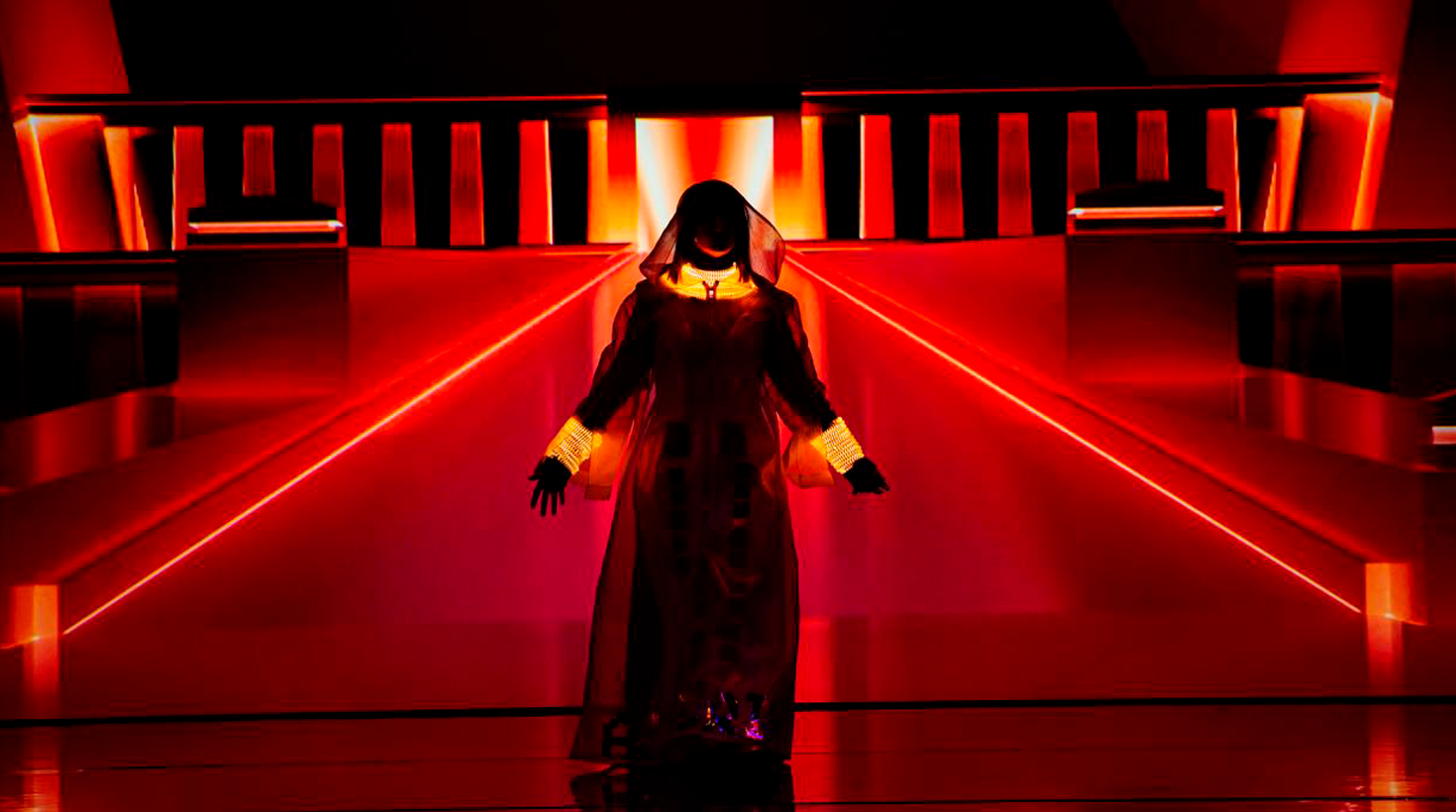
El Gran Teatre del Liceu and the Fundació Òpera Catalunya present 'La Jove Aïda' in Tarragona, a new operatic production that will tour five Catalan cities in 2026. This reinterpretation of Verdi’s 'Aida' combines opera, technology, and a retro-futuristic aesthetic inspired by video games. With dramaturgy by Jordi Casanovas, musical direction by Daniel Perpiñán, and a strong educational project from LiceuAprèn, the production aims to bring opera closer to children and young audiences.




The new production La Jove Aïda will tour Catalonia before arriving at the Liceu. This opera for children and adolescents will premiere on February 7, 2026, in Tarragona, and will then continue on a tour across several venues in the Òpera Catalunya theater network, thanks to the collaboration with the Fundació Òpera a Catalunya (FOC). This project, which is accompanied by a comprehensive educational program, will reach the Gran Teatre del Liceu during the 2026/27 season while continuing its tour across the region.
La Jove Aïda is a project conceived by the Liceu with the support of Joan Planes Vila, founder of the Fluidra group and the Fundació Fluidra, who believed in the project from the start. The performances pay tribute to his legacy and commitment to culture and education.
The five municipalities participating in this project for 2026 are Sant Cugat, Tarragona, Girona, Cornellà de Llobregat, and Figueres (between this season and the next). For 2027, relationships have already been established with several theaters in Catalonia to host the production, and work is underway to expand the tour to other municipalities that have shown interest.
La Jove Aïda is a creation by Jordi Casanovas, Marian Márquez, and Onionlab. It offers a reinterpretation of Verdi’s iconic Aida with arrangements, adaptation, and musical composition by Marian Márquez that combine the essence of the original opera with new compositions. The staging and dramaturgy by Jordi Casanovas explore the boundaries between reality and fiction and place the work within a retro-futuristic aesthetic inspired by early video games. The visual artistic direction is by Onionlab, which through digital scenography pays homage to the iconic sets of Josep Mestres Cabanes. Daniel Perpiñán serves as the musical director of the production.

The cast of La Jove Aïda will feature soprano Rosa Maria Abella (Aina / Aïda); baritone Joan Garcia-Gomà (Ramon / Amonasro); tenor Arnau Torres (Radamès); and mezzo-soprano Yasmin Forastiero (Amneris). The instrumental performance of the work will be carried out by an ensemble from the Orquestra Simfònica del Vallès.
The first tour of La Jove Aïda across the region will visit the Teatre Auditori Emma Vilarasau in Sant Cugat on February 1 (pre-premiere); and the Teatre Tarragona on February 6 and 7 (premiere). Next season, it will go to the Auditori de Cornellà on November 15 and 16; Girona on November 22 and 23; and Figueres on November 29 and 30. The production will premiere at the Gran Teatre del Liceu at the start of the next season, in October.
This season, the Gran Teatre del Liceu celebrates the 25th anniversary of El Petit Liceu, a key milestone in the theater’s history that reinforces the institution’s commitment to bringing opera to people of all ages. El Petit Liceu continues to grow with the creation of new productions that capture the essence of opera through fresh perspectives and in connection with other visual and performing arts.
Meanwhile, the educational program LiceuAprèn opens new opportunities for access to culture and the Liceu through initiatives and projects developed around this artistic programming.
On the occasion of the 25th anniversary of El Petit Liceu, the Gran Teatre del Liceu will premiere a total of four new productions in the 25/26 season: Simfònic en família, Al cor del Liceu, and La Jove Aïda, as well as a new production of Trencanous-Jazz, which this season moves to the Main Hall with a completely renewed conceptualization and staging.
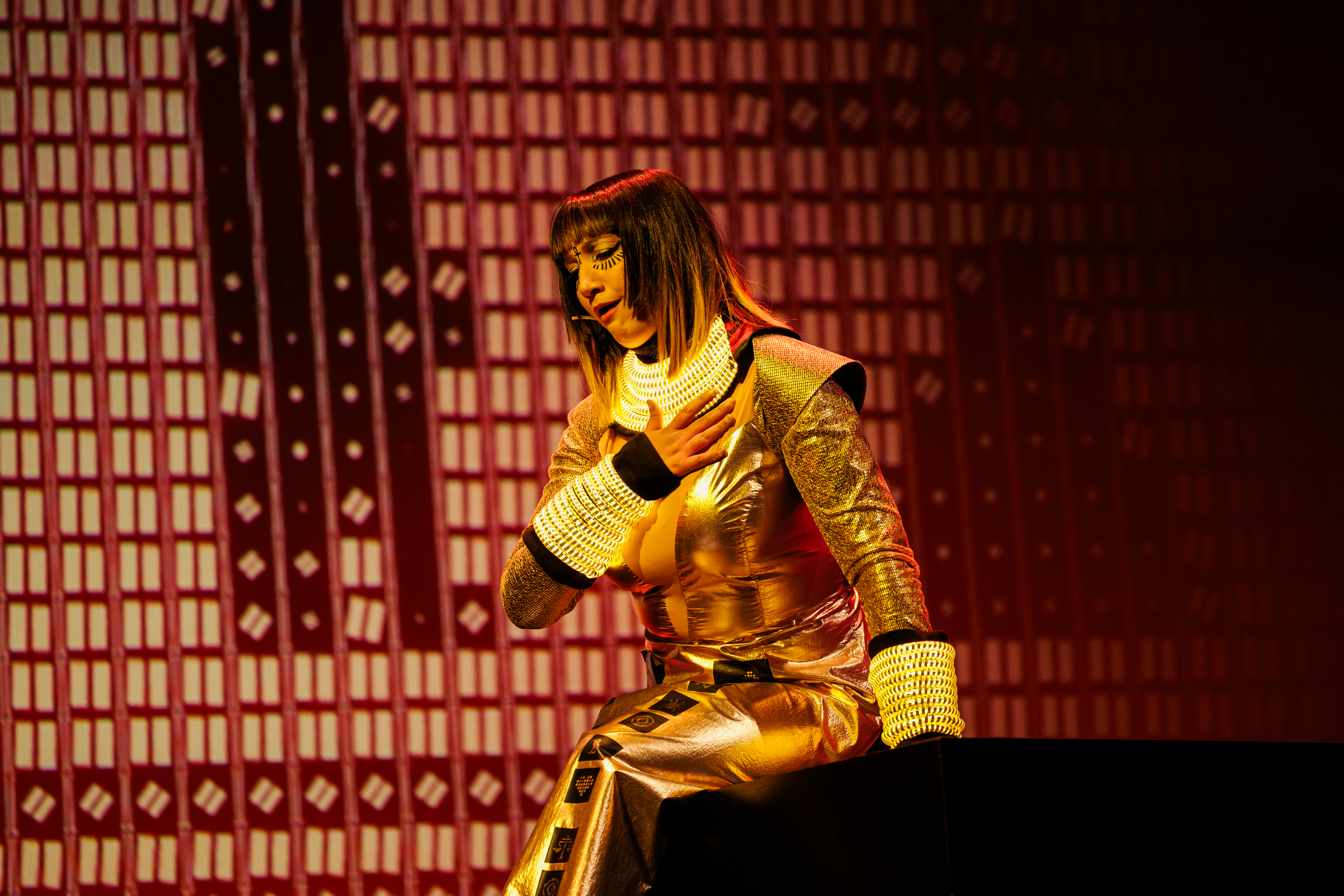
Innovative scenography through audiovisual design and technology
Onionlab’s scenographic proposal is based on the iconic production of Aïda presented at the Gran Teatre del Liceu with scenography by Josep Mestres Cabanes, offering a contemporary reinterpretation through audiovisual design and technology.
The scenography, conceived primarily as an audiovisual device, brings a modern aesthetic to the production and allows the iconic sets of Mestres Cabanes to be revisited from an innovative perspective. This approach facilitates the touring of the production and reinforces a commitment to sustainability by reducing physical elements and optimizing technical resources.
The plot
La Jove Aïda tells the story of Aina, a shy but brilliant video game developer who is about to present a groundbreaking innovation at an international virtual reality conference at the Gran Teatre del Liceu. For the demonstration, she creates a virtual world inspired by Verdi’s Aïda, the opera most frequently performed historically at the Liceu, reinterpreted with a retro-futuristic aesthetic reminiscent of early video games.
A technical error, however, traps her inside this universe, where she herself takes on the role of Aïda and discovers that fiction is built from her own memories, desires, and fears. In her attempt to find a way out and avoid the tragedy of the original opera, Aina learns that not everything can be controlled and that imperfection is part of both fiction and life. The journey culminates with her return to the real world, where she shares not only the technology she created but also reflections on empathy, dramatic conflict, and the blurred boundaries between reality and fiction.
La Jove Aïda is presented with a technological and audiovisual staging that immerses the audience in a retro-futuristic aesthetic inspired by early video games, while also allowing a contemporary reinterpretation of the iconic scenography that Josep Mestres Cabanes created in 1945 at the Liceu for Aïda.
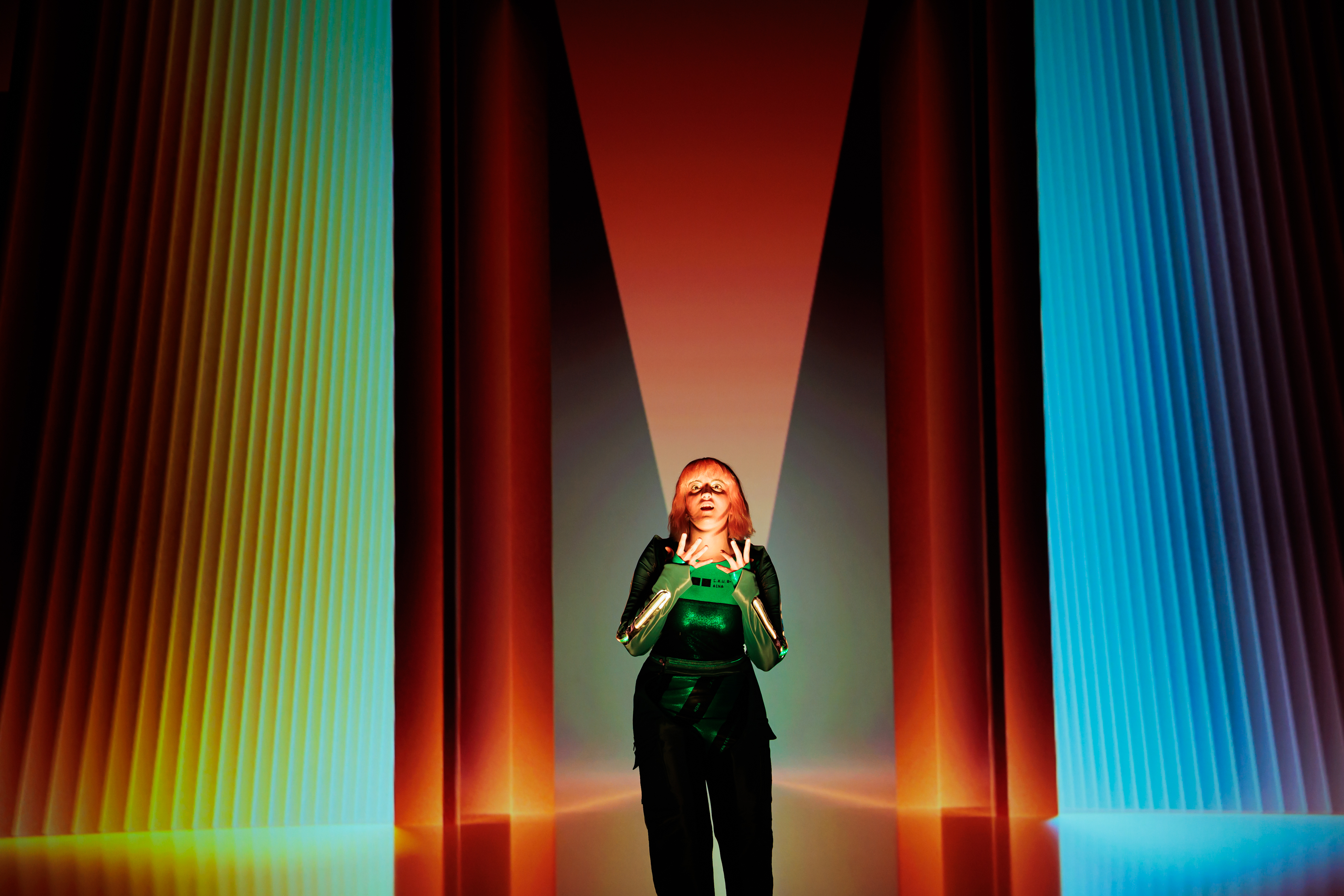
The music
The Òpera a Catalunya Circuit
The Fundació Òpera a Catalunya (FOC) is composed of the Associació d’Amics de l’Òpera de Sabadell, the Orquestra Simfònica del Vallès, the Fundació Banc Sabadell, and the Fundació Fluidra, and receives support from the Departament de Cultura de la Generalitat de Catalunya, the Ajuntament de Sabadell, the Ministerio de Cultura y Deporte – INAEM, the Diputació de Barcelona, and other institutions, sponsors, collaborators, and patrons.
Among FOC’s objectives are the creation, production, direction, presentation, and promotion of operatic and lyrical productions that make up the Temporada d’Òpera de Sabadell and the Òpera a Catalunya cycle, a circuit also including the cities of Sant Cugat del Vallès, Manresa, Granollers, Reus, Girona, Vic, Tarragona, Lleida, Viladecans, Barcelona, Figueres, and Cornellà de Llobregat. The commitment of these cities and institutions makes it possible for Catalonia to have a unique model that enables the dissemination and democratic access to opera across the region in an efficient and sustainable manner.
True to its mission of promoting opera and culture in general, FOC also works on developing artistic, social, and educational projects that use opera and music as both a tool and a central axis, making the musical and cultural experience accessible to everyone, and contributing to a broader understanding and projection of opera in all possible areas.