

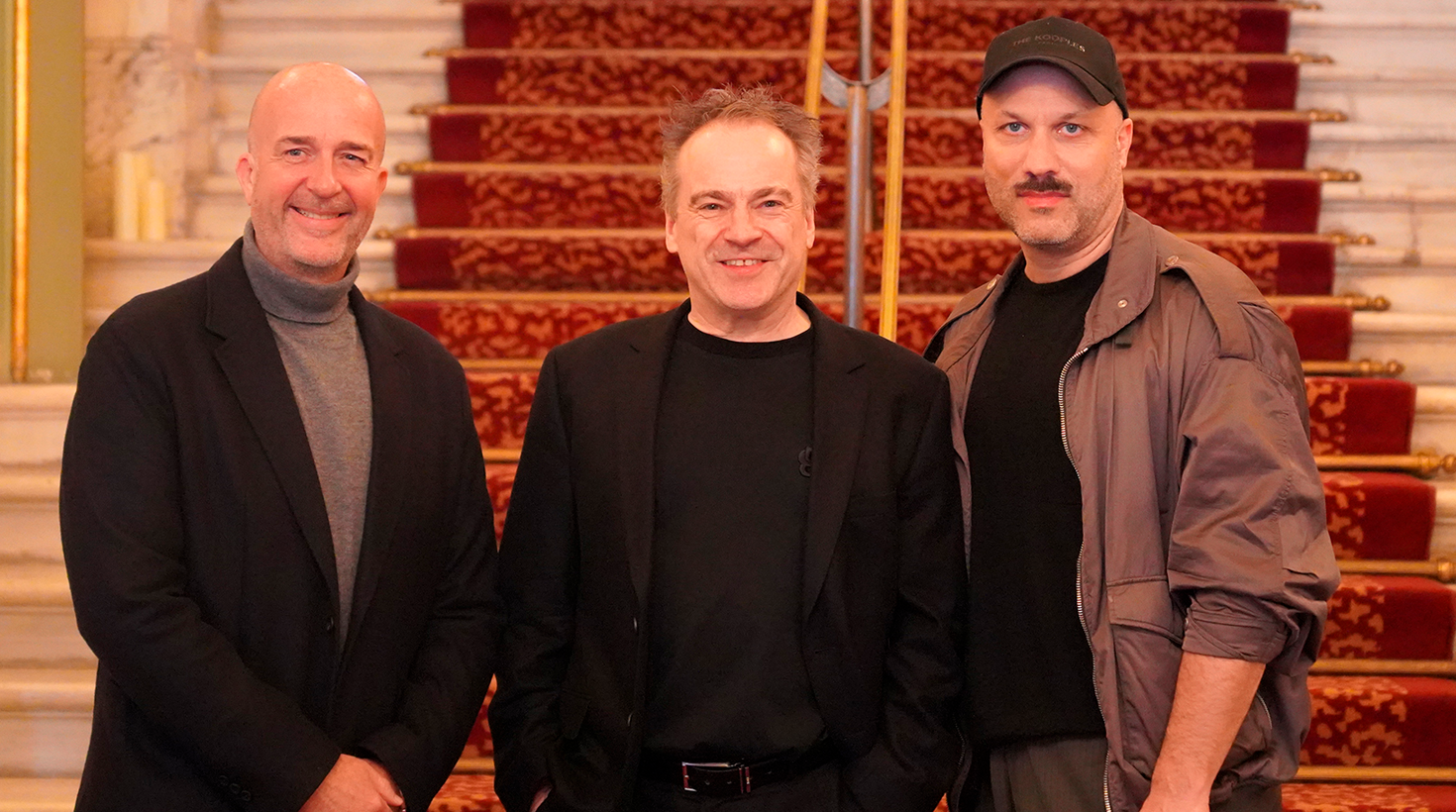
The Gran Teatre del Liceu premieres the new Tetralogy of Wagner in the 26/27 season, with musical direction by Jonathan Nott and stage direction by Tobias Kratzer. This co-production with the Bayerische Staatsoper in Munich will present one title from 'Der Ring des Nibelungen' each year through the 29/30 season, offering a vision that combines power, religion, and immortality, marking a historic moment for the Liceu and its operatic programming.




The Gran Teatre del Liceu leads a new tetralogy of Wagner, a highly ambitious project that becomes one of the most significant artistic milestones of the upcoming seasons, in co-production with the Bayerische Staatsoper. The cycle will premiere next season with stage direction by Tobias Kratzer and musical direction by Jonathan Nott, marking the first collaboration between the two directors.
A powerful Wagnerian cast will tackle a score of extraordinary richness, capable of alternating passages of almost ethereal lightness with moments of profoundly earthly force.
The last time the Gran Teatre del Liceu presented the tetralogy was between the 2012/13 and 2015/16 seasons, in the production by Robert Carsen with musical direction by Josep Pons. Previously, the cycle was also seen between the 2002/03 and 2003/04 seasons under the stage direction of Harry Kupfer and musical direction of Bertrand de Billy.
According to Víctor Garcia de Gomar:
“Each interpretation of the Ring is not a repetition, but an act of creation and a reaffirmation of a theatre. Presenting a new production is to enter a sonic and philosophical architecture that, more than being performed, must be occupied and inhabited. Tobias Kratzer’s interpretation was, for us, the discovery of the best Ring that Barcelona deserves: a Ring of our generation that we are very excited to present, not only for the contemporary vision and the magic it proposes, but also for the literal fidelity with which Wagner conceived his work.”
Musical Direction by Jonathan Nott
The future principal conductor of the Liceu, Jonathan Nott, will conduct the Ring for the fourth time in his career and for the third time in a staged version, showcasing his extensive experience with Wagner and the tetralogy.
Nott will unfold a symbolic power with an orchestra full of leitmotifs that emerge as evocative archetypes of nature, greed, lost love, or water. His conducting, precise, organic, and deeply narrative, collaborates to transform the score into a living organism. After fifteen years without engaging with a Ring, this tetralogy will be presented every January and February from 2027 to 2030, with the same cast accompanying the Ring from the first to the last performance.
Today, musical director Jonathan Nott has shared his vision of this new Ring, a work he knows deeply and now approaches at the Liceu with special emotion. “We all know it’s fifteen hours of music, but the main wonder of the Ring is that no one needs to know anything before hearing it. Come and experience it: living it is already enough,” he stated. Nott understands the tetralogy as “four movements of a great symphony,” a musical drama of human proportions in which the leitmotifs structure the narrative and the composer becomes almost the true protagonist. “Music and drama cannot be separated: they are what allow us to navigate this journey without getting lost, to the point that in the end one loses track of time.”
Regarding his work with the orchestra, Nott emphasized that he seeks “epic power, but not for the sake of it,” rather a grandeur that arises from the musical writing itself: “I try to achieve sound density through harmonic density.” The goal is to build a three-dimensional orchestration, with tension that grows progressively without becoming overwhelming.
For the maestro, each return to the Ring is a discovery: “The more you look, the more you find; it’s a whole life within these hours of music.” And he concluded: “It’s a gift. You take an inner journey, an allegory of how we should live and relate to one another.”
Stage Direction: Tobias Kratzer
Since his production of Tannhäuser at the Bayreuth Festival, Tobias Kratzer has established himself as a leading Wagnerian director. The internationally sought-after and award-winning director will make his long-awaited debut at the Gran Teatre del Liceu with this new cycle of productions.
Kratzer has also worked, among others, at the Bayerische Staatsoper, Deutsche Oper Berlin, Komische Oper, Oper Frankfurt, and the opera houses of Oslo, London, Amsterdam, Brussels, and Paris. Starting in the 2025/26 season, he will assume the artistic direction of the Hamburgische Staatsoper.
In Das Rheingold, the beginning of the new Ring des Nibelungen, Kratzer emphasizes an aspect of the work that in recent decades had been in the background: the theme of religion. The production revolves around power and religion, mortality and immortality. As a counterpoint to Wotan, who struggles with the infinity of his existence, Kratzer conceives Alberich as someone aware of his finitude and who, therefore, believes he can take everything life offers him.
For stage director Tobias Kratzer, the gold of the Ring is the prologue of a world in which the gods regain power, but the true dramatic center lies in the consequences of this gesture. In this sense, the director connects the tetralogy with the thought of Friedrich Nietzsche and his statement “God is dead,” an idea he finds surprisingly close to Wagner’s universe: “But can a god die? If he is immortal, what does his death mean? These are reflections that the production will gradually reveal through the music.”
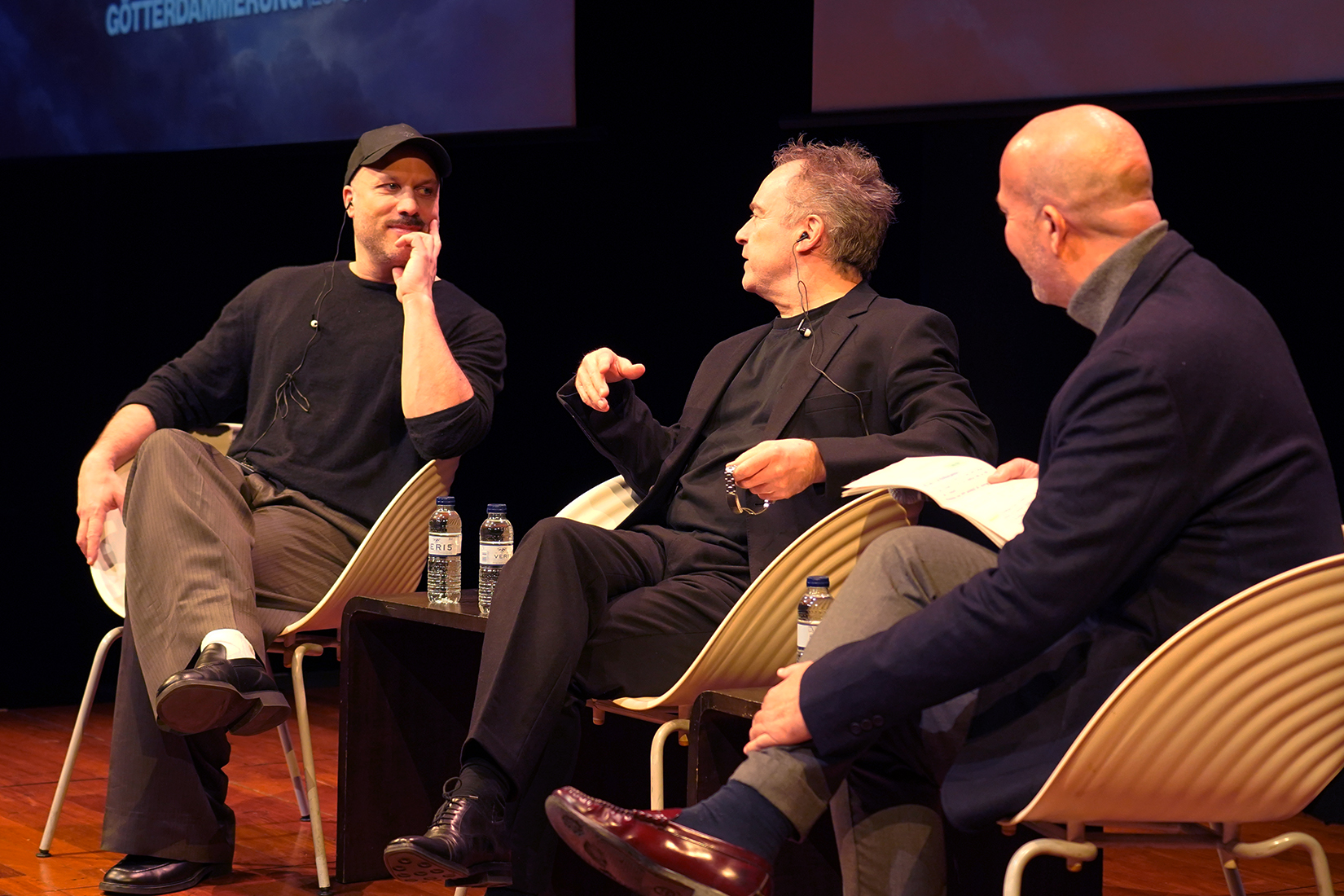
Kratzer also emphasized that his proposal is not abstract, but the construction of “a universe parallel to our present,” with the technological devices and psychology of our time, yet permeated by magic. A magical realism that, according to him, makes visible how deeply contemporary the questions posed by Wagner are.
Finally, the director stressed that the experience must combine entertainment and reflection: “The first thing that must happen is that the audience enjoys themselves. And at the same time, that the production triggers profound reflections: this is the best one can expect from an opera.”
Artistic Team
The production of Das Rheingold features set and costume design by Rainer Sellmaier, lighting by Michael Bauer, and video by Manuel Braun, Jonas Dahl, and Janic Bebi, with dramaturgy by Bettina Bartz and Olaf Roth. Musically, it involves the Choir of the Gran Teatre del Liceu, conducted by Pablo Assante, and the Gran Teatre del Liceu Symphony Orchestra, under the direction of Jonathan Nott.
The cast is led by bass-baritone Nicholas Brownlee (Wotan), baritone Kartal Karagedik (Donner), tenor Roger Padullés (Froh), tenor Nicky Spence (Loge), baritone Georg Nigl (Alberich), tenor Mikeldi Atxalandabaso (Mime), bass Ante Jerkunica (Fasolt), bass Wilhelm Schwinghammer (Fafner), mezzo-soprano Tanja Ariane Baumgartner (Fricka), soprano Anett Fritsch (Freia), mezzo-soprano Okka von der Damerau (Erda), soprano Ximena Agurto (Woglinde), mezzo-soprano Jennifer Feinstein (Wellgunde), and mezzo-soprano Helena Ressurreição (Flosshilde).
Premiere at the Bayerische Staatsoper in Munich
This new cycle of productions of Der Ring des Nibelungen premiered at the Bayerische Staatsoper on October 27, 2024, with Das Rheingold.
During the current season, on June 25, 2026, the German theater welcomes Die Walküre, which Richard Wagner wrote as the second of the four parts of Der Ring des Nibelungen, inspired by the medieval Nibelungenlied and the Norse sagas of the ancient gods.