

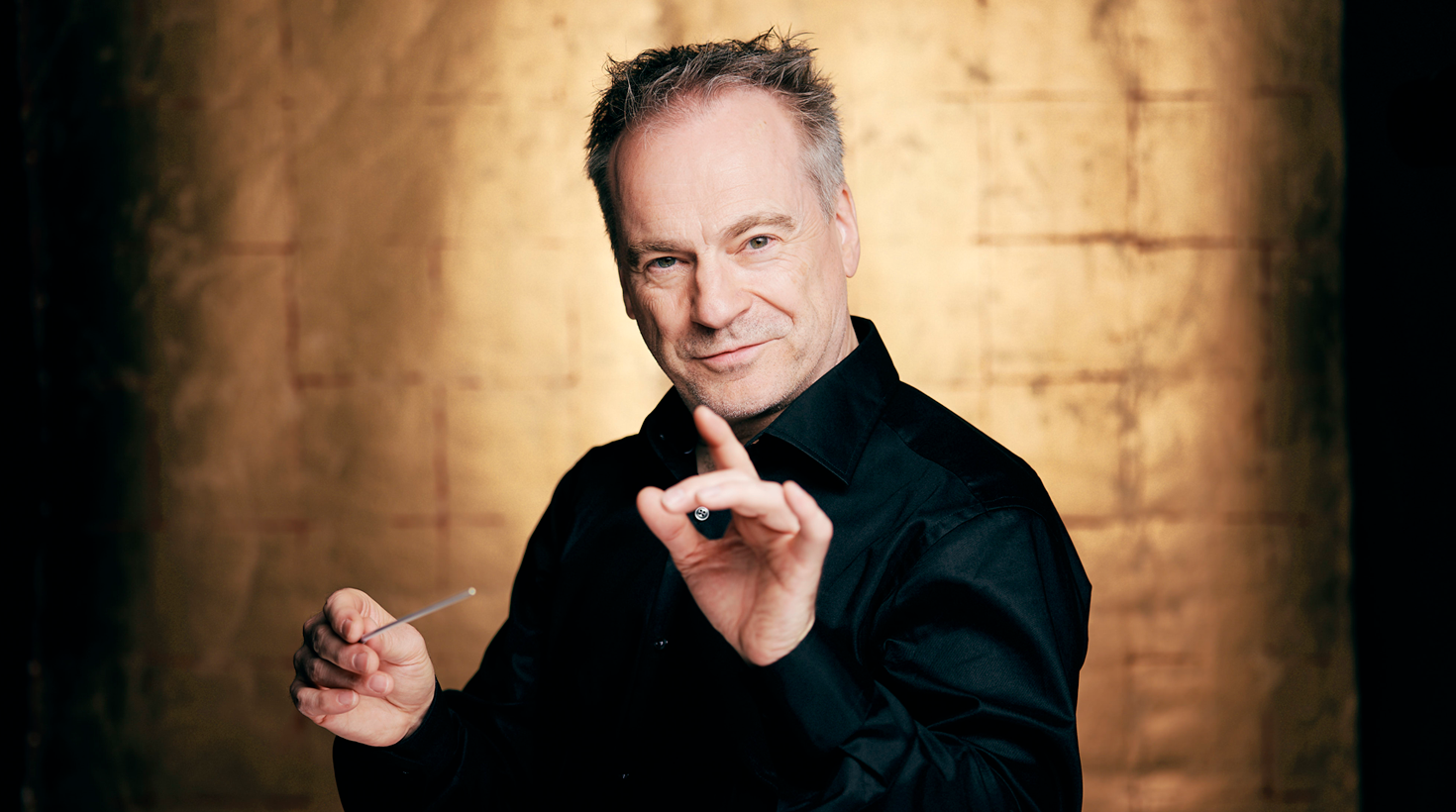
The Gran Teatre del Liceu presents Jonathan Nott as its new musical director starting from the 2026/2027 season for five seasons, succeeding Josep Pons. Coinciding with his arrival, the Liceu is launching a new symphonic subscription. Nott will conduct 'Nijinsky by Neumeier' this season and Wagner’s Tetralogy in 2026/2027, beginning a new chapter defined by musical excellence.




A central figure in contemporary orchestral conducting, Jonathan Nott is distinguished by a musical vision of exceptional intellectual clarity and an expressive intensity that combines analytical rigor with poetic impulse. Trained in the UK, where he began in choral music and developed an early affinity for the human voice, he soon expanded his interests to the great symphonic repertoire and contemporary music, understood not as a rupture but as a natural continuation of historical discourse.
Endowed with a deep sensitivity to the human voice, he served as choir master at the Frankfurt Opera and the Hessisches Staatstheater Wiesbaden, where he was also a répétiteur, building an extensive operatic and ballet repertoire including works such as Nijinsky, The Magic Flute, La Bohème, La Traviata, and The Ring Cycle, among others. His international presence is fully established, regularly leading major orchestras across Europe, Asia, and the Americas, with particularly close relationships with ensembles of strong sonic identity.
His transformative artistic leadership was especially evident during sixteen years at the helm of the Bamberger Symphoniker, where he redefined the ensemble’s identity through a meticulous reading of the Germanic tradition and a decisive openness to contemporary creation. Committed to 20th- and 21st-century music, he is a reference interpreter of works by Mahler, Bruckner, Ligeti, Messiaen, and Boulez, approached with structural clarity that reveals hidden layers of the orchestral fabric.
His conducting is characterized by precision and transparency, able to articulate large symphonic architectures without losing the narrative breath or dramatic tension of each score. In collaboration with leading operatic and symphonic institutions, his work stands out for attentive listening to the collective sound and careful attention to color and timbral balance. Deeply reflective in his artistic profile, he conceives music as a space for thought, emotion, and ethical resonance, inviting the listener into a demanding and revealing aesthetic experience.
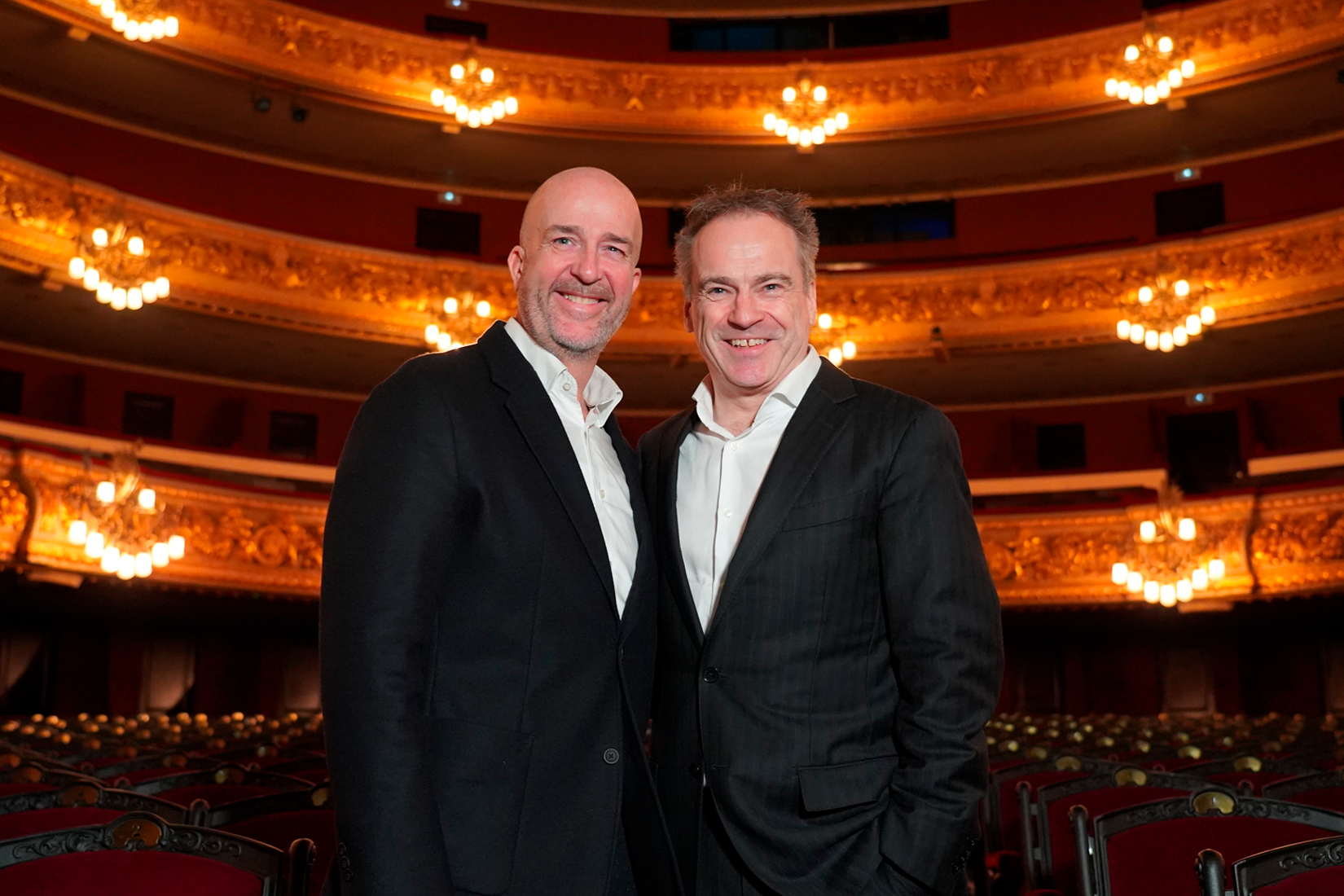
At a press conference, Jonathan Nott expressed the deep personal connection he feels with the Gran Teatre del Liceu, explaining that receiving the invitation to join was an unexpected and revealing experience: “The Liceu and everything it represents has been part of me since I was a child. When this invitation arrived, quite suddenly, something unexpected happened: I felt it was a fantastic sign, a clear intuition that a new home was waiting for me.”
The conductor highlighted in particular the social dimension of the theater’s artistic project and the LiceuAprèn and LiceuApropa initiatives, which made him feel he could fully belong to the institution: “What excited me most was learning about this idea and this commitment to universal access to culture. When I see that such an important part of the work at the Liceu is about social interaction, I completely understand the message the Liceu sends to the world; it is truly impressive and moves me deeply.”
Finally, he described his arrival at the Liceu as a symbolic and vital return, uniting artistic excellence with social commitment: “Coming to the Liceu means coming home. Being part of this wonderful process, with the highest artistic quality but also a very clear social vision, is a gift of life.”
Der Ring des Nibelungen under the baton of Jonathan Nott
The Gran Teatre del Liceu and the Bayerische Staatsoper in Munich are co-producing a new production of Der Ring des Nibelungen by Richard Wagner, with musical direction by Jonathan Nott and stage direction by Tobias Kratzer.
Tobias Kratzer takes on the challenge of bringing the Tetralogy to life with a perspective that directly confronts the struggle for power and its inevitable decline. The 2026/2027 season will begin with this cycle of new productions, marking Kratzer’s debut at the theater and consolidating the collaboration with one of the most internationally acclaimed directors.
The Gran Teatre del Liceu will launch the cycle in the 2026/2027 season, premiering one title each year until the 2028/2029 season.
Nijinsky by Neumeier, Jonathan Nott’s first performance leading the Liceu Orchestra
Before the next season, Jonathan Nott will conduct an exceptional work in the current program: Nijinsky by Neumeier, scheduled from April 12 to 15, featuring the renowned choreographer John Neumeier and the Hamburg Ballet.
The Gran Teatre del Liceu celebrates the opportunity to have Nott’s mastery this season, as he takes the podium to deliver a unique interpretation of a repertoire including Chopin, Schumann, Nikolai Rimsky-Korsakov, and Dmitri Shostakovich.
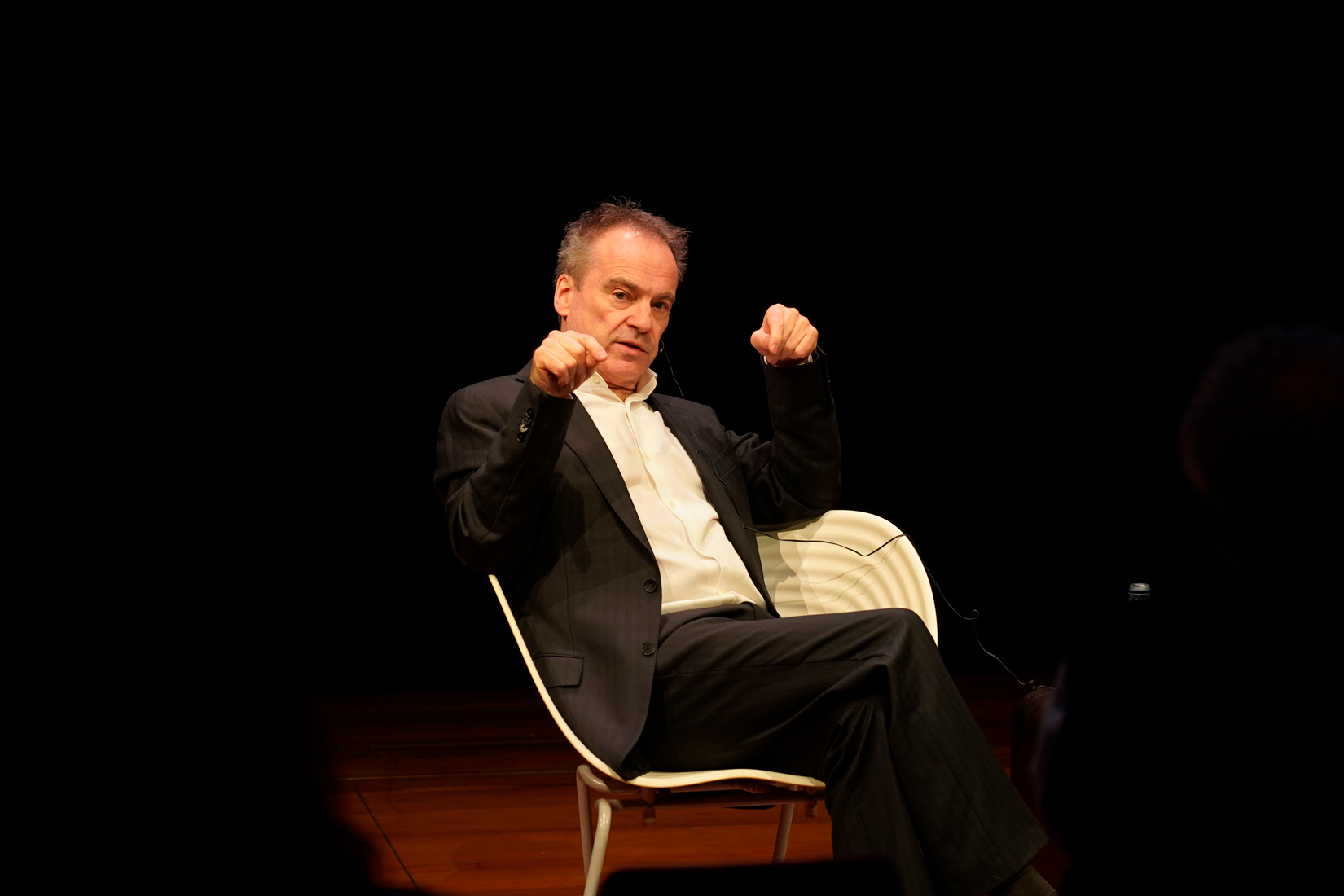
New symphonic subscription
Coinciding with the start of Nott’s tenure as musical director, the Gran Teatre del Liceu will introduce a new symphonic subscription, featuring three titles, as part of its commitment to the symphonic repertoire.
Jonathan Nott, new musical director of the Liceu
Jonathan Nott was a boy chorister (with Louis Frémaux and the City of Birmingham Symphony Orchestra), sang as a tenor at the University of Cambridge, and studied operatic singing at the Royal Northern College of Music. As a répétiteur at the London Opera Studio, he trained in conducting with David Parry, performed Tosca on the organ, conducted the offstage choir in Parsifal at Covent Garden (under Bernard Haitink), and led the offstage orchestra in the recording of Donizetti’s L’Assedio di Calais for Opera Rara. As a tenor, he sang with the choirs of St. Paul’s and Westminster Cathedrals.
His first position was as a répétiteur at the Frankfurt Opera under Garry Bertini, who also gave him his first opportunity as a conductor: La finta giardiniera by Mozart and the Beckett Trilogy by Heinz Holliger, the success of which led him to conduct The Nose by Shostakovich and Mahagonny by Weill.
As First Kapellmeister of the Opera of Wiesbaden, he conducted a wide range of repertoire: from Cimarosa, Mozart, Rossini, Verdi, Gounod, Puccini, Shostakovich, Weill, Maxwell Davies, and Henze, to a new production of Prokofiev’s ballet Romeo and Juliet, as well as Sondheim and Little Shop of Horrors. He also conducted Der Ring des Nibelungen by Wagner (with Siegfried Jerusalem) and Elektra by R. Strauss (with Eva Marton) at the Maifestspiele Festival.
During his time in Frankfurt, he developed a strong interest in contemporary music, conducting works by Ligeti (the first Hungarian production of Le Grand Macabre at the Budapest Opera), Boulez (Béjart ballet), Stockhausen, Lachenmann, Hosokawa, Eötvös, Gubaidulina, and numerous younger-generation composers.
Jonathan Nott has held positions as music director of the Lucerne Opera, principal conductor of the Lucerne Symphony Orchestra, and music director of the Ensemble Intercontemporain. He debuted with the SWR at the Baden-Baden Festival with Elektra (production by Ruth Berghaus, with Hildegard Behrens), and as music director of the Orchestre de la Suisse Romande he led new productions of Rossini’s Il barbiere di Siviglia, Debussy’s Pelléas et Mélisande, Wagner’s Parsifal, and R. Strauss’s Der Rosenkavalier at the Grand Théâtre de Genève. He conducted concert performances of Tristan und Isolde at the Edinburgh Festival, and of Falstaff and Der Ring des Nibelungen at the Lucerne Festival with the Bamberg Symphony Orchestra, where he was chief conductor from 2000 to 2016. He recently completed a new production of Der Ring des Nibelungen at Theater Basel.
During his 12 years as chief conductor of the Tokyo Symphony Orchestra, Nott and Sir Thomas Allen led a series of concert opera performances: the Mozart/Da Ponte trilogy, Salome (with Asmik Grigorian), Elektra (with Christine Goerke), which was named “Best Concert in Japan 2023-24” by Ongaku no Tomo magazine, Der Rosenkavalier, and Schönberg’s Gurrelieder.
Recent projects include Messiaen’s Saint François d’Assise, directed by Adel Abdessemed in Geneva, Mahler’s Seventh Symphony with the New Japan Philharmonic, two concerts with the Berlin Philharmonic featuring works by Mazzoli, Eötvös, and Ives, and a tour of Germany with the Junge Deutsche Philharmonie, where he was principal conductor from 2014 to 2024.
After the New Year’s Gala with the Orchestre de la Suisse Romande (with Juliana Grigoryan), he began 2025 conducting the SWR (Zemlinsky), followed by the WDR Sinfonieorchester Köln (Boulez), the Dresdner Philharmonie (Pelléas and The Rite of Spring), a full version of Die Fledermaus at the Tokyo Spring Festival, the Tonhalle Orchester Zürich (Messiaen and Mahler), and is currently touring Asia with the OSR.
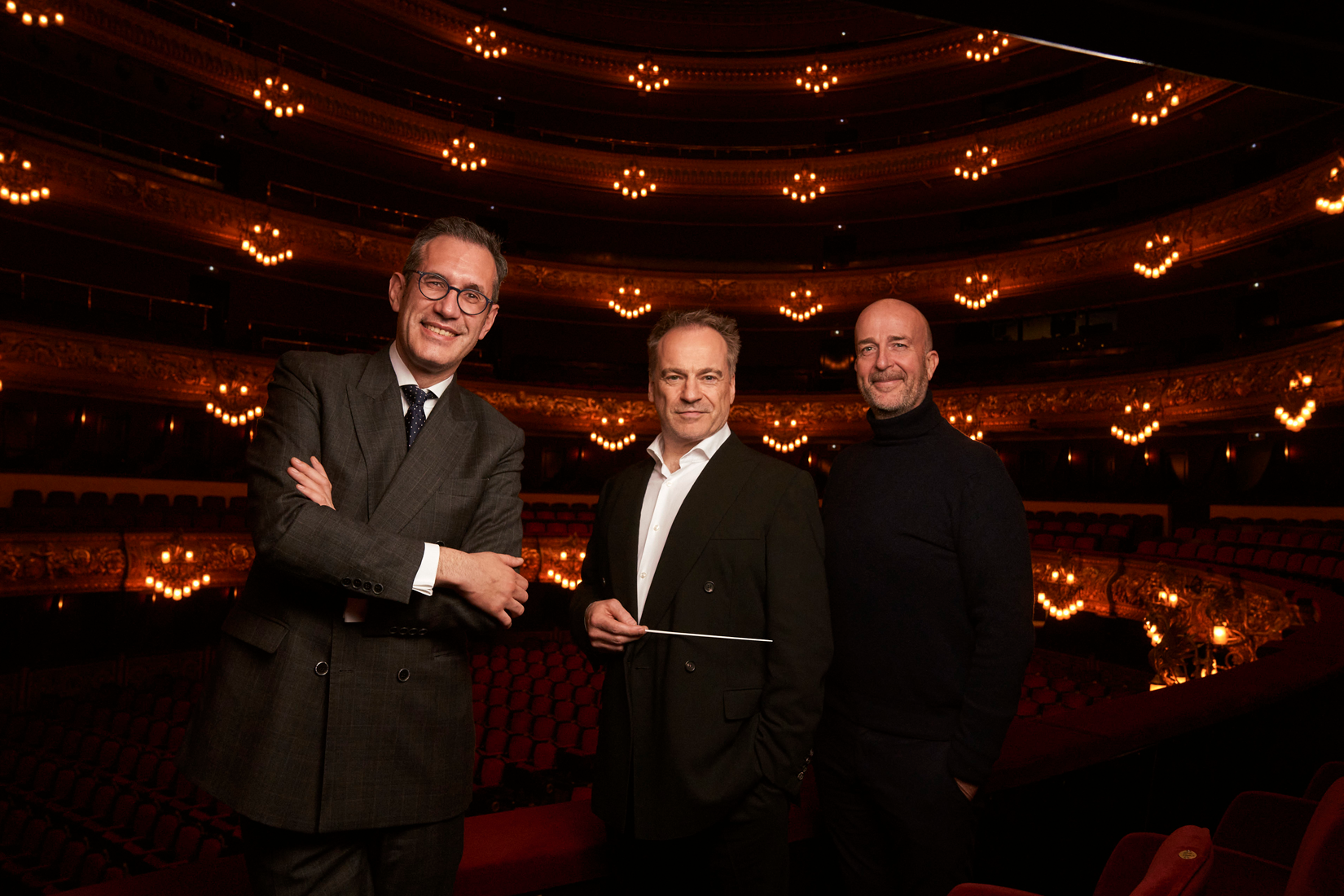
Jonathan Nott is a Reiki master: “Over the years I have come to understand that true greatness in musical conducting lies simply in shaping and reshaping an inexorable human energy, in constant flow, created by the musicians and singers, and transmitted and reflected by the listener through this most fundamental and wonderful form of non-verbal communication we call ‘music.’ Music heals: this is its sole and true purpose, and ours as well.”
Jonathan Nott has an extensive discography, including the complete orchestral works of Ligeti with the Berlin Philharmonic and Das Lied von der Erde by Mahler with the Vienna Philharmonic and Jonas Kaufmann. His recordings with the Bamberg Symphony Orchestra include works by Janáček, Bruckner, Wagner (with Klaus Florian Vogt), as well as the complete symphonic works of Schubert and Mahler. The latter received the “Internationaler Schallplattenpreis Toblacher Komponierhäuschen 2009” and the MIDEM Award for Best Classical Recording 2010 (for Mahler’s Ninth Symphony), as well as recognition as the “best Mahler Fifth on record” by the French magazine Classica in February 2022.
His first recording with the OSR included works by Richard Strauss, Debussy, and Ligeti (Pentatone 2018), followed by a Pelléas et Mélisande-themed disc with works by Debussy and Schönberg, which received a Choc from Classica and the “Preis der Deutschen Schallplattenkritik” (German Record Critics’ Award). A third CD (2022) featured pianist Francesco Piemontesi performing works by Ravel, Schönberg, and Messiaen. In 2025, the first studio recording of Dieter Ammann’s four orchestral works (Schweizer Fonogramm) will be released, along with a live performance of the Eroica and the Guillaume Tell overture on the OSR’s “Virtual Hall” platform.
The COVID-19 years fostered innovation with the OSR: a live broadcast of Beethoven’s Ninth Symphony, a series of daily online sessions on the workings of conducting, followed by an introduction to Mahler’s Ninth Symphony and a full performance, produced by Actua Films from Victoria Hall in Geneva. In 2025, the first studio recording of Dieter Ammann’s four orchestral works (Schweizer Fonogramm) and a live performance of the Eroica and the Guillaume Tell overture will be published on the OSR’s “Virtual Hall” platform.
His discography with the Tokyo Symphony Orchestra, which includes works by Mahler, Bruckner (1, 2, 5, 7, and 9), and Tchaikovsky (2, 3, 5, and 6), will be expanded this month with releases of Beethoven (2 and 5) and Brahms (2) (EXTON/OCTAVIA).