
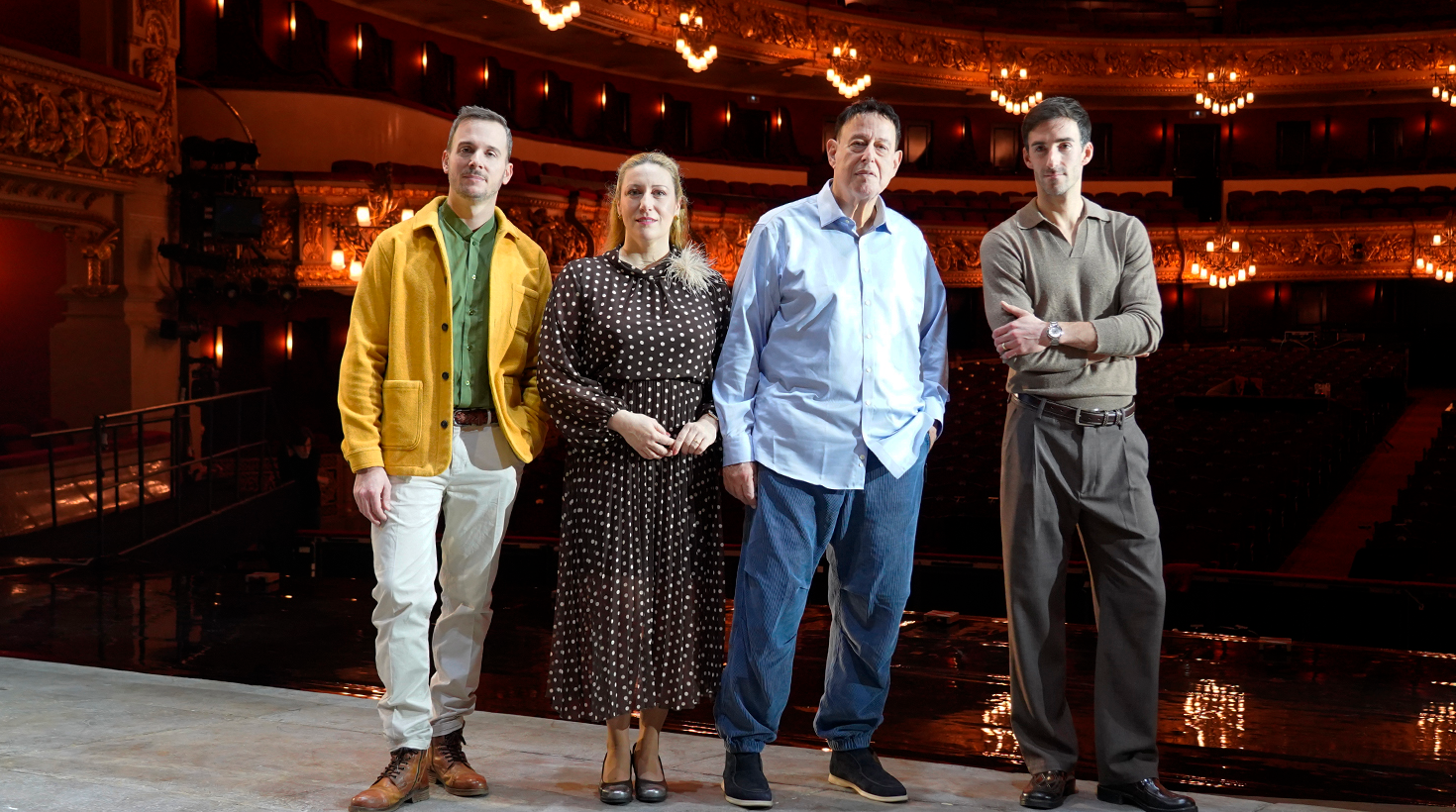
'La Gioconda', by Amilcare Ponchielli, returns to the Gran Teatre del Liceu from February 17 to March 2 in a production by Romain Gilbert and under the baton of Daniel Oren. This major work of Italian Romantic opera features a classical staging set in 17th-century Venice and an international cast led by Saioa Hernández and Michael Fabiano. The opera also stands out for the central role of the ballet and the famous 'Dance of the Hours', and will be available in a digital premiere on LiceuOPERA+ on March 8




The Gran Teatre del Liceu presents La Gioconda by Amilcare Ponchielli from February 17 to March 2, with stage direction by Romain Gilbert and musical direction by Daniel Oren. La Gioconda will also include an exclusive performance for the Under35 audience, featuring a masquerade ball, to be held on February 16. Throughout its history, the Gran Teatre del Liceu has staged La Gioconda more than 150 times. The most recent performance at the Teatre, during the 2018/2019 season, was the 154th. This marks the third time the title has been programmed since the reopening of the Liceu in 1999.
This opera brings together the finest styles of its time: Verdian influences in the melodies, choral passages typical of Venetian popular music, soliloquies with touches of Mussorgsky or Tchaikovsky, Wagnerian orchestration, dances characteristic of French Grand Opéra, and a finale that anticipates the verismo-naturalist repertoire. Altogether, it places the audience before a magnificent masterpiece—the last great opera of Italian Romanticism.
It is worth noting that the costume design is by the renowned fashion designer Christian Lacroix. In this production, the ballet also plays a leading role: a corps de ballet made up of 12 dancers brings to life the beautiful Dansa de les hores, a famous ballet score whose melody and rhythm evolve to depict the passage of time, with choreography by Vincent Chaillet.
Exceptional on-stage cast: a major opera written for six different vocal ranges
La Gioconda is a piece that serves as a bridge between the past and future of Italian opera, combining the best of Verdi with the best of Puccini, and even the best of romantic Wagner. Ponchielli’s score is written for six major voices (one for each range: bass, baritone, tenor, contralto, mezzo, and soprano). In this respect, it is an opera closer to the Italian generation emerging from the 1890s (the lead role is written for the same type of dramatic sopranos who sing Tosca or Turandot) than to the early 19th-century bel canto tradition.
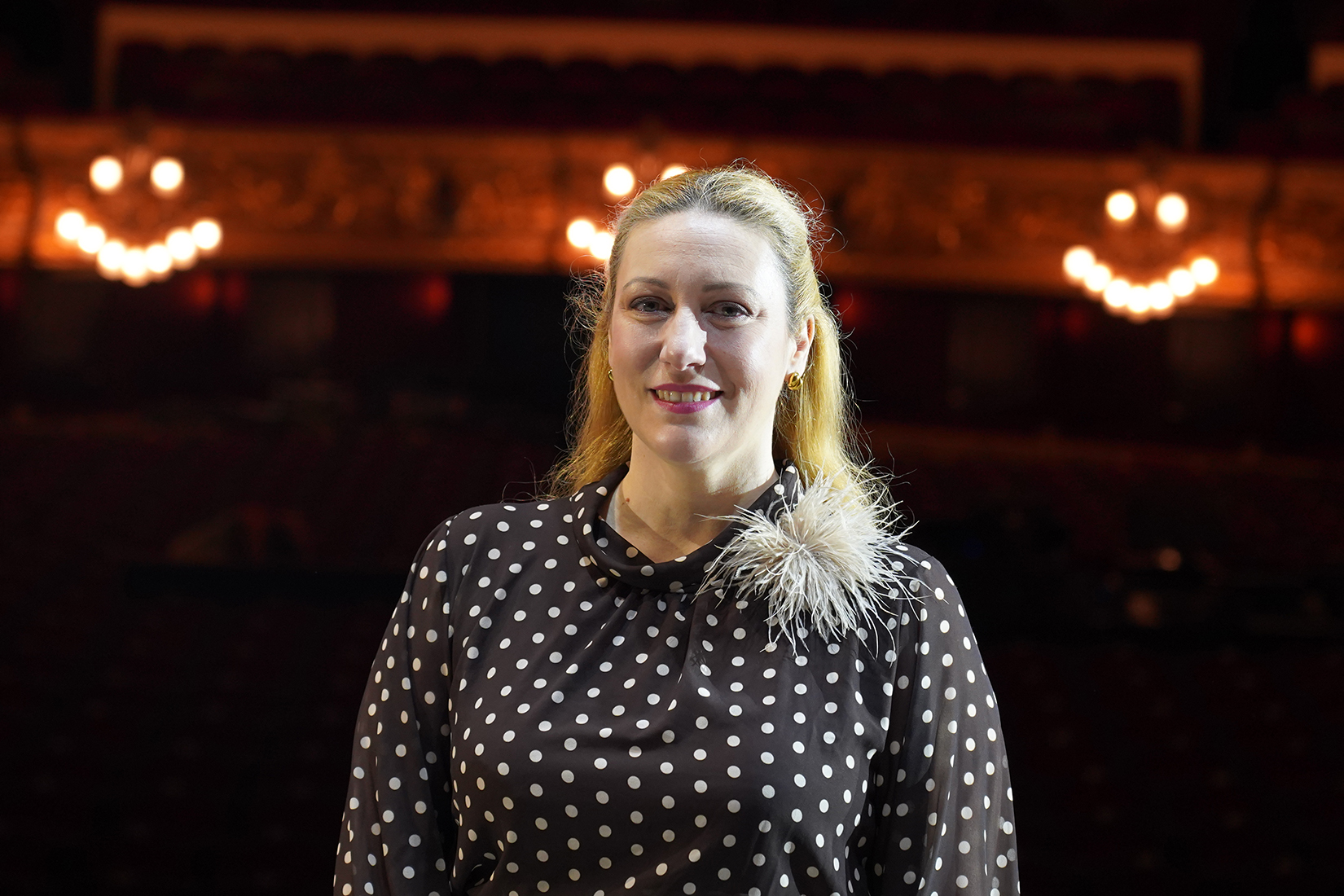
In the lead role, written for dramatic soprano, we have two outstanding artists well known to the Liceu audience: Saioa Hernández and Ekaterina Semenchuk. For Hernández, these performances will likely be very special, as her Barcelona debut was in La Gioconda during the 2018-2019 season. Semenchuk, on the other hand, returns to the Liceu after performing in Macbeth and Turandot in previous seasons.
Each principal role in La Gioconda has two assigned singers in this production. The antagonist, the evil Barnaba, written for baritone, is shared by Tarragonese Àngel Òdena and Italian Gabriele Viviani, while the other central male role, Enzo Grimaldi, is performed by two extraordinary spinto tenors: American Michael Fabiano, a regular on the Liceu stage, and German-Brazilian Martin Muehle. The role of Laura Adorno is sung by two mezzos who always deliver impeccable performances: Russian Ksenia Dudnikova, making her Liceu debut, and Armenian Varduhi Abrahamyan. The Venetian inquisitor, Alvise Badoero, a low-voice role, is sung by basses John Relyea and Alexander Köpeczi, and the role of Cieca, for contralto, is assigned to a legend, Lithuanian Violeta Urmana, and a rising star, Hungarian Anna Kissjudit. Notably, Violeta Urmana makes her debut in the role of Cieca, marking the milestone of having performed all three principal female roles in this opera—Gioconda, Laura, and Cieca—over her career.
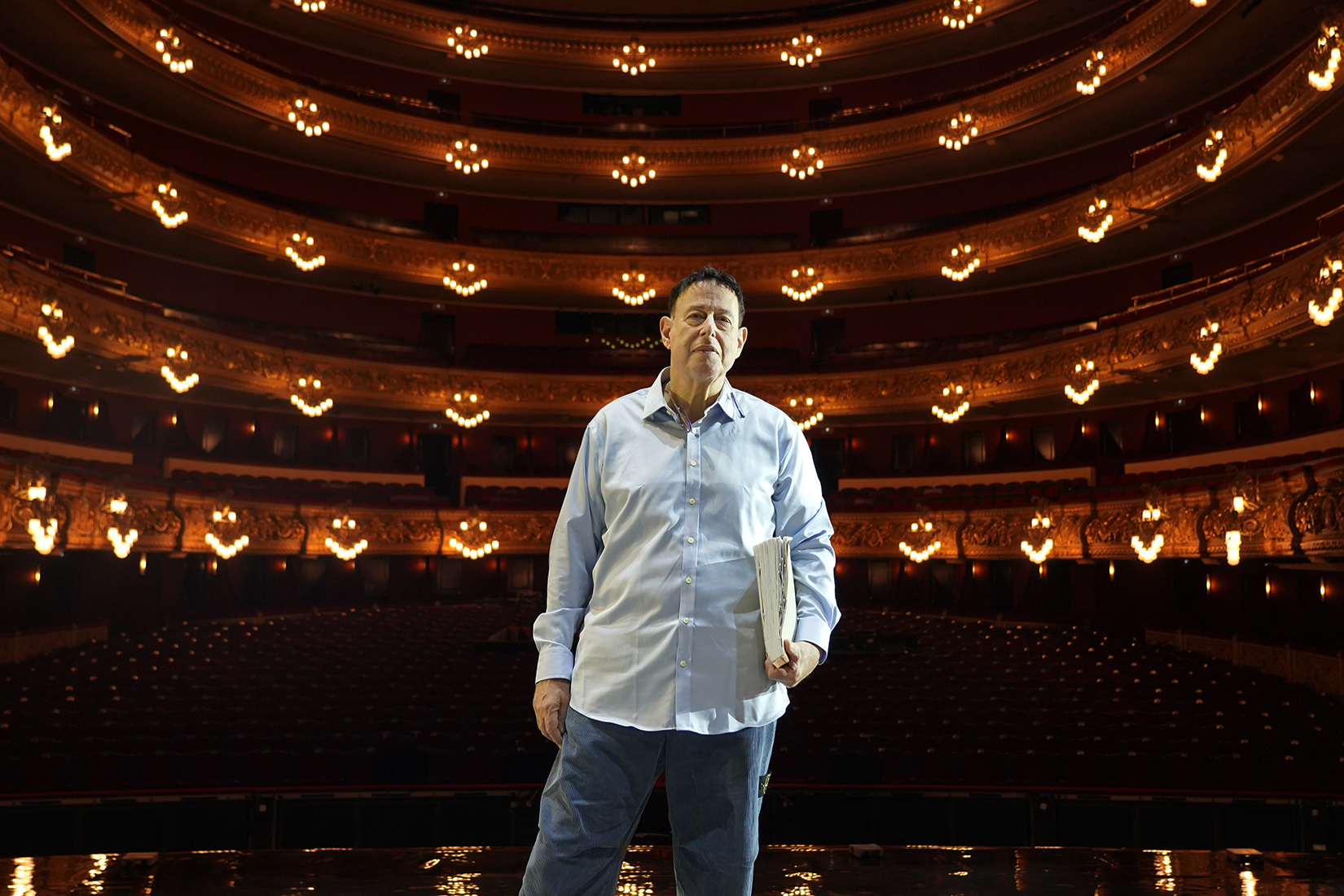
All performances are conducted by maestro Daniel Oren, who ensures the orchestra and soloists perform at the highest level so that the grandeur and lyricism of this opera combine perfectly.
A Venice in chiaroscuro, the perfect setting for a cold and cruel story
La Gioconda, with a libretto by Arrigo Boito, is an opera completely inseparable from the city of Venice, but Romain Gilbert offers a perspective far from postcard Venice. His staging revives a 17th-century city that is dark, unsettling, and deeply marked by power and hidden violence. A Venice where surface beauty coexists with an oppressive reality, dominated by fear, judgment, and death.
This stage universe arises from a key idea in the libretto: one of Barnaba’s first lines, which speaks of a people dancing over graves, “E cantan su lor tombe!”. From this, Gilbert constructs a city that appears splendid but is pierced by darkness, with canals hiding punishments and disappearances, and with figures of power, like Alvise, who embody this relentless authority.
The French stage director was commissioned for the new production of La Gioconda by the Teatro San Carlo and the Gran Teatre del Liceu, aligning the 2026 performances with the 150th anniversary of the opera’s premiere in Milan. Thanks to the lighting work of Valerio Tiberi, the Venice presented in this production is immersed in chiaroscuro, revealing the moral forces at play in the story: the absolute evil represented by Barnaba and Gioconda’s selfless generosity.
The scenography plays a crucial role in this narrative. The large-scale stage set transforms throughout the opera: from a Venetian square in Act I to a canal with a boat in Act II; from Alvise’s palace, with a large painting as backdrop, to a devastated space in the final act, where the passage of time and destruction are visible. This constant evolution reinforces the idea of a living, changing city marked by drama.
The plot
La Gioconda tells a grim story of revenge: that of Barnaba, a spy in the service of the Venetian Inquisition in the 17th century, against Gioconda, a street singer he loves but who does not return his affection. Gioconda cares for her mother, Cieca, who is now elderly, and Barnaba’s first maneuver is to convince the people of Venice that this woman is a witch who must die at the stake. A miraculous appearance—Laura, the wife of the inquisitor Alvise—saves Cieca from death, but at the same time sets the stage for Laura to reunite with her youthful love, Enzo, who is Gioconda’s current fiancé. Enzo must choose between two passions and ultimately chooses Laura, leaving Gioconda in a difficult position that will eventually lead to her death when Barnaba exploits her weaknesses to humiliate her.
The plot is highly intricate and romantic, yet it is accompanied by sublime music that balances stormy orchestral passages with the most beautiful lyricism, and it has continued to captivate audiences for 150 years.
The “Dance of the Hours” and the ballet
La Gioconda is also an opera in which ballet plays a fundamental role. Among the choral and orchestral passages, the Dance of the Hours stands out as one of the most famous and emblematic fragments of the operatic repertoire. In this production, Romain Gilbert integrates this moment into the visual universe of 17th-century Venice, placing it in a space inspired by the commedia dell’arte, clearly referencing the artistic context of the era and paying tribute to it.
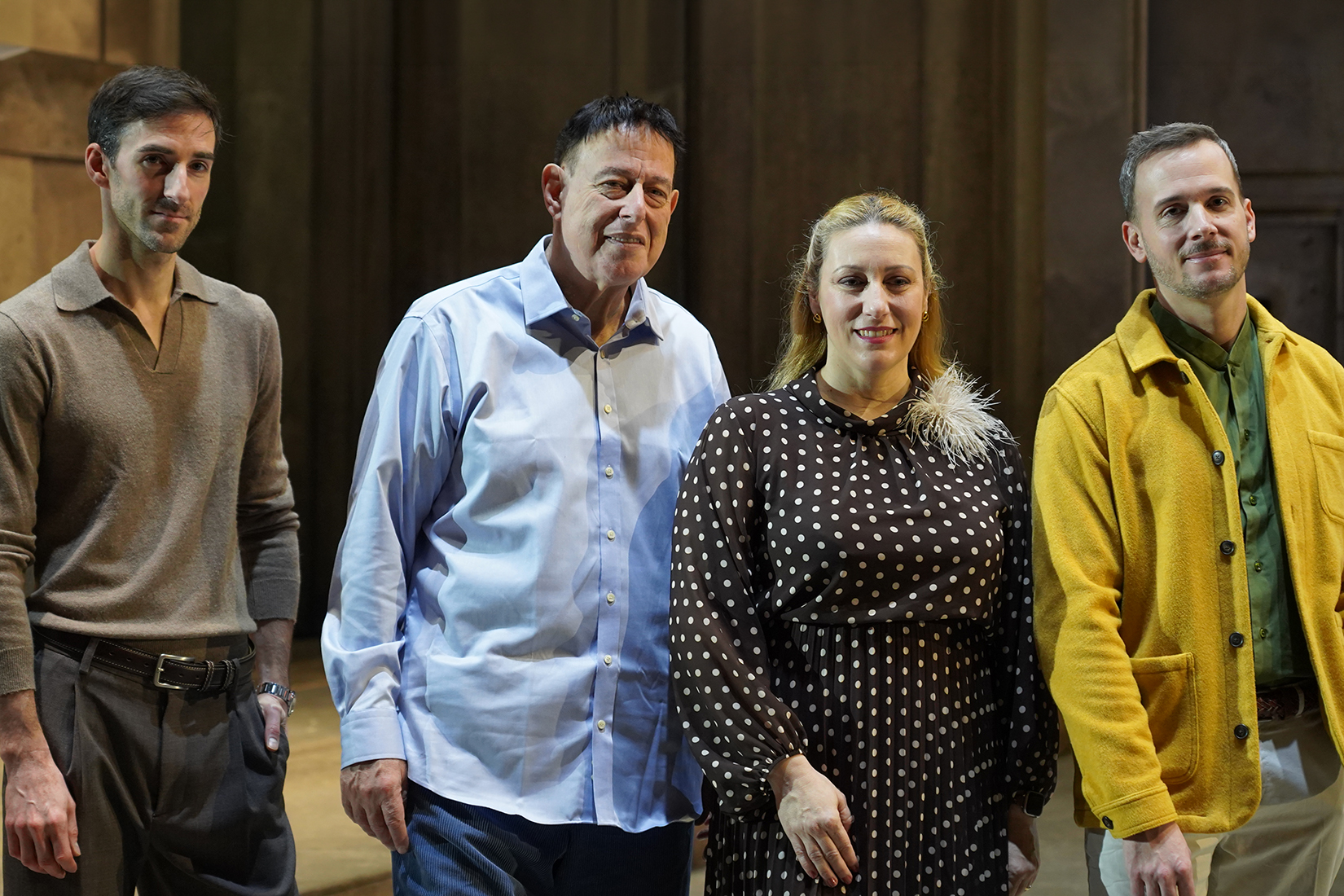
The choreography is by Vincent Chaillet, who conceives the dance not as a mere interlude, but as a piece fully integrated into the stage narrative. To achieve this, the production features a corps de ballet of 12 dancers, along with 3 acrobats and a mime. The ballet thus becomes a celebration of time, movement, and theatre within theatre, while also interacting with the darkness that permeates the entire production. This choreographic moment also serves as an homage to the Italian stage tradition and reinforces the spectacular dimension of La Gioconda, reminding audiences that this opera is, at once, drama, music, and the body in motion.
With the support of: