
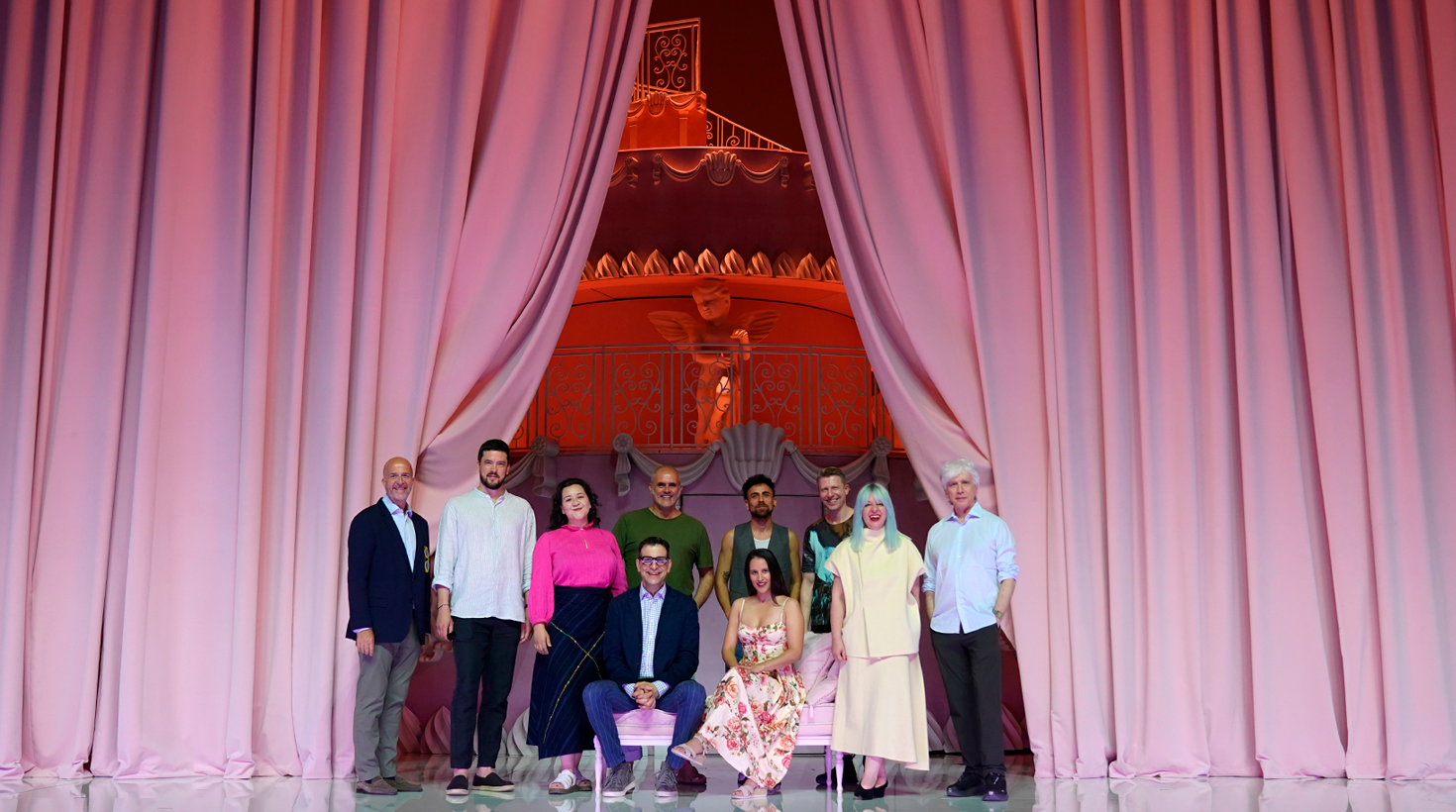
The Gran Teatre del Liceu premieres a new production of 'Le nozze di Figaro' by Mozart from June 5 to 21, with stage direction by Marta Pazos and musical direction by Giovanni Antonini. An exuberant and colorful visual proposal inspired by Susan Sontag’s 'camp' universe, featuring a major international cast and a special magazine dedicated to the opera’s creative process.




The Gran Teatre del Liceu premieres a new production directed by Marta Pazos of Le nozze di Figaro by Mozart, running from June 5 to 21, with a pre-opening performance for Under35 audiences on June 4. Italian conductor Giovanni Antonini, a specialist in Classical and Mozart repertoire, will lead a total of 14 performances at the helm of the Liceu Orchestra, with a star-studded cast led by Luca Pisaroni and Sara Blanch as Susanna and Figaro. The lineup also includes major voices such as Andrè Schuen as the Count and Adriana González as the Countess, among others. The second cast will be led by Alejandro Baliñas, Anna Prohaska, Samuel Hasselhorn, and Anett Fritsch, respectively.
Le nozze di Figaro, beyond being one of Mozart’s great comedies and one of the masterpieces of his output, is also one of the great works of universal art that best reflects the variety and depth of the human spirit. The last time audiences at the Liceu experienced Le nozze di Figaro was in the 2021/22 season, under the musical direction of Marc Minkowski and stage direction of Ivan Alexandre, as part of the Mozart-Da Ponte trilogy alongside Don Giovanni and Così fan tutte.
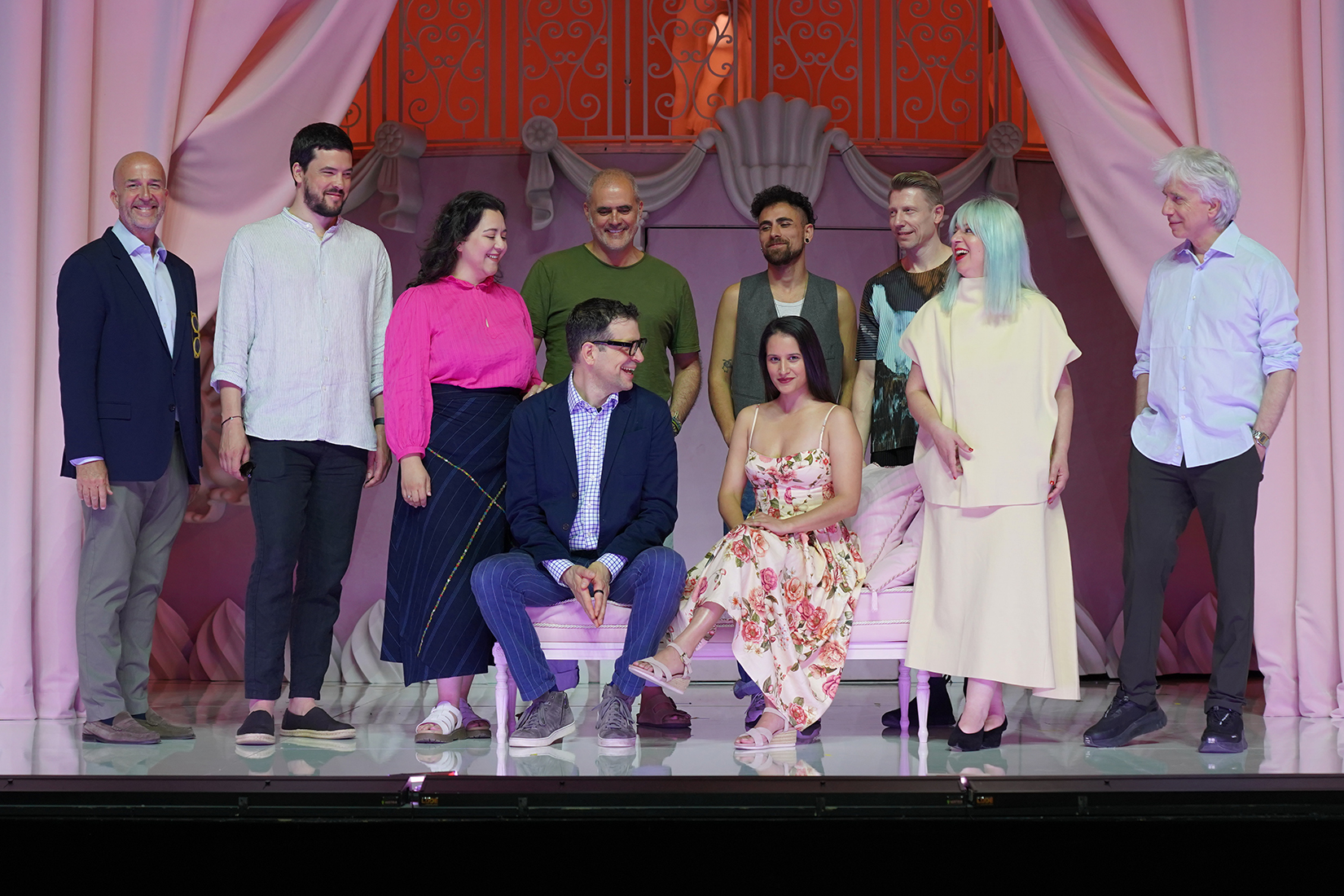
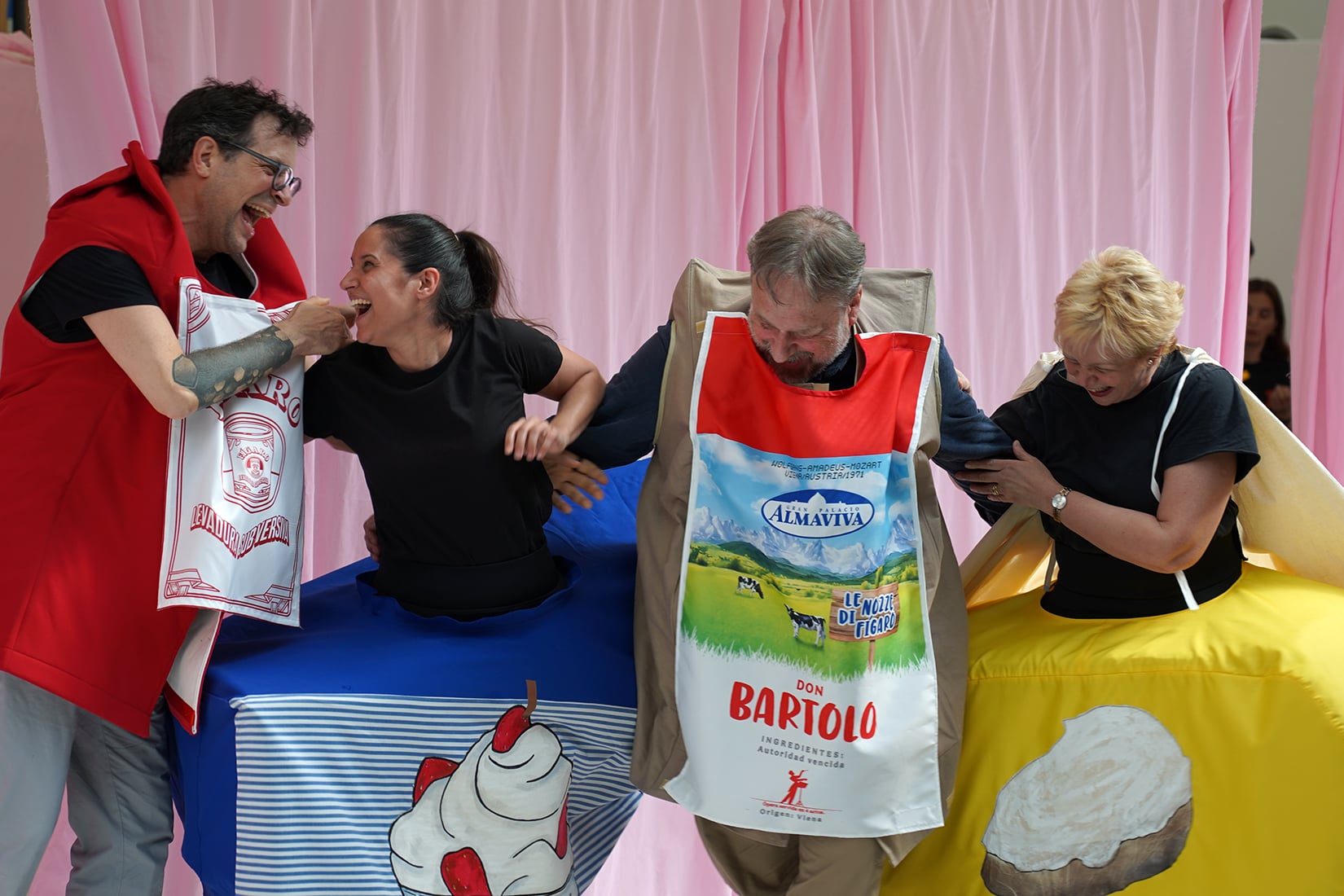
The production unfolds through shifting textures of light and color throughout the work, with an exuberant stage design created by Max Glaenzel from an idea by Marta Pazos, and lighting by Nuno Meira. The inventive costumes by Agustín Petronio become an expression of each character’s personality and a constant dialogue between class differences, using ingredients, iconic brands, and tastes ranging from sweet to bitter.
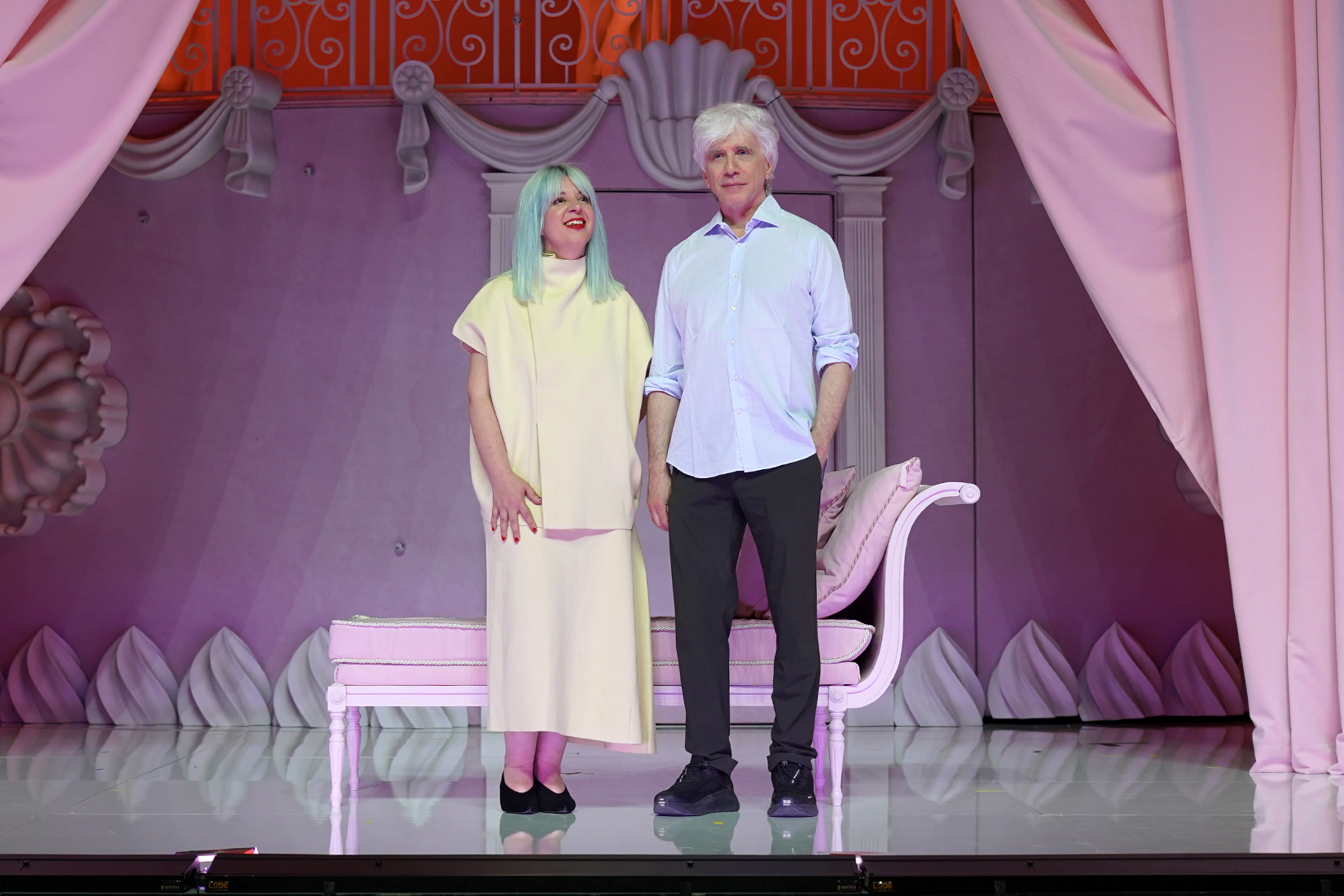
These architectural bodies are revealed as a living landscape through the work of choreographer Andreas Heise and a cast of dancers who accompany the characters for almost the entire opera.
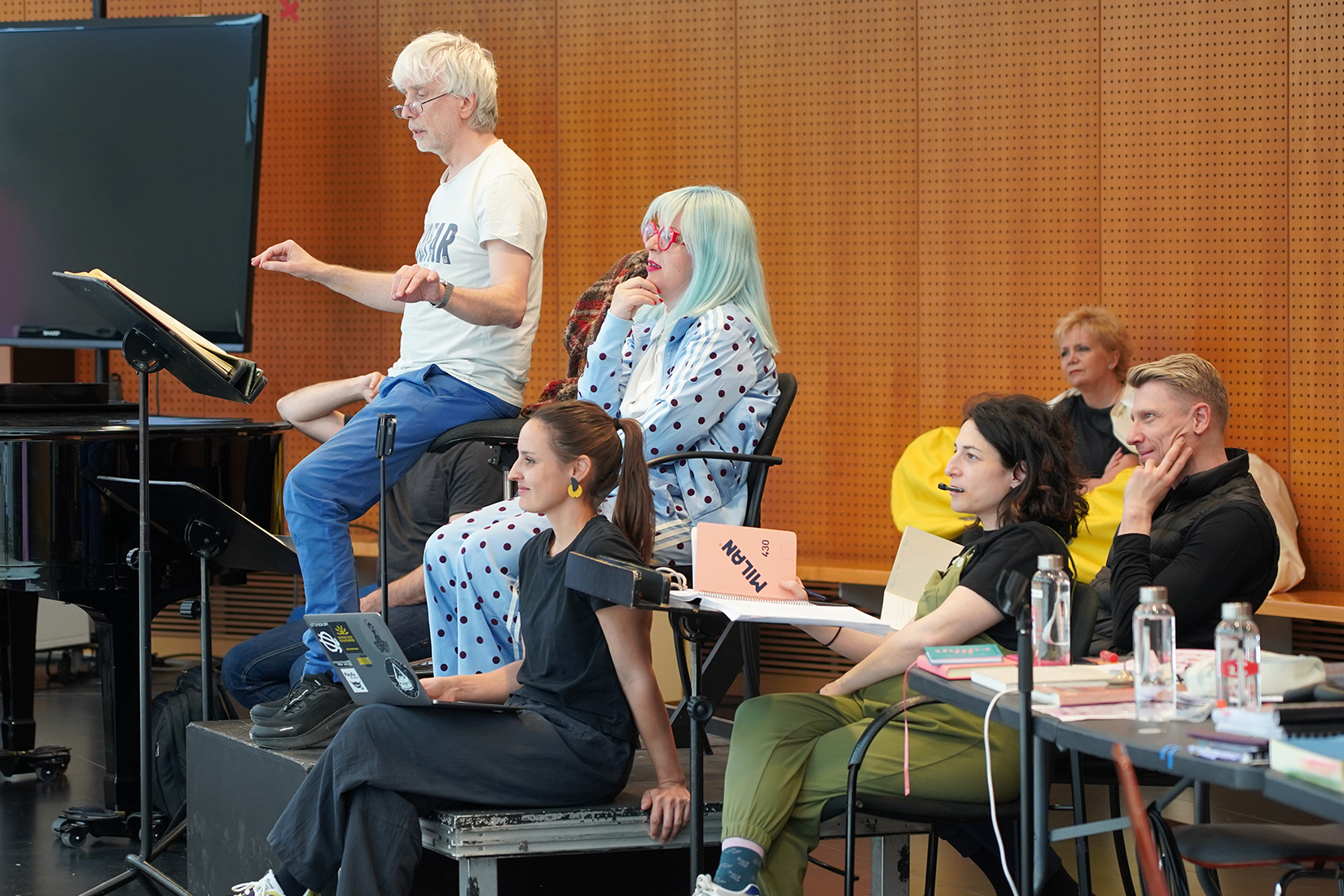
In the creative process, Pazos draws on the book Notes on “Camp” by Susan Sontag, who theorized the concept of “camp” in the 1960s as an aesthetic sensibility based on artifice, exaggeration, theatricality, and a taste for excess.
Co-produced with the Auditorio de Tenerife, the staging highlights the dynamism and emotional richness of the score, in which Wolfgang Amadeus Mozart combines humor, tension, lyricism, and humanity with a vision of romantic relationships whose modernity remains striking today.
New production by Marta Pazos: irreverence and audacity
The Gran Teatre del Liceu presents a new production of Le nozze di Figaro directed by Marta Pazos, which takes as its starting point the concept of “camp” formulated by Susan Sontag in Notes on “Camp” to build a festive, exuberant, and deeply critical stage space that questions social hierarchies.
The staging transforms the Almaviva palace into a giant wedding cake, through a powerful set design by Max Glaenzel, illuminated by Nuno Meira. This central image symbolizes both the marriage that structures the story and the social pyramid in which the characters are placed.
Pazos highlights aspects of the opera that connect directly with contemporary times: the irreverence of a work that was once censored, the audacity of its plot, and a dramatic structure that pushes the characters to their limits. This stage interpretation thus offers a free and creative rereading of one of the great masterpieces of the operatic repertoire.
Each layer of the cake reflects a hierarchy, a role, or a conflict. Beneath a festive appearance lies a rigid power structure that the characters attempt to challenge, preserve, or overturn. Transformed into a large stage object, the cake embodies the essence of a shared life and symbolically concentrates all the tensions of the opera: desire, power, ambition, and love. At the same time, it becomes a living and mutable space that hosts the characters and accompanies the dramatic transformation of the story.
The costumes by Agustín Petronio reinforce this idea by turning the characters into ingredients of a great emotional and scenic recipe. Each figure is associated with a flavor, a texture, or a specific intensity: Barbarina is honey; Cherubino, impulsive and tender, is a candy; other characters take on bitter or alcoholic notes, such as Basilio, who is cognac, according to their dramatic function. These architectural bodies are revealed as a living landscape through the work with choreographer Andreas Heise.
With this staging, Marta Pazos builds a meta-narrative on the dramaturgy of life and moves away from the literal representation of traditional opera spaces —the castle or the garden— to go directly to the essence of weddings: to celebrate them, exalt them, and turn them into the great emotional and symbolic center of the stage.
A large cast of both young and experienced voices
Le nozze di Figaro is an opera that flows with apparent naturalness: a torrent of luminous harmonies and memorable melodies. Yet behind this lightness lies a highly demanding vocal writing, with clean, precise lines full of nuance, requiring both technical agility and strong acting skills. Mozart builds living, shifting, deeply human characters, and this demands a cohesive cast capable of combining experience, youth, and a strong stage presence.
At the head of the cast are Luca Pisaroni and Sara Blanch, two voices with a solid Mozartian career who lead a high-level vocal and theatrical ensemble. Susanna, one of the most beloved and complex Mozart roles, finds in Sara Blanch a performer of great vocal freshness, theatrical intelligence, and a musicality that combines technical precision with expressive naturalness. Alongside her, Luca Pisaroni brings to Figaro a combination of Mozartian experience, stage charisma, and vocal solidity that has made him one of the major international references in the repertoire.
The central role of Figaro, written for bass-baritone, will also be performed by the young Galician bass Alejandro Baliñas. The role of Susanna will fall in the second cast to Anna Prohaska, while the Countess —a character of great lyrical and emotional depth— will be interpreted by Adriana González and Anett Fritsch.
The Count Almaviva, a role that combines authority, elegance, and vulnerability, will be sung by baritones Andrè Schuen and Samuel Hasselhorn. One of the most beloved characters in the opera, the page Cherubino, will be performed by Julia Lezhneva and Mercedes Gancedo, two voices of luminous timbre and great musical sensitivity.
The cast is completed by bass Roberto Scandiuzzi and Alejandro López as Doctor Bartolo. The remaining characters will be performed by a single singer throughout the run: mezzo-soprano Mireia Pintó will be Marcellina; Roger Padullés will perform Basilio; Moisés Marín will portray Don Curzio; Lucía García will be Barbarina, and Luis López Navarro will play Antonio.
The plot: social critique and rebellion in operatic form
Lorenzo Da Ponte was Mozart’s librettist in the trilogy formed by Le nozze di Figaro, Don Giovanni, and Così fan tutte. Le nozze di Figaro was the first collaboration between Mozart and Da Ponte. The opera is based on the stage play La Folle Journée, ou le Mariage de Figaro by Pierre-Augustin Caron de Beaumarchais, which had premiered two years earlier.
This four-act comic opera portrays the antagonism between social classes, masters and servants, and questions the privileges of the aristocracy. Considered one of the works that best reflects the complexity of the human condition, Le nozze di Figaro represents the culmination of late 18th-century opera buffa.
The work by Beaumarchais had been banned in France for its critique of aristocratic privilege. Even today, its message remains relevant: beyond political critique, it focuses on abuses of power and the corrupt morals of the ruling classes.
The opera tells the story of Figaro and his fiancée, Susanna, servants of the Count of Almaviva, a Sevillian nobleman with a predatory attitude toward women. On their wedding day, the Count attempts to revive an old feudal right to seduce Susanna before the marriage. When they discover his intentions, the couple devises a plan to thwart him with the help of the Countess, who is aware of her husband’s infidelities and deeply wounded by the situation.
At the same time, other characters contribute to the complications of the plot: the housekeeper Marcellina claims Figaro as her lawful husband, until an unexpected family connection is revealed, with the support of Doctor Bartolo and the music master Basilio. Also involved is Cherubino, a young page in love with all the women in the palace, who ends up causing both comic and compromising situations.
After a succession of misunderstandings, disguises, and conspiracies, the wedding of Figaro and Susanna can finally take place. But the Count does not abandon his intentions and, in the final garden scene, tries to seduce a woman he believes to be Susanna, without realizing she is actually the disguised Countess. Discovered and humiliated, the Count asks his wife for forgiveness, which she grants him in one of the most moving endings in Mozart’s operas.
Key musical moments
Le nozze di Figaro is considered one of the operas that best reflects the depth and variety of the human spirit. More than two centuries after its premiere, it continues to retain its power of fascination. Here, Mozart combines extraordinarily rich music with an emotional and theatrical universe that still speaks directly to today’s audiences.
At the helm of the Liceu Orchestra, Giovanni Antonini, one of the leading international specialists in Classical and Mozart repertoire, will bring to life one of the most brilliant and recognizable works in the operatic canon. The opera opens with the famous overture: a vertiginous, energetic, and vibrant score that, from the very first bars, concentrates the frantic pace, humor, and web of intrigue that run through the entire work.
Among the key musical moments is, in the first act, Figaro’s aria Non più andrai, one of the most famous pages in the opera. Mozart overlays a memorable melody with a military march rhythm full of irony. After the Count of Almaviva discovers Cherubino hiding in Susanna’s room and decides to send him off to war, Figaro affectionately mocks the young page and the end of his amorous adventures.
Also in the first act appears one of the most well-known melodies of the entire opera, Non so più cosa son, in which Cherubino expresses, with nervousness and adolescent excitement, the confusion of first romantic impulses.
In the second act, Cherubino sings Voi che sapete, an aria of extraordinary delicacy in which the character briefly sets aside his youthful impulse to wonder what it truly means to love. Here, Mozart creates one of the most tender and moving melodies of his entire output.
Another major moment comes in the third act with Dove sono, the Countess of Almaviva’s final aria. While waiting for Susanna, with whom she has devised a plan to unmask the Count, the Countess nostalgically recalls the time when she was happy. It is a passage of great emotional depth, in which Mozart combines elegance, fragility, and dignity with extraordinary sensitivity.
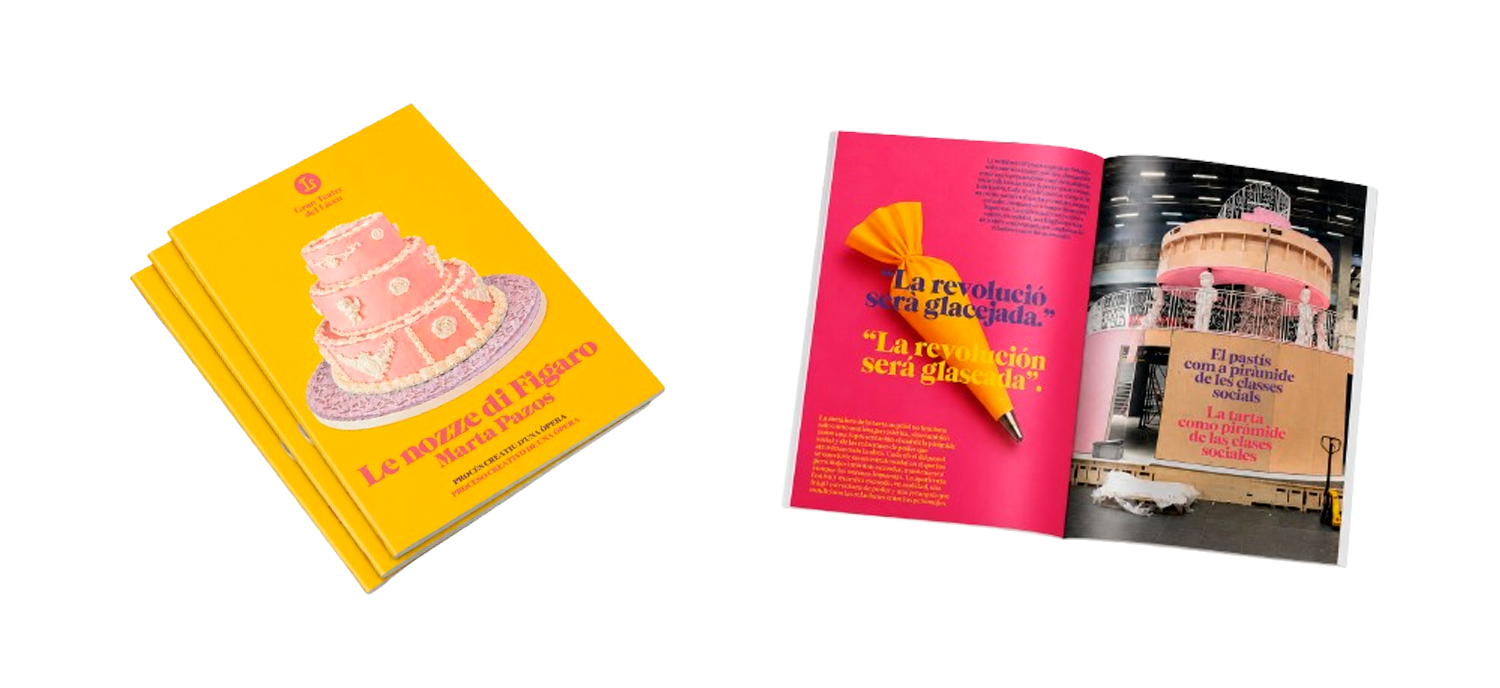
Special limited-edition magazine for the new production of Le nozze di Figaro
On the occasion of the new production of Le nozze di Figaro, the Gran Teatre del Liceu expands the audience experience with a special limited-edition magazine inviting readers to delve into the opera’s creative process. In addition to the free program booklet, this exclusive publication —available from June 3 for a price of 10 euros— features unpublished images of the artistic development and costumes of the production conceived by Marta Pazos, offering a unique behind-the-scenes perspective to discover the visual and stage universe that brings this new operatic proposal to life.
The magazine is published in a bilingual Catalan-Spanish edition and also includes English translations to make the content accessible to an international audience. It will be available during performance days at the theatre lobby shop.
With the support of: