

This event has already taken place.
We invite you to explore the current schedule.
An essential Baroque work, timeless for its depth
«I have loved to the point of madness; for me, it is the only sane way to love»
Françoise Sagan
Orlando, one of Georg Friedrich Händel’s most celebrated operas, is a cornerstone of the Baroque repertoire, having transcended time due to its emotional complexity and intricate musical development. Composed in 1732, Orlando is a serious opera based on Ludovico Ariosto’s epic poem Orlando Furioso, a tale that intertwines mythology, love, and madness. The opera premiered at King's Theatre de Londres, a key venue in Händel’s career, and has remained an essential work on opera stages worldwide, particularly for its exploration of the human psyche and its musical expression.
The libretto of Orlando, written by the Italian poet and librettist Carlo Sigismondo Capece (who also provided the verses for two other Handelian operas, Ariodante and Alcina), presents a story rich in internal conflicts and unrestrained passions. The protagonist, Orlando, is a medieval knight who, amid war, falls madly in love with the beautiful Angelica. However, the story takes a tragic turn when Angelica falls in love with Medoro, a young man who, in turn, rejects Orlando’s affections. Consumed by jealousy and despair, Orlando loses control of his reason, leading to a temporary madness. In his delirium, he becomes a complex and ambiguous character, caught between the nobility of his nature and the irrationality of his emotions.
The figure of Orlando is central to the work, and Händel’s music masterfully captures the protagonist's internal struggle. Throughout the opera, the score explores a wide range of human emotions, from the anguish of despair to the exaltation of love. Orlando’s arias, such as the famous “Verdi prati,” are the perfect vehicle for conveying his feelings of suffering and frustration, and Händel's ability to use the human voice as a means of communicating the psyche of his characters is one of the great virtues of the work.
The character of Angelica, on the other hand, is the driving force of the conflict, but her romantic dilemma gives her depth as a character. Despite her love for Medoro, Angelica is a noble figure who, at many moments in the opera, appears as a symbol of virtue and honor. Her music is equally complex and dynamic, with arias that oscillate between sweetness and pain, underscoring her struggle between duty and desire.
Another key element in Orlando is the relationship between reason and madness. The work examines how love can disturb the human mind, and the character of Orlando becomes a study of emotional and mental fragility. The music, laden with ornamentation and complexity, reflects this emotional instability, with arias that range from calm to despair. Händel’s ability to create this kind of tension and resolution within the music is one of the reasons why Orlando remains a beloved work to this day.
With rich orchestration and a prominent use of the basso continuo that adds depth to the musical texture, the arias stand out for their virtuosity and complexity, with numerous moments where the singers showcase their technical prowess. The work was written for Senesino, a castrato with supernatural abilities, which is inferred from the varied range of registers the score demands of its protagonist, especially in the particular and highly demanding “madness scene” that closes the second act.
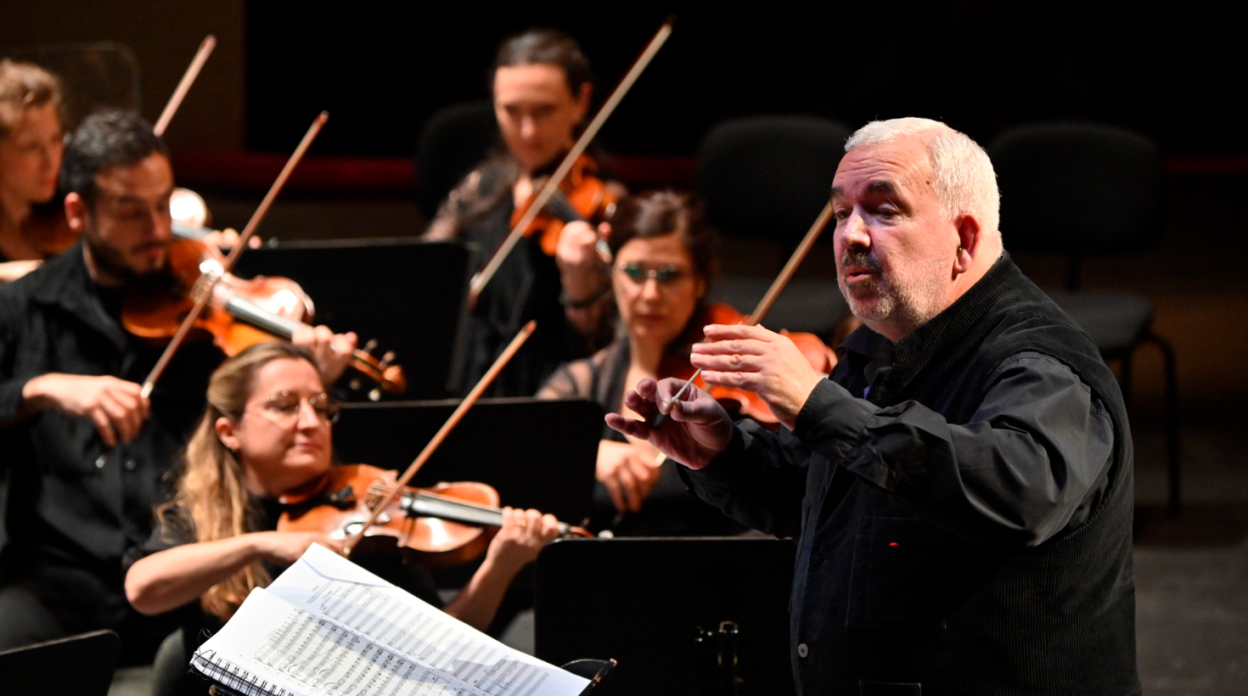
The “Caro Sassone” was the ambassador of Italian opera in the United Kingdom (in 1711, Rinaldo was the first Italian opera presented in the country). Händel’s style had such a significant impact that it influenced composers of the time and garnered the support of the public. Marc Minkowski, a refined advocate of the Baroque composer, once again takes the helm of his ensemble, Les Musiciens du Louvre, to reveal this rich score to us.
Opera seria in three acts
Anonymous libretto based on the libretto by Carlo Sigismondo Capece, L’Orlando, overo La gelosa pazzia, based on the epic poem Orlando Furioso by Ludovico Ariosto.
World premiere: 27/01/1733 at the King’s Theatre in London
Premiere at the Gran Teatre del Liceu
With the support of:

|
Dates and tickets
| Subscription G |
- First part 1 h 50 min
- Intermission 30 min
- Second part 50 min
Artistic profile
- Les Musiciens du Louvre
- Conductor Marc Minkowski
- Set design
- Loïc Richard


Hand program
Hand program
Get ready for “Orlando”
Ciutat de Clàssica
Each season, Barcelona hosts more than 1,100 concerts and operas performed by the most important international conductors, orchestras, singers, and soloists, in the three great temples of classical music in Barcelona: the Gran Teatre del Liceu, the Palau de la Música Catalana, and L’Auditori de Barcelona.
The concert version of the opera Orlando by Georg Friedrich Händel is part of the Ciutat de Clàssica 2026 programme.