


'Manon Lescaut', the first great success of Giacomo Puccini, returns to the Gran Teatre del Liceu with a contemporary interpretation by Àlex Ollé. Starring Asmik Grigorian, this production presents Manon as a 21st-century undocumented immigrant woman and reclaims the archetype of the Puccinian tragic heroine, caught between the desire for love, the search for security, and an implacable destiny




Before beginning work on Manon Lescaut, Giacomo Puccini was a talented composer, but one with an uncertain future. However, just after its premiere in 1893, and before he had even turned thirty-five, his profile changed: Puccini emerged as the new global opera superstar, the natural heir to Giuseppe Verdi. It was at this point that he first unleashed his full power and the most recognizable traits of his style: immortal melodies, great orchestral force, a powerful dramatic sense, and believable characters, with a particular emphasis on the heroic and tragic dimension of his female protagonists. The production of Manon Lescaut now arriving at the Liceu, signed by Àlex Ollé, updates this passionate story and renews the figure of Manon as a valid archetype for the twenty-first century.
“Manon Lescaut, premiered in 1893, was the first major triumph of Giacomo Puccini, the impactful work with which he began a long thirty-year career of continuous successes”
It is no secret that audiences feel, and will always feel, an unconditional love for the operas of Giacomo Puccini. The explanation is simple: his melodies reach the depths of the soul, his music is warm and rich in orchestral colors, and his stories are full of passion, pain, and death. But there is a common thread that unifies all his masterpieces: the great care he always put into his female characters, heroines who loved like no one else and tragically paid the high price of their emotions. But before Mimì, Tosca, or Butterfly were born, there needed to be a first woman who laid the foundations of the Puccinian model. And that woman was Manon Lescaut, the protagonist of his first major success in 1893, the beginning of a reign of more than thirty years in the global operatic scene.
A Manon in the Italian style, of flesh and blood
In 1889, after the premiere of Edgar —his second opera, a moderate failure that nearly derailed his promising career as Giuseppe Verdi’s successor, and which he attributed to the weakness of the libretto— the young Giacomo Puccini made a drastic decision: he would no longer work on commission, he would decide for himself which stories to set to music, and he proposed a risky move to his publisher, Giulio Ricordi: to retell the story of Manon Lescaut, a French novel from the early 18th century by the abbé Prévost, full of adventure and forbidden love, and which was still very popular
The risk was that Manon Lescaut had already been adapted to opera several times, and the last time, in 1884, under the shortened title Manon and by Jules Massenet, had achieved resounding success. No one in their right mind would have gone through with this plan, but Giacomo Puccini was determined: he was obsessed with the novel’s protagonist, felt that Massenet had presented her as a young woman of volatile character, and believed he could present a different Manon, stronger, tormented by her passions, and destined for an unforgettable death. He wanted to present her “in the Italian style,” of flesh and blood, conflicted and real. Against all odds, Puccini triumphed and surpassed Massenet. His next opera was La bohème (1896), the full confirmation of his genius, and another demonstration of his special talent for expressing the power of youthful first loves.
Absolute fidelity to the story
One of the aspects in which Giacomo Puccini was inflexible when approaching Manon Lescaut was the libretto, which he wanted to be faithful to Prévost’s novel, something Massenet had not respected. Creating the text was quite an adventure: more than five people were involved in its drafting, Puccini requested changes constantly —a pattern in his working method that continued through Turandot—, and he even revised it in 1924, shortly before his death. What interested him most about Manon’s personality was her mix of fidelity and irresponsibility: as a character, she represents the woman who seeks pleasure, and therefore is passionate in love, but sometimes fails to recognize the harm her actions cause.
“Àlex Ollé’s production asks what kind of woman Manon Lescaut would be today, and presents her as an undocumented immigrant seeking safety in a new country”
The story begins with the meeting of the main couple, the knight Renato Des Grieux —a temperamental young man from a good family— and Manon, a young woman also undisciplined, whom her father has sent to Rouen to enter a convent. On the journey, she is accompanied by her brother, Lescaut, and an older man, Geronte, who tries to lure her with his wealth. But Des Grieux gets ahead of him: he falls in love with Manon, asks her to flee with him, and they embark on an adventure. Even so, she has a weakness: she is passionate about luxury and covets security and economic stability. In the second act, we learn that she has left Des Grieux for the wealthy Geronte. However, she misses the passion of first love and seeks a way to reunite with Des Grieux. When they meet, he forgives her, and they run away together again, taking some of Geronte’s jewels and money, but unfortunately are arrested by the police.
In the third act, Manon is in prison and has been sentenced to exile in Louisiana, the French colonial possession in North America, where criminals and prostitutes were sent. Des Grieux cannot live without Manon, so he bribes the captain of the ship crossing the Atlantic to take him on board as well. However, it becomes a disastrous journey: in the final act, the couple crosses a desert to reach English territory and gain freedom, but they have gone days without food or water. Manon is weak and dies, doing so in the arms of her beloved, finally faithful and constant in love.
Asmik Grigorian, a perfect Manon
Manon is a character of great complexity, which in Giacomo Puccini’s version has moments of high emotional intensity —the aria in the fourth act, “Sola, perduta, abbandonata”— and must also display her changing character, from youthful innocence to the awareness of her tragic fate. It therefore requires singers of great physical strength, beautiful timbre, and high dramatic level, qualities embodied by Lithuanian dramatic soprano Asmik Grigorian, one of the brightest stars in today’s operatic sky, who already dazzled at the Liceu in June 2025 with Rusalka. Alongside her is a balanced and experienced cast, including American tenor Joshua Guerrero as Renato Des Grieux, Belarusian baritone Iiurii Samoilov as the brother Lescaut, and Italian bass Donato Di Stefano as Geronte di Ravoir, a role reserved for veteran singers. This opera also includes three smaller roles —Edmondo, a dance master, and a musician— performed respectively by Croatian tenor Filip Filipović, Valencian tenor Álvaro Diana, and Argentine soprano Mercedes Gancedo. Overall, a cast worthy of the challenge, because Puccini, although his music comes easily and offers immediate sensory pleasure, is never easy to sing.
“Soprano Asmik Grigorian, after dazzling in Rusalka, returns to the Liceu to present the most desperate side and the psychological complexity of the character of Manon”
An opera against the law of gravity
Puccini reached maturity as a composer during a time of great transformations in opera. Just when Manon Lescaut premiered —at the Teatro Reggio in Turin— Verdi was rehearsing at La Scala in Milan what would be his last opera, Falstaff. At that time, Romanticism had also been left behind, and the maturity period of the so-called Giovane Scuola had begun (which included composers such as Cilea, Mascagni, Leoncavallo, Giordano, Catalani, and Puccini himself), which proposed more realistic and raw stories, something that would later be known as verista opera. At the same time, Puccini had received great influence from the dense orchestration of late Verdi (the Otello period), but above all from post-Wagner German opera. This makes his style, from Manon Lescaut onward, resumable as a permanent struggle against the law of gravity: dense orchestrations, full of detail, with notable sonic weight, and yet seeking elevation toward the sublime, accompanying the beauty of the voices with warm timbres. Puccini was also a great exponent of the new way of presenting operas: as an action drawn directly from life, without overture or preludes, where sublime moments —arias and duets of breathtaking beauty— emerge from the action with total naturalness.
A production that redefines Manon in the 21st century
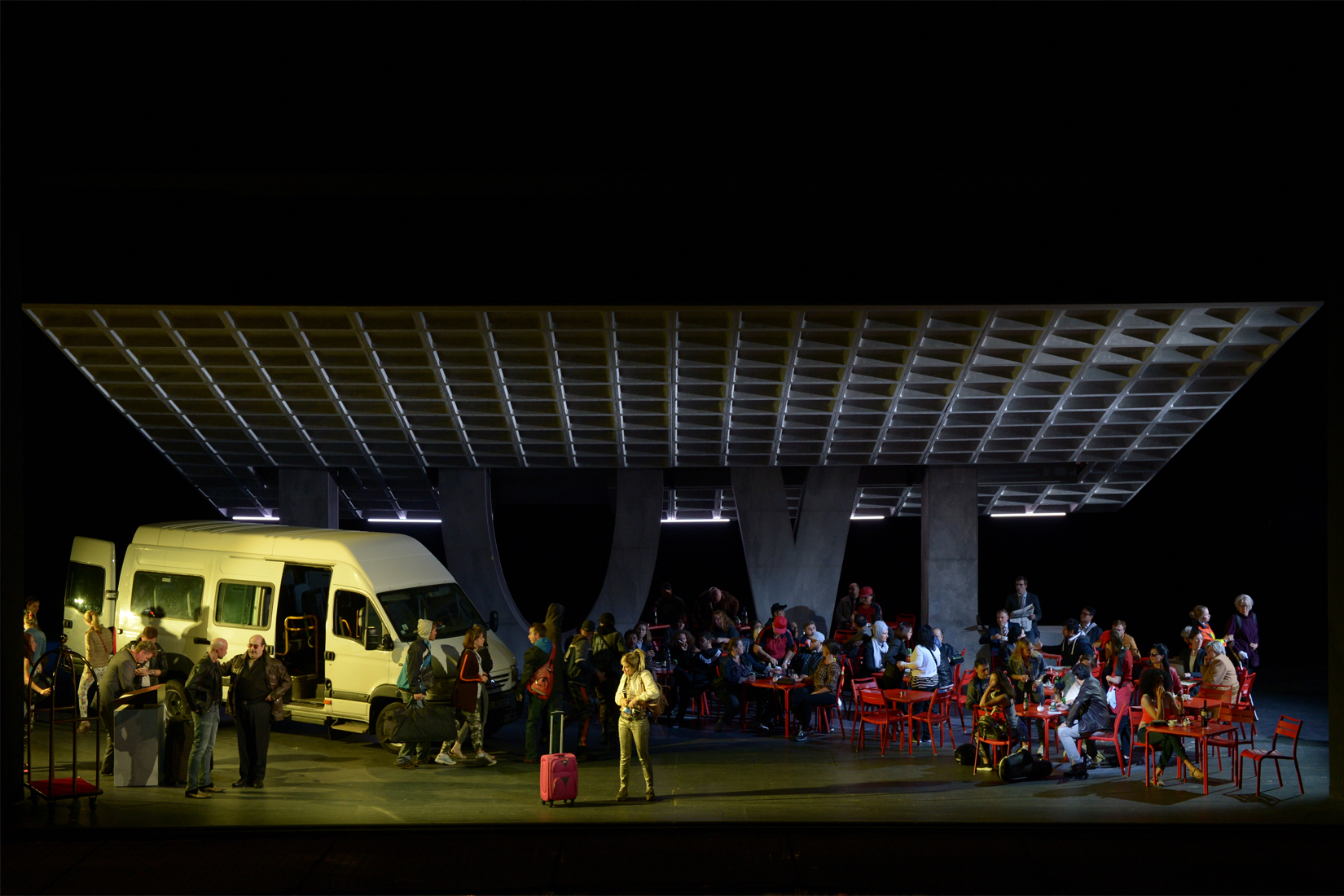
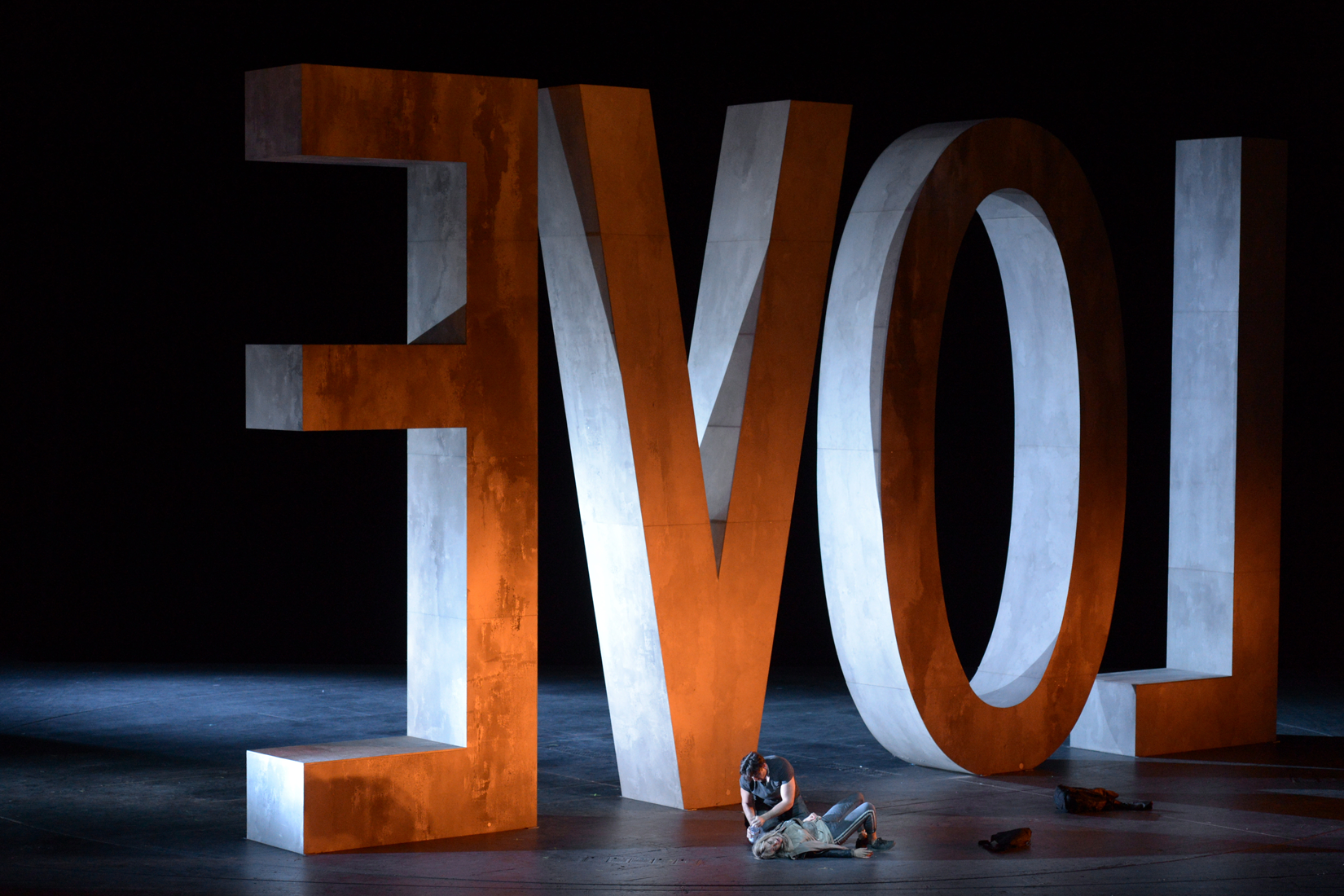
In the same way that Puccini wanted to be fiercely contemporary, the production now presented at the Liceu, directed by Àlex Ollé —and originally premiered at the Opera of Frankfurt—, offers a version of Manon Lescaut adapted to the 21st century. If Manon is a universal female archetype that, as 19th-century French writer Guy de Maupassant said, is comparable to those of Eve or Cleopatra, what does she have to tell us today? When he conceived his production, Ollé started from the following idea: Manon is a woman seeking security, but surrounded by hostile men looking to exploit her, except for Des Grieux, the only one who truly loves her. In this way, he found a parallel with the situation currently faced by many immigrant and exiled women in Europe. In this version, Manon arrives in France irregularly from another country, seeking safety, but is a victim of abuse. Only love will save her, and therefore a guiding aesthetic element of the work —together with contemporary costumes and striking lighting— is the presence, across all four acts, of a stage structure that spells the word love, and is the only one that remains standing when she dies.
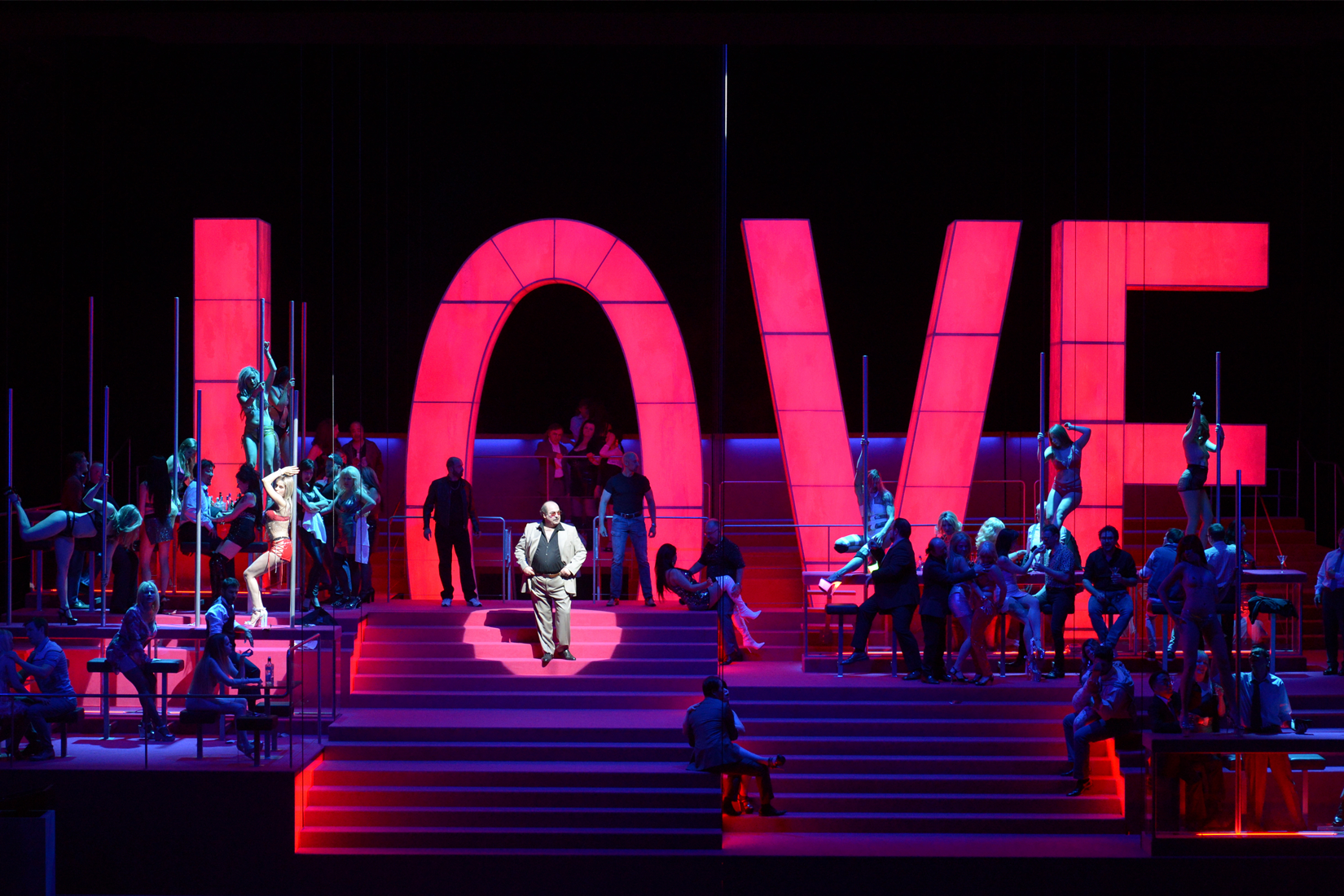
Manon Lescaut is, at its core, a cruel story. All the hopes and desires of the protagonist are crushed by her mistakes, but also by the wickedness of the people around her. She has a chance for redemption in love, but always encounters an obstacle, and the music of Giacomo Puccini fits this emotional torment of Manon and Des Grieux perfectly. His first great success was not an accident: it was the result of brilliantly tackling a universal story of tragic love, which almost 130 years later continues to move us. Before Puccini, Manon was an important archetype. After Puccini, she became an eternal myth.
Key musical moments.
Act I, Renato Des Grieux
“Donna non vidi mai”
This brief tenor aria corresponds to Des Grieux’s love at first sight when he is before Manon for the first time, at the moment she descends from a horse-drawn carriage (in Ollé’s production it is a van). Des Grieux is a temperamental young man, but inexperienced, who feels the fatal arrow of love and expresses his sudden emotions in a lyrical passage of great beauty, rising to reach fabulous high notes, marking his transformation: from now on, the emotion that will dominate him is the ardor of love, and he will do anything to be with Manon, even die for her.
Act IV, Manon Lescaut
“Sola, perduta, abbandonata”
As Manon and Des Grieux walk across an arid plain in Louisiana, having gone days without food or water, she finally loses her strength. Manon feels that she will achieve neither freedom nor a happy life with her lover, and prepares to die. In the final hour, she expresses the loneliness and abandonment she feels, in a hostile land, after having suffered all kinds of disappointments and humiliations. This great aria was a later addition by Giacomo Puccini in the 1924 revision of the score, and is one of the most desolate and beautiful moments of his career, a central piece of the repertoire for dramatic soprano.