

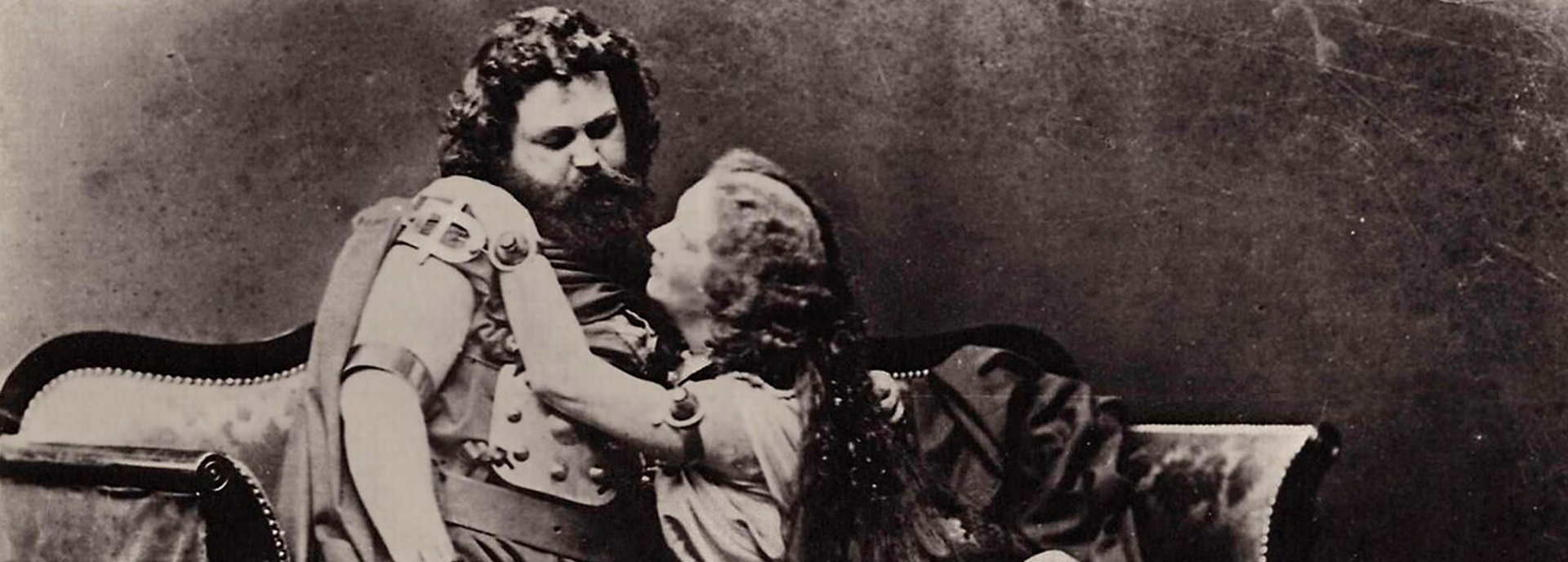
During his exile in Switzerland in the 1850s, Wagner delved into medieval myths and found inspiration in the legend of Tristan and Isolde and his platonic love for Mathilde Wesendonck. He thus composed an opera about absolute love, a feeling so immense that it transcends time, space, and existence, becoming one of opera’s masterpieces.




The story of Tristan and Isolde began to circulate widely across Western Europe —mainly in what are today the British Isles and French Normandy— around the 11th century, with the appearance of the first written accounts in French. It was primarily the story of Tristan, a fabulous knight capable of accomplishing the most impressive martial feats, who in successive adventures killed giants and dragons and earned the honor of receiving the hand of the beautiful Isolde, princess of Ireland, for his uncle Marke, king of Cornwall and vassal of the powerful King Arthur. Although the main versions are French —those of Béroul and Thomas of England— Richard Wagner became acquainted with the legend through an Old High German version written in the 12th century by Gottfried von Strassburg. Between the 1830s and 1850s, Wagner was deeply interested in medieval Germanic epic and the school of the minnesingers —the troubadours of central Europe— and drew from this material for all his major works: Tannhäuser, Lohengrin, The Ring of the Nibelung, The Mastersingers of Nuremberg, Parsifal, and, later, Tristan und Isolde.
«With Tristan und Isolde, Wagner composed a revolutionary opera that pushed Romantic ideas of love to the limit and was accompanied by new, tense music.»
However, of this story, Wagner was only interested in one aspect that, while important in the ancient legends, was less so for Gottfried von Strassburg: the inevitable love between the pair, brought on by a powerful magic potion that makes them long to be together, even though their love is ominous, as Isolde must marry King Marke and Tristan is the king’s nephew, heir, and most loyal friend. Impossible love —a theme recurring widely throughout Wagner’s work, from his second opera, titled The Prohibition of Loving, to Twilight of the Gods— strongly resonated in the composer’s life. In 1848, Wagner had to flee Dresden after the failure of the anarchist revolution in which he participated and went into exile in Switzerland. In Zurich, he met one of his patrons, the textile merchant Otto Wesendonck, and his young wife Mathilde. Wagner was still married to his first wife, Minna, but their relationship was strained, and he found in Mathilde a muse with whom he could discuss music, literature, and the most intense emotions sublimated through art. They never had a sexual relationship —it was primarily a platonic love, expressed mainly through the exchange of letters— but Wagner formed his idea of absolute love through his obsession with Mathilde, which inspired the language and central core of his opera’s story, which he wanted to build as the definitive monument to love.
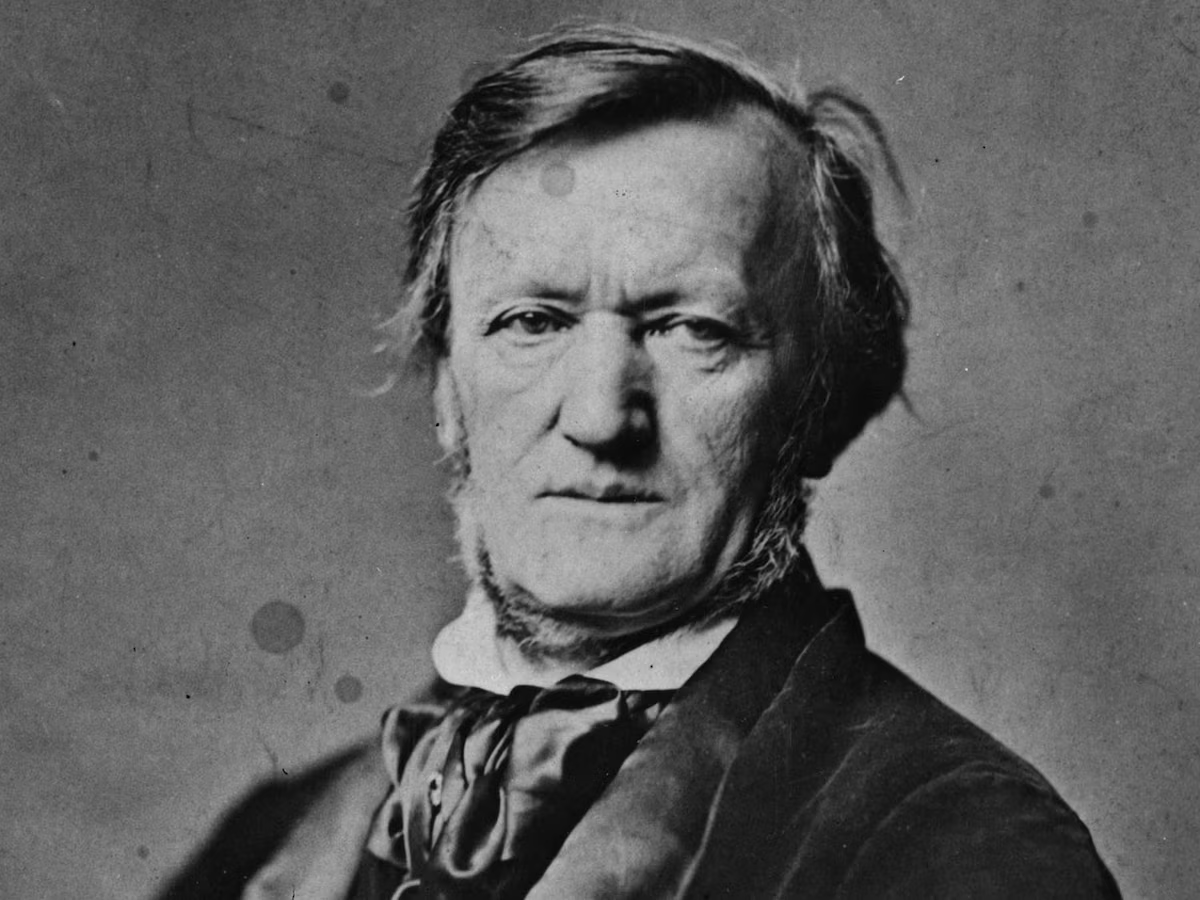
Wagner focused on three episodes of the story: the first act narrates Tristan and Isolde’s journey by ship from Ireland to Cornwall; Isolde wishes to die and kill Tristan, whom she urges to drink a deadly potion, but Brangäne secretly switches it for a love potion; from then on, their passion becomes uncontrollable. In the second act, Wagner staged the great love duet, but also the fatal catastrophe: King Marke, Isolde’s lawful husband, discovers the affair. Tristan duels with the traitor Melot, who informed the king, and allows himself to be wounded to hasten his death. The third act shows Tristan agonizing, awaiting Isolde’s arrival. When she arrives, he can die happy, and Isolde will join him, as only in death can their love be consummated, eternal and invincible.
«The production also seeks to reinforce Wagner’s ideas about love: a constructive force that stops for no obstacle and transforms reality.»
Stripped almost entirely of plot, the opera is a volcano of emotions in the finest Romantic tradition. Wagner achieved an unprecedented feat: a metaphysical piece —heavily influenced by the philosophy of Arthur Schopenhauer— and at the same time poetic, in the tradition of Novalis, the great German Romantic master. For this work, he composed new music, with tense, nocturnal, uncertain harmony and an infinite melody, and although he could not premiere it, not without difficulties, until 1865, the subsequent impact of Tristan und Isolde has been incomparable. It is not only Wagner’s masterpiece but one of the great masterpieces of all Western art.