

'Akhnaten' (1984) was the culmination of a trilogy through which Philip Glass shook the foundations of avant-garde opera. In fact, Glass has never liked the word opera: he has always been more drawn to the concept of staged action with music. However, with 'Akhnaten' —the continuation of 'Einstein on the Beach' and 'Satyagraha'— he took a decisive step toward reconciling tradition and experimentation. This work about Pharaoh 'Akhenaten' retains Glass’s repetitive, pulsating style, while also developing an organized narrative and a musical language closer to operatic conventions.




Act I. Chorus
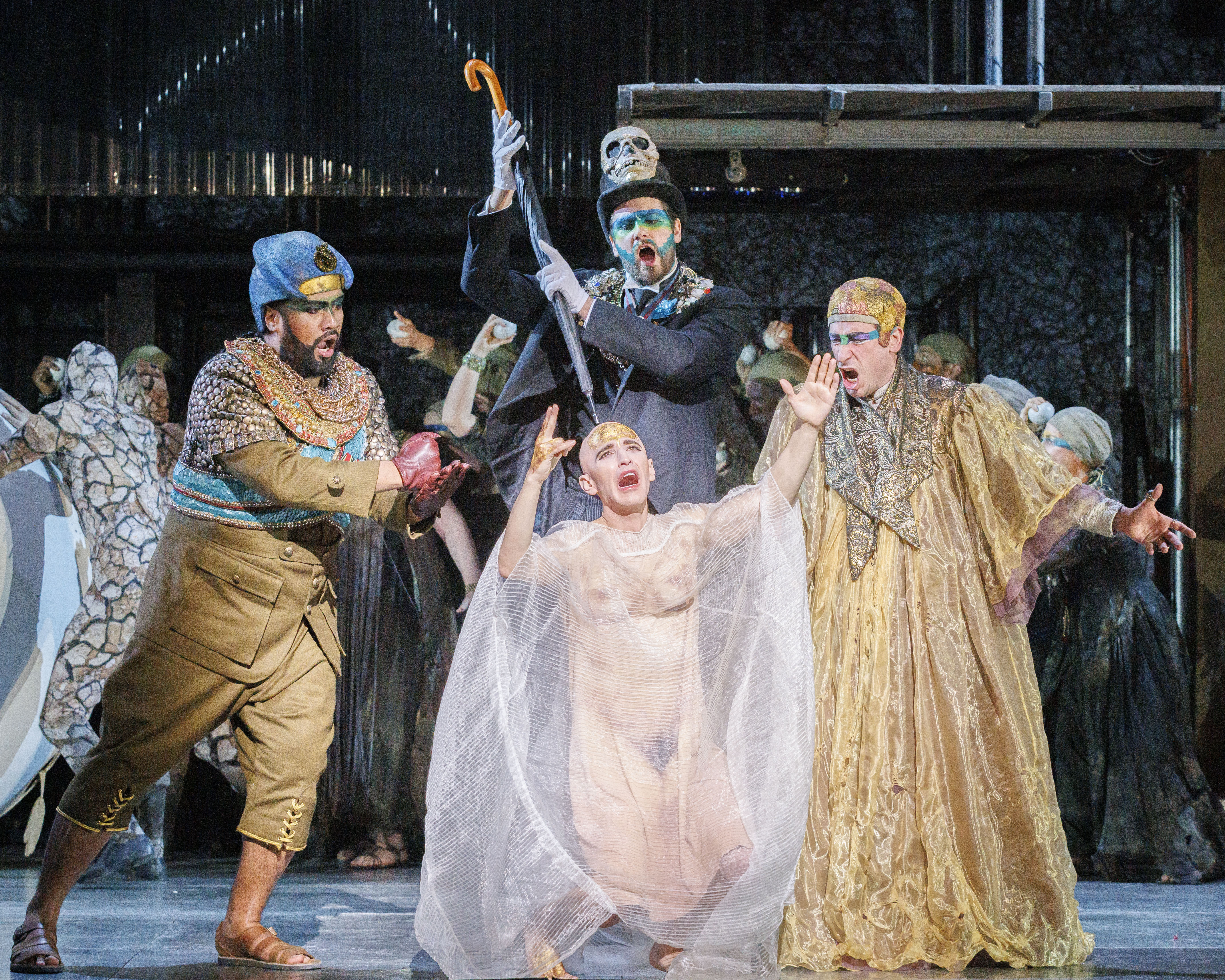
“Funeral of Amenhotep III”
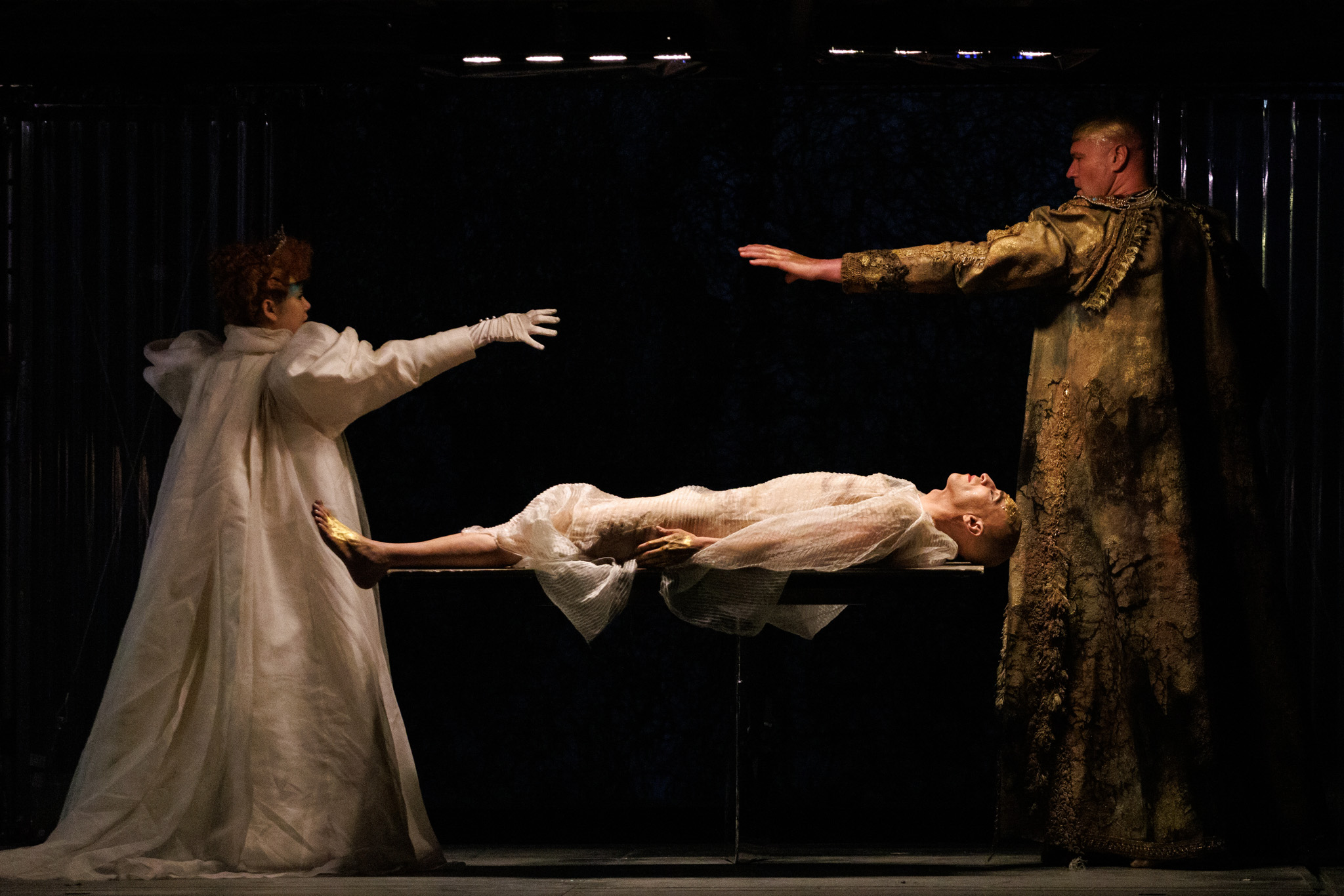
After a prelude that introduces us to the opera’s atmosphere, marked by Glass’s style —a constant flow of hypnotic arpeggios with an unrelenting rhythmic pulse—, the first scene of Akhnaten is set at the funeral of Pharaoh Amenhotep III. In this section, the vigor of the chorus and the orchestra’s electric density are accompanied by a strong percussion section in which Glass attempted to imagine, based on the musicological studies available to him, what the ritual music of ancient Egypt might have sounded like. Adapted, of course, to his purely minimalist language.
Act II. Akhenaten, Nefertiti
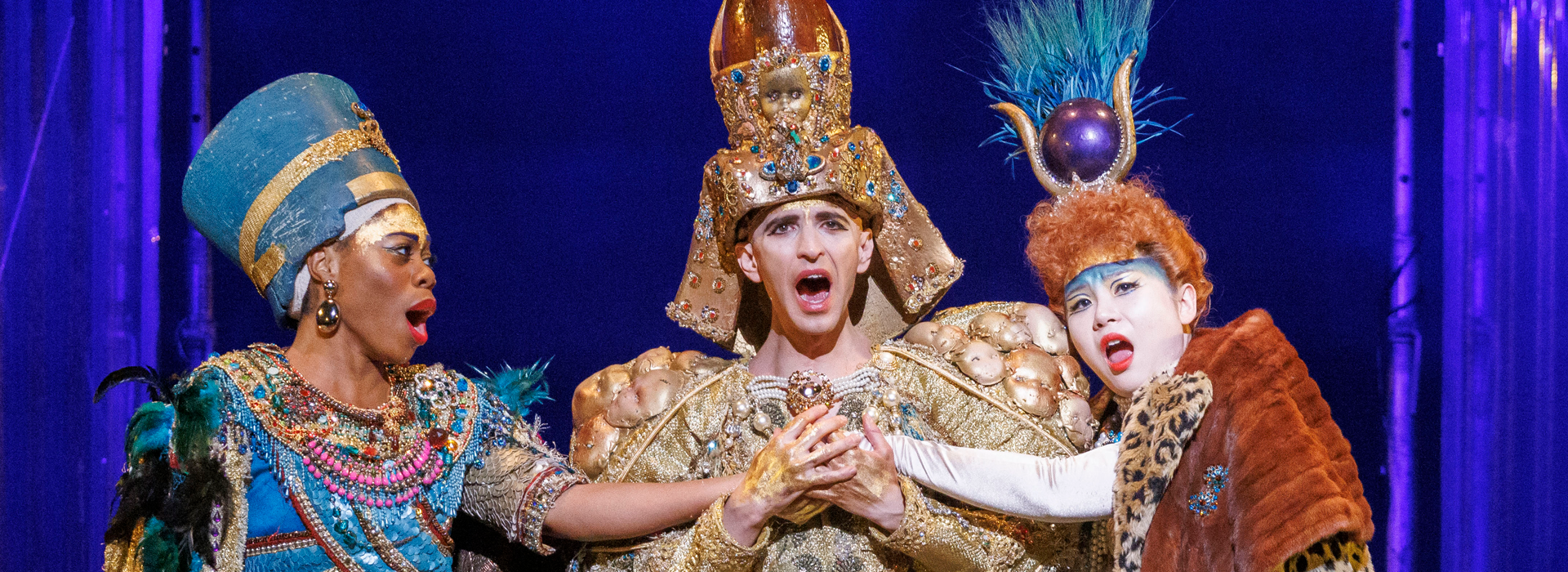
“Akhnaten and Nefertiti”
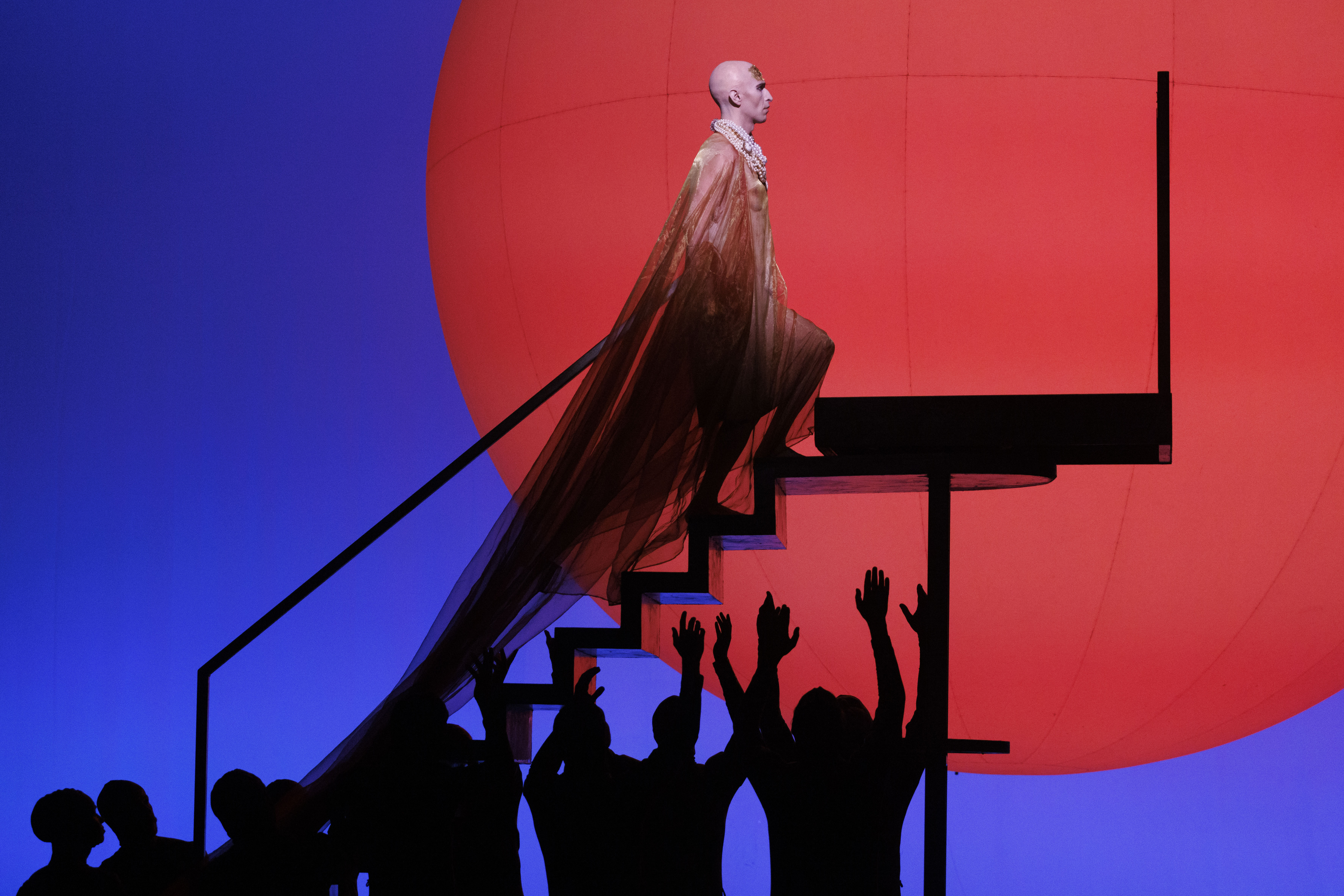
Against a deep red background, Pharaoh Akhenaten and his wife, Nefertiti, begin a new phase of their reign: Aton is the sole god of Egypt, and the construction of the City of the Horizon is underway, resulting in a scene of majestic celebration of power, religious fervor, and the love that binds the couple. This scene is a duet between the countertenor and the mezzo-soprano of extraordinary difficulty, as it sits in a very high vocal tessitura and is accompanied by an orchestral wall that, as the duet progresses, swells in volume until culminating in an explosive ecstasy.
Act II. Akhenaton
“Hym to the Sun”
Once the City of the Horizon, consecrated to the god Aton, is completed, Akhenaten turns to the sun in prayer. This part of the libretto is inspired by an inscription found in the ruins of Al-Amārna that archaeologists believe may have been written by the pharaoh himself. It is also the protagonist’s main part, a long passage for countertenor that conveys the various emotions defining Akhenaten: faith that borders on fanaticism, but also the desire to achieve the sublime state of union with the sun, accompanied by a luminous orchestral accompaniment, of course.
On stage
Akhnaten is an opera that, since its premiere with great success in Stuttgart in 1984, has regularly reappeared in theaters around the world. This means it has never been a rarity or an eccentricity —it has, fortunately, left behind the unfortunate status of being a dark work that is occasionally revived only to fall back into obscurity—, but it also cannot be considered a standard repertoire piece, the kind that professional singers memorize completely. Akhnaten is an opera that requires specialists: it involves learning texts in ancient Egyptian and undergoing long rehearsals; it is not for any singer and cannot be learned quickly. For this reason, the artistic team presenting Philip Glass’s third major opera in Barcelona will, to a large extent, be the same one that has performed it since the 2016 revival directed by Phelim McDermott. Almost ten years have passed since its premiere in London, and during this time the production has been staged in cities such as Los Angeles and New York, meaning that now, arriving in Barcelona, the cast has perfectly internalized the opera’s musical and vocal mechanisms and is capable of performing it flawlessly.
"The orchestra [in the case of Akhnaten] is unusual, with winds, brass, and a large percussion section, but no violins; the absence of strings creates an ominous, meditative sound, very fitting for a tragic subject like this."
In fact, the musical direction will be led by American conductor Karen Kamensek, who has previously conducted from the pit at the Metropolitan Opera in New York, and who, within her remarkable eclecticism —tackling everything from 17th-century opera to works of the 20th and 21st centuries— has worked extensively on Philip Glass’s repertoire. Kamensek will have the responsibility of guiding the Gran Teatre del Liceu Symphony Orchestra through the curved lines and rapid tempos of Glass’s music —this will be the first time in many years that a classic minimalist work, a very uncommon style despite its popularity, is performed at the Liceu. Kamensek’s baton will also direct the Gran Teatre del Liceu Chorus and its director, Pablo Assante, who has a central role in Akhnaten, as well as the principal singers. The leading role of the pharaoh will be sung by the renowned American countertenor Anthony Roth Costanzo, who has performed the extremely demanding role of Akhenaten since 2016 —challenging both musically and dramatically, given that the character barely leaves the stage from the first scene. Meanwhile, Queen Nefertiti will be portrayed by Tunisian-Canadian mezzo-soprano Rihab Chaieb, who has also performed this role for years in perfect harmony with Roth Costanzo.
An important role in this opera is that of the scribe, written for baritone with long declamatory passages, which requires the performer to be both a skilled singer and a strong actor. This role will be performed by American Zachary James, who has extensive experience in opera, as well as in musical theatre on Broadway and even cabaret. The other major role in the opera, Queen Mother Tiy, will be sung by Barcelona-born soprano Katerina Estrada Tretyakova. The minor roles will be performed by local singers: baritones Joan Martín-Royo and Toni Marsol will be General Horemheb and Ai, the pharaoh’s advisor, respectively, and tenor José Manuel Montero will perform the High Priest of Amun. Finally, in the third act, the six daughters of Akhenaten and Nefertiti appear, performed by six outstanding singers: Alba Valdivieso, Carmen Buendía, Mar Esteve, Carol García, Marina Pinchuk, and Anna Tobella.