

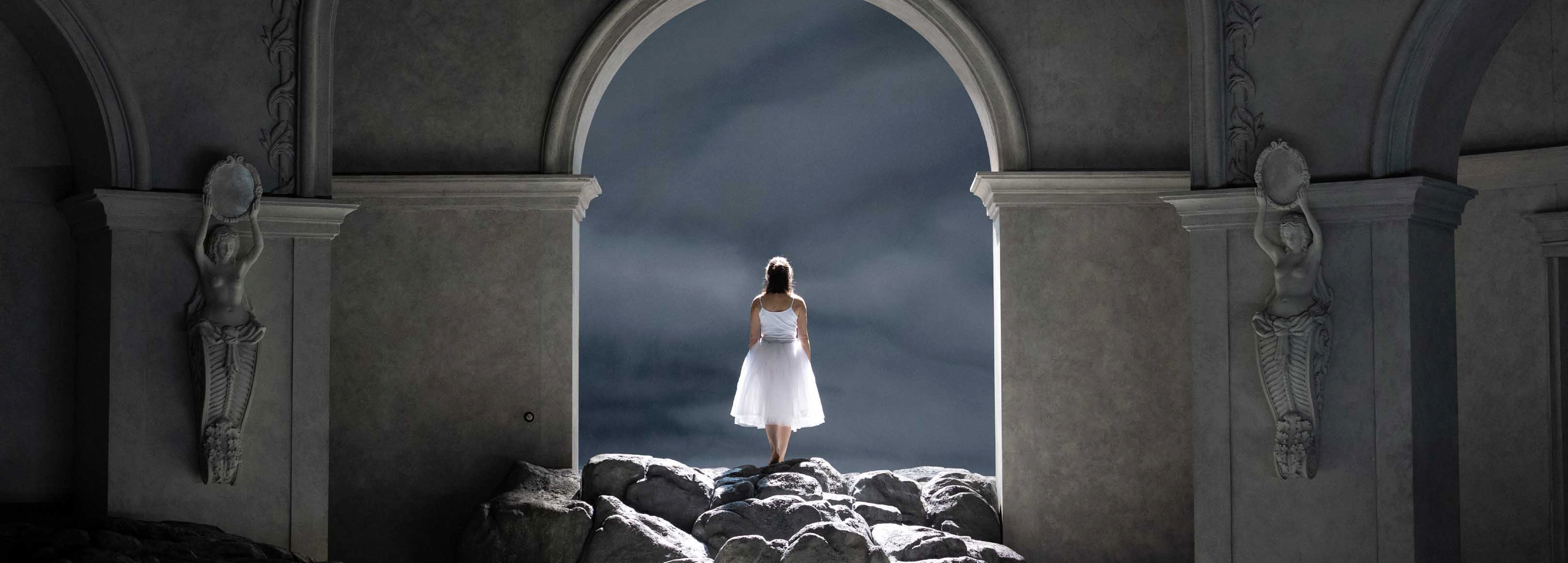
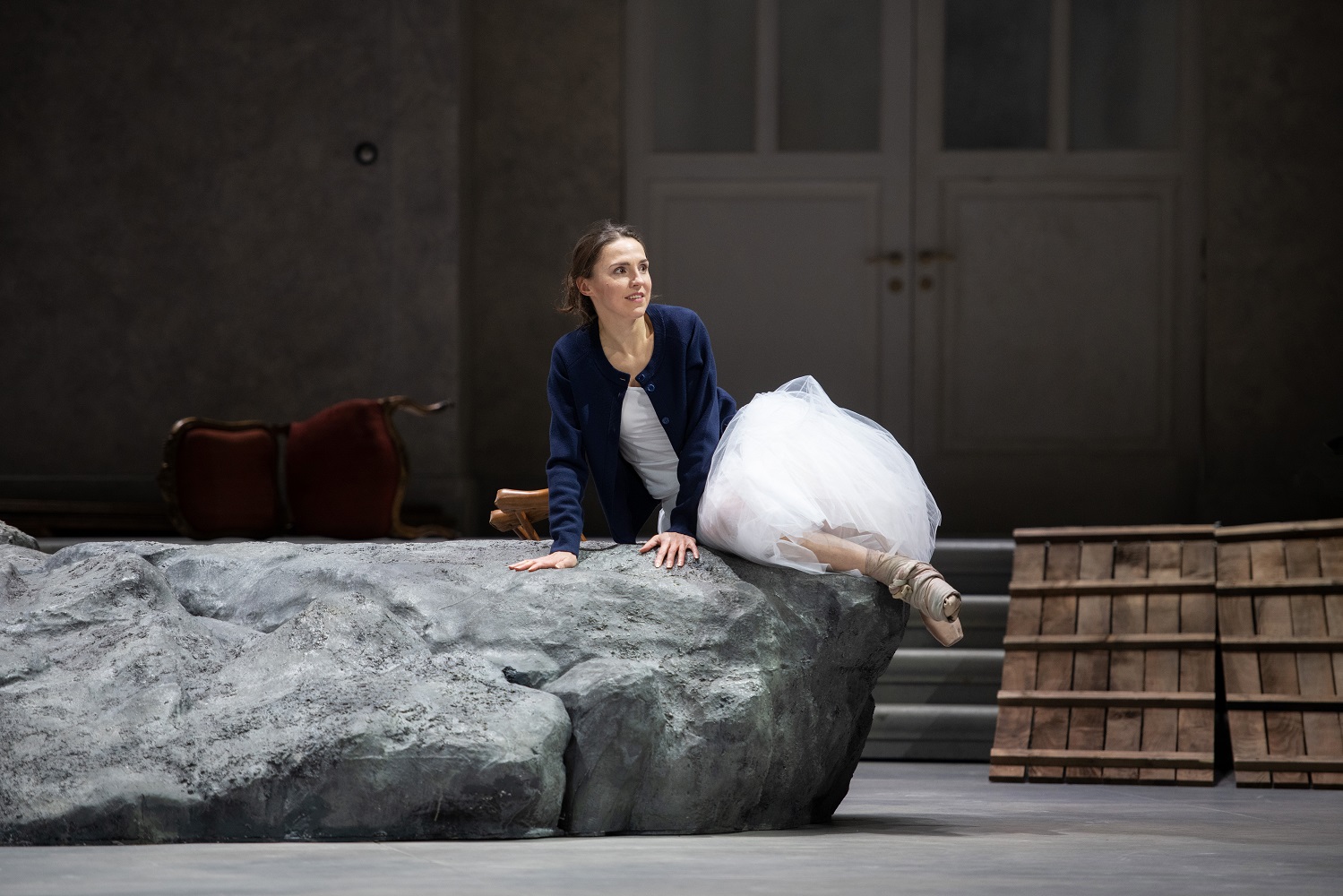
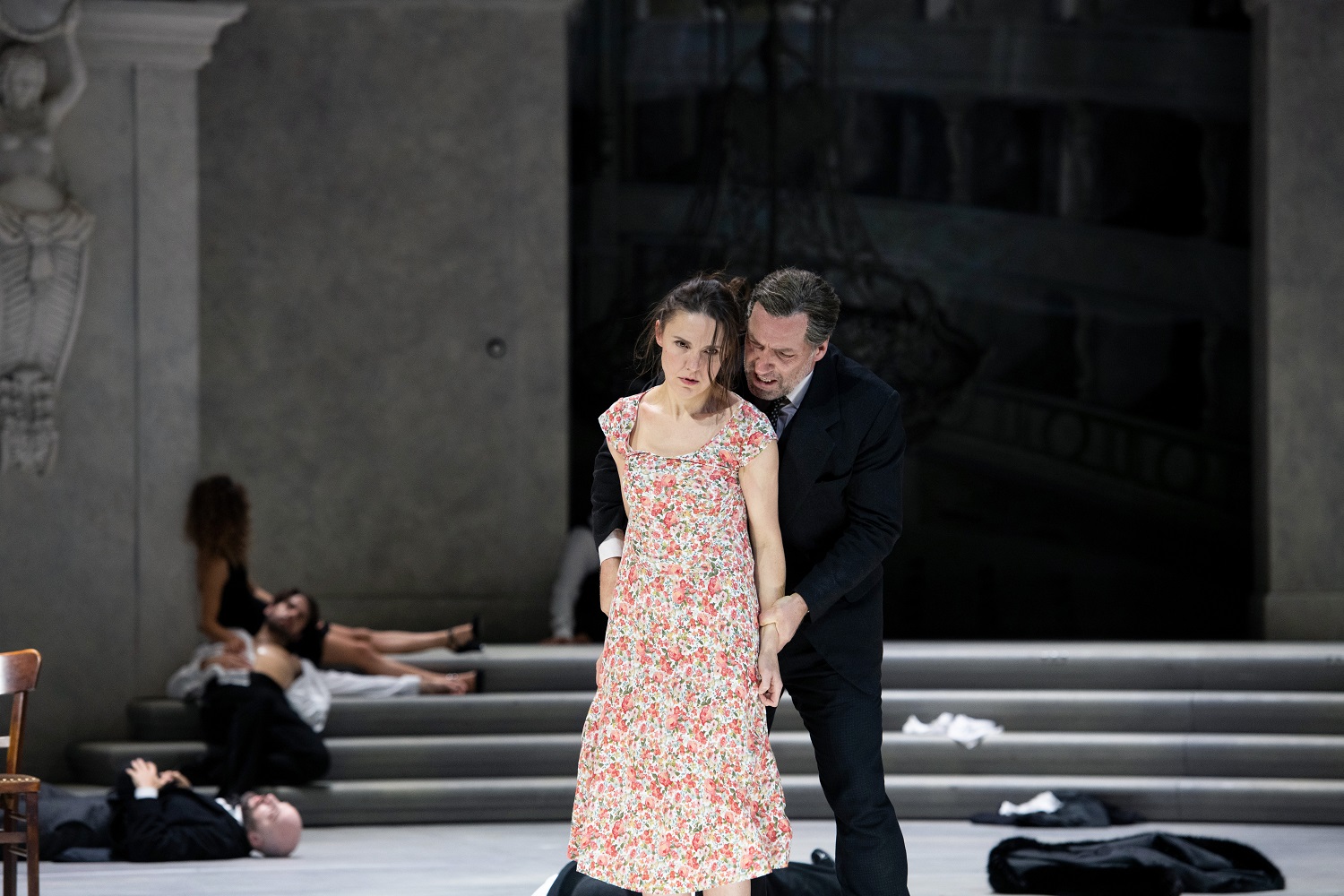
Christof Loy’s production places the action in a symbolic lake, a space between life and art. Rusalka, who cannot speak or walk after the magical ritual, becomes trapped and frustrated, unable to be loved. This modern and psychological approach explores the conflict between reality and fantasy.




In 1895, Antonín Dvořák returned to Prague after spending four years in New York, where he taught at the city’s conservatory. That period coincided with the definitive confirmation of his status as one of the leading composers of symphonic and chamber repertoire worldwide: from his American adventure, Dvořák brought his Ninth Symphony, known as the New World Symphony, thus securing his unquestionable place in music history. Yet despite having achieved fame, respect, and prestige, the Czech composer, now over fifty, still had an unfulfilled dream and a mission to accomplish: to leave a profound mark on opera and, if possible, in his own language. Musical theater had been Dvořák’s most sincere and intense love in life, as he expressed in 1904 in an interview with the Viennese newspaper Die Reichswehr (The Imperial Defense), where he declared that he considered opera the most suitable way to leave a lasting impression on the life and emotions of the audience and to strengthen the cultural legacy of peoples. When he died that same year, Dvořák had composed a total of ten operas, though only one, Rusalka, premiered in 1901, would have the impact he sought.
Dvořák wrote his first opera, Alfred, in 1870, when he was 35 years old. It was a work heavily influenced by the inevitable grandeur of Wagner and promoted by his teacher and great protector, Bedřich Smetana, the father of the Czech nationalist movement. Smetana was also the musical director of an institution, the Provisional Theatre in Prague, which was dedicated to promoting opera in Czech within the Austro-Hungarian Empire, where the official culture had to be German. Dvořák had been a musician in the Provisional Theatre orchestra and showed Smetana his youthful works: Alfred was written in German and had to premiere elsewhere, but his next piece, The King and the Woodcutter (1872), fully embraced Smetana’s theses: modern music serving the national construction of the Czech people. However, Dvořák went further, and his nationalist approach expanded to the entire Slavic world. In any case, his operas enjoyed local successes, although only on a local scale: the composer’s international prestige was cemented thanks to his symphonies, his role as a conductor, and, during his years in the United States, with his Cello Concerto. Dvořák had everything except a major international operatic hit.
However, once settled again in Prague, Dvořák received a notice from his friend František Šubert, the director of the National Theatre: a young poet, Jaroslav Kvapil, had written a libretto inspired by Slavic legends and several European romantic tales about an undine, a river nymph, who longed to become a woman and live in the human world with a prince she had fallen in love with. The story was not only captivating — inspired by The Little Mermaid by Hans Christian Andersen and the German romantic tale Undine by Friedrich de la Motte Fouqué — but also by its close connection to the folk culture of Eastern European peoples.
«Wrapped in a hypnotic Wagnerian atmosphere, Rusalka is the story of a water nymph who falls in love with a human prince and fails in her attempt to love.»
Obsessed with the many possibilities of the work —which was also wrapped in a Wagnerian atmosphere of magic, impossible love, death, and curse— Dvorák composed the music and crafted his finest lyrical score: the premiere, in 1901, was a success in Prague and also a phenomenon that spread worldwide, largely thanks to the hypnotic power of the protagonist’s opening aria, the “Song to the Moon.” This is the central and majestic piece of an opera without highs or lows that fulfilled Dvorák’s dream: to universalize Czech folk culture and leave a valuable legacy to his own people.