

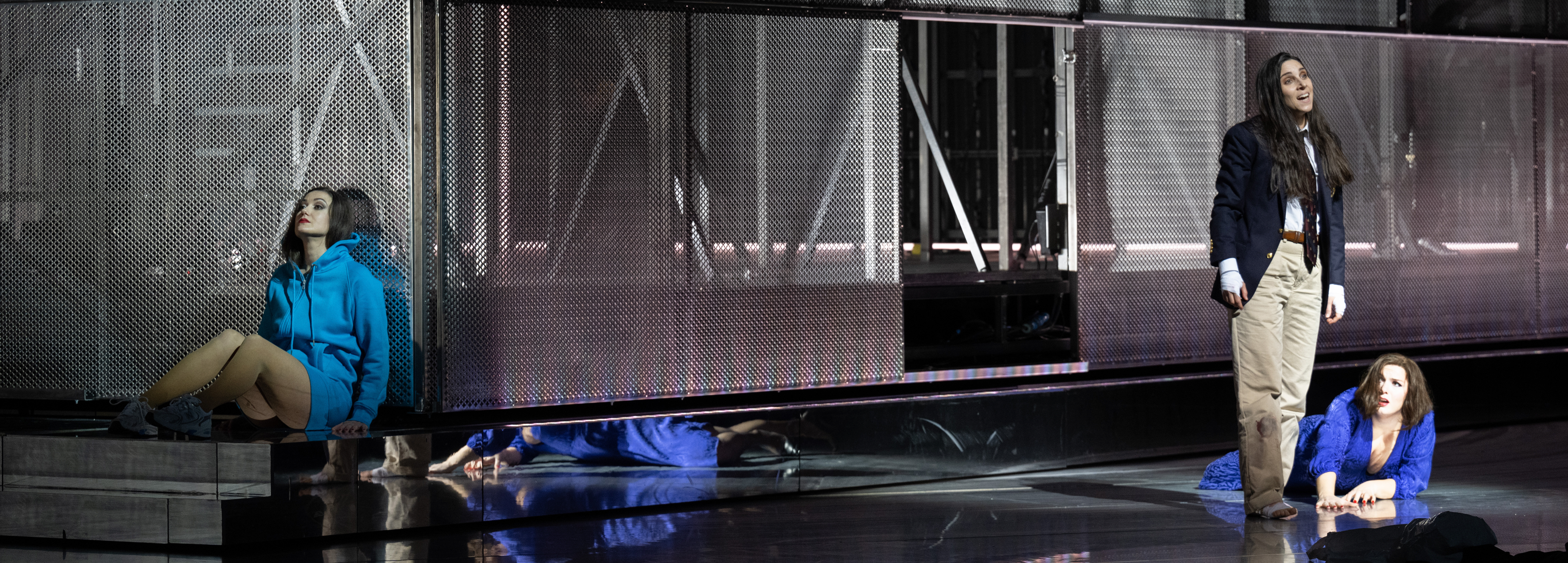
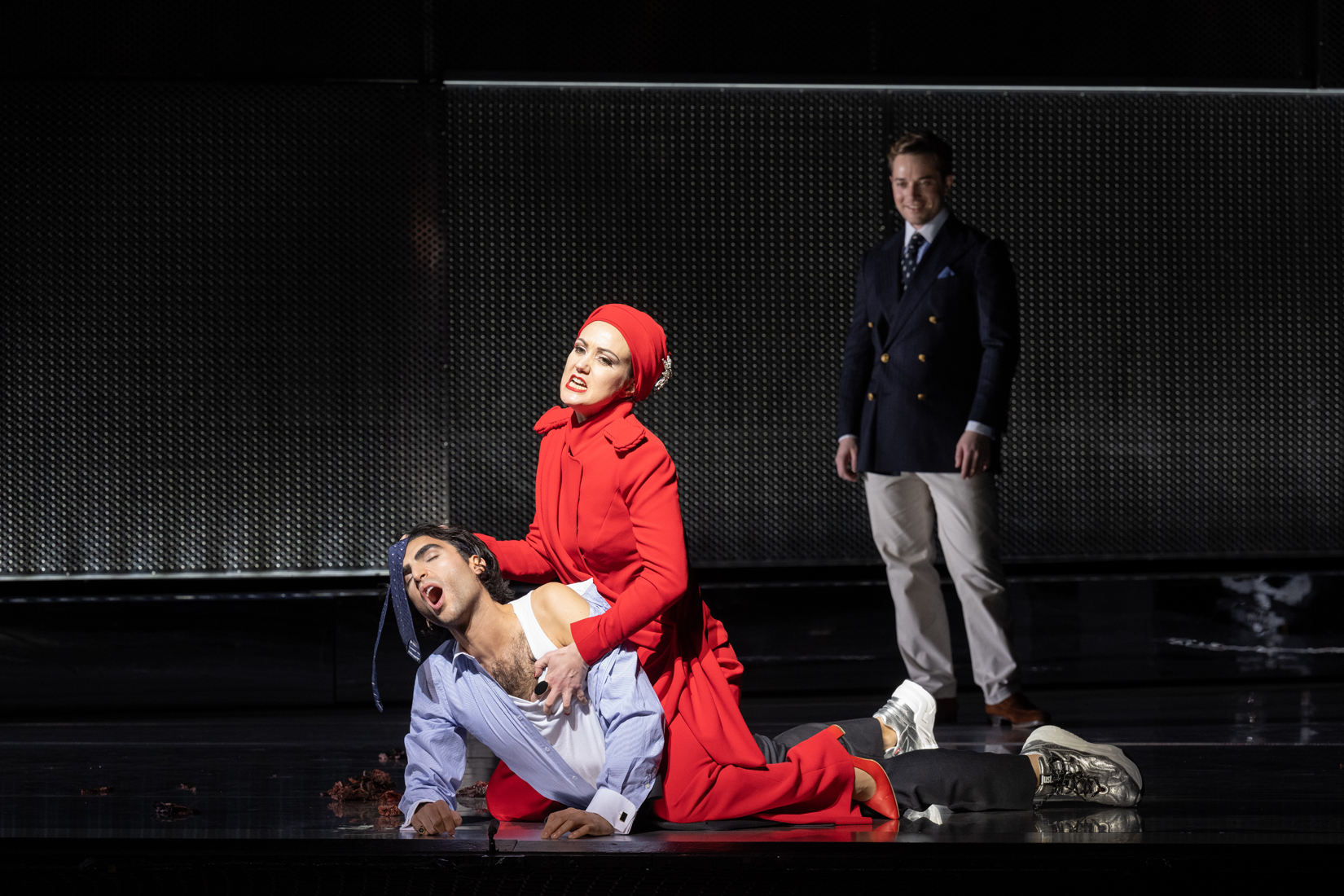
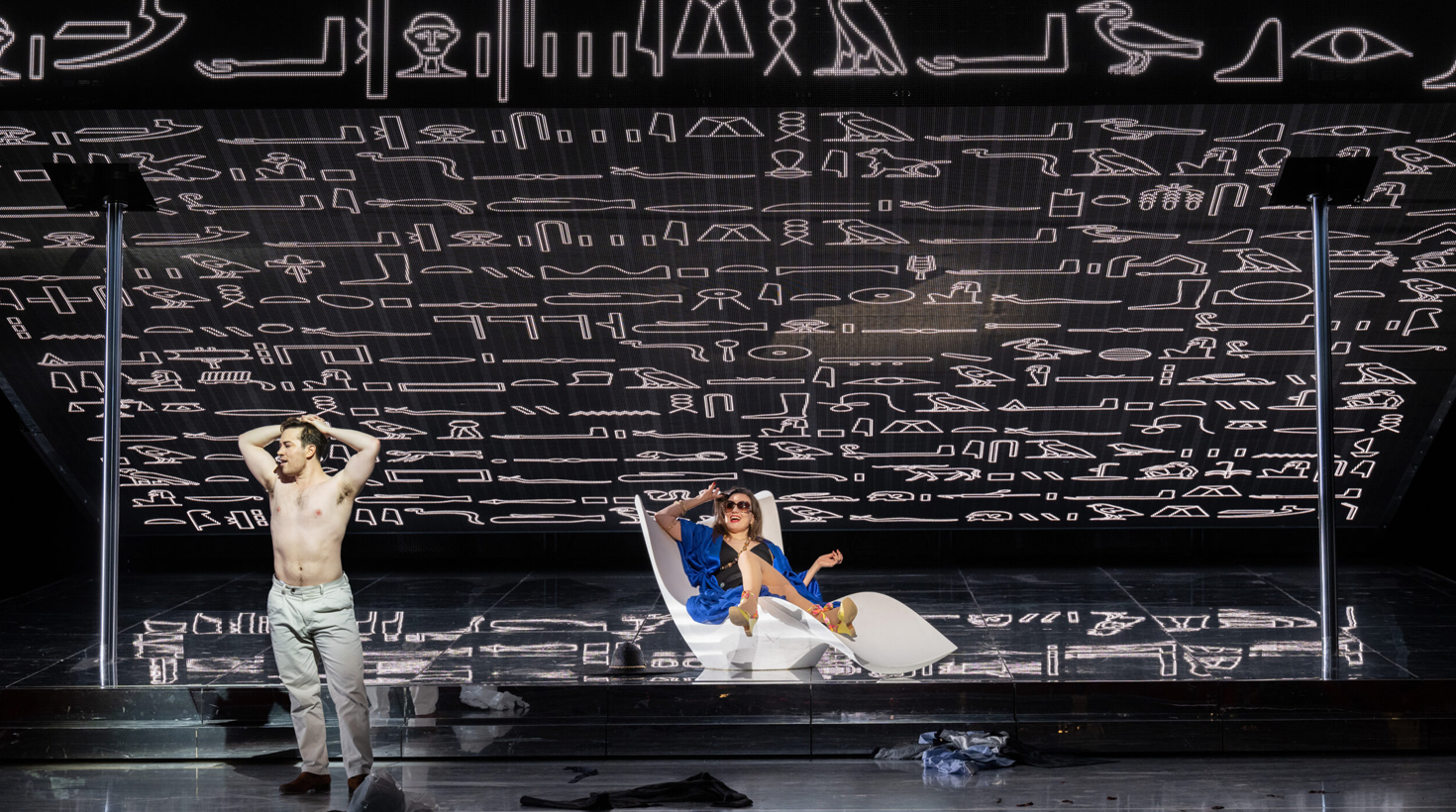
Giulio Cesare is an opera set in the past, but it is not a historical opera: its interest lies in how it presents eternal human archetypes and values, adapted to the political concerns of the 18th century. Similarly, Calixto Bieito brings the opera into a present-day setting —with austere scenography and modern costumes— to explore, through a contemporary lens, issues such as the struggle for power and its resulting immorality, sexual obsession, the desire for revenge, and the need for forgiveness in a world increasingly consumed by violence and selfishness.




Händel compuso a lo largo de su extensa carrera cerca de 40 óperas, y suele considerarse Giulio Cesare in Egitto —este es su título original— como la mejor de todas, la que muestra el despliegue musical más brillante y la mejor caracterización de los personajes. Si esto es así —y existe un consenso bastante sólido al respecto—, se debe a varios motivos, y el principal es que Händel pudo trabajar en esta obra en unas condiciones únicas dentro de toda su trayectoria: con el mejor equipo a su disposición, un buen presupuesto y mucho tiempo para componer.
In 1711, after a brief musical career in Hanover and in various states across the Italian peninsula, the young Handel arrived in London as a companion and trusted musician of the then-future King George I, who had laid claim to the English throne and would solidify his reign from 1714 onward. There, with the monarch's support, Handel began developing a space dedicated to Italian-style opera, which was still largely unfamiliar to English audiences. Following the premiere of Rinaldo —a resounding success— Handel earned the royal household's trust, and from 1715 he was granted his own theatre for premieres, the King’s Theatre in Haymarket, along with a budget to establish a top-tier artistic company, featuring virtuoso instrumentalists, poets —librettist Nicola Francesco Haym wrote and adapted several stories for him— and, of course, spectacular singers such as the famous (and temperamental) castrato Senesino.
«Giulio Cesare is considered the finest of the nearly 40 operas Handel composed, thanks to a high-quality libretto and a collection of emotionally powerful arias.»
Starting in 1719, Handel also received additional support from a group of aristocrats who financed his projects through an institution called the Royal Academy of Music, created to consolidate opera in London. For many years, he was able to work in comfortable conditions, accumulating successes and winning the favor of an audience —mainly aristocratic— that had embraced the novelty of opera with enthusiasm.
Thus, in 1724, Handel set out to demonstrate his full power with a work, Giulio Cesare, to which he dedicated an extraordinary amount of time. Usually, Handel would complete an opera in just a few weeks —and when pressed for time, he would present a recycled piece, a pasticcio— but for this one, he spent several months in close collaboration with the librettist Haym and his team of singers, aiming for greater narrative complexity and extending the length of the piece. The result was an exponential leap in artistic quality, a level he would not surpass again until his retirement from opera in 1741. However, he did exceed it in the genre he focused on from 1735 onward: the English oratorio.
Giulio Cesare is based on various Roman historical texts —chiefly the poem Pharsalia by Marcus Annaeus Lucanus, written during Emperor Nero’s reign— which document the civil war that, a century earlier, had pitted Julius Caesar against Pompey. Pompey’s defeat took place on the outskirts of Alexandria, which is where the opera’s story begins: upon arriving victorious in Egypt, Cesare finds that Pharaoh Tolomeo, in an attempt to win his favor and avoid being removed from the throne, has killed Pompey and cut off his head. This decision enrages the Roman general, and his taking sides prompts several characters to seek alliances with him for their own purposes: Cornelia and Sesto —Pompey’s widow and son— seek to kill Tolomeo, and Queen Cleopatra attempts to seduce Cesare so that he will help her overthrow her brother.
The opera flows naturally because the emotions the characters project are universal: ambition for power, the thirst for revenge, compassion, the demand for justice… In the end, as is typical in 18th-century opera seria, Giulio Cesare highlights the ruler’s most noble values: he restores Cleopatra’s power, forgives his enemies, and forges a political alliance between Rome and Egypt. All this is accompanied by an impressive arsenal of arias —eight for Cleopatra and seven for Cesare, not counting those of the secondary characters—: duets, choruses, symphonies, and the most colorful and richly textured orchestral writing in all of Handel’s operas. A masterpiece that has truly stood the test of time.