

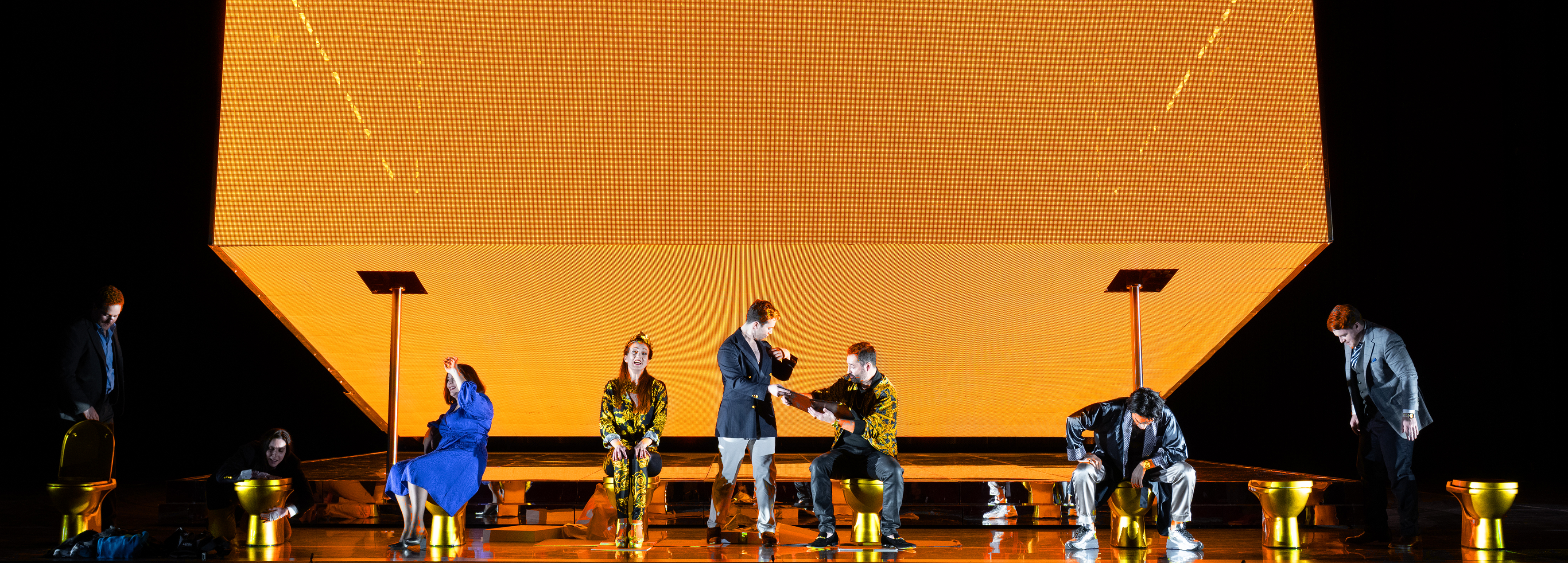
Händel premiered 'Giulio Cesare' in 1724, taking advantage of royal support and a favorable context in London. With an excellent team and a large budget, he transformed an episode of the Roman civil war into an opera that depicts, with sublime music, the great human passions.




Act I. Julius Caesar
Va tacito e nascosto
The pharaoh Ptolemy calls a meeting with Giulio Cesare to resolve the issues between them after Pompeo's assassination and invites him to stay at the palace. Although it is clear that it is a trap, Cesare accepts: it is better to have the enemy close than far from his control. This aria, with an essential french horn accompaniment, shows one of the virtues of the Roman general: prudence, as well as cunning in strategic matters. Like all opera arias, it has a da capo structure, where the third section is a repetition of the first, but giving the singer the freedom to ornament it as they wish.
Act II. Cleopatra
V’adoro, pupille
Cleopatra seeks to get closer to Giulio Cesare so he will help her conquer the throne of Egypt, and when she learns that he spent the night at the pharaoh's palace, she does everything she can to attract him to her side. Her intention is to seduce him and make him her lover — the queen is also cunning and scheming — and this aria shows her more sensual side. "V'adoro, pupille" is the central aria of the scene known as the Parnassus, a recreation — with musicians on stage — of the idea of paradise in ancient mythology, where Cleopatra presents herself as an irresistible goddess of love.
Act III. Cleopatra
Se pietà di me non senti + Piangerò la sorte mia
After the battle between the Egyptian and Roman troops, in which Tolomeo has defeated Giulio Cesare, Cleopatra has been captured and dragged into a dungeon in the pharaoh’s palace. There, she awaits death, as she believes Cesare is also dead and no one will come to help her. These arias are the most balanced and emotional of Cleopatra in the opera, two adagios not meant to showcase the soprano's ability for agile and embellished singing, but to convey a genuine feeling of pain and despair, as she will lose not only any political aspirations but also her life.
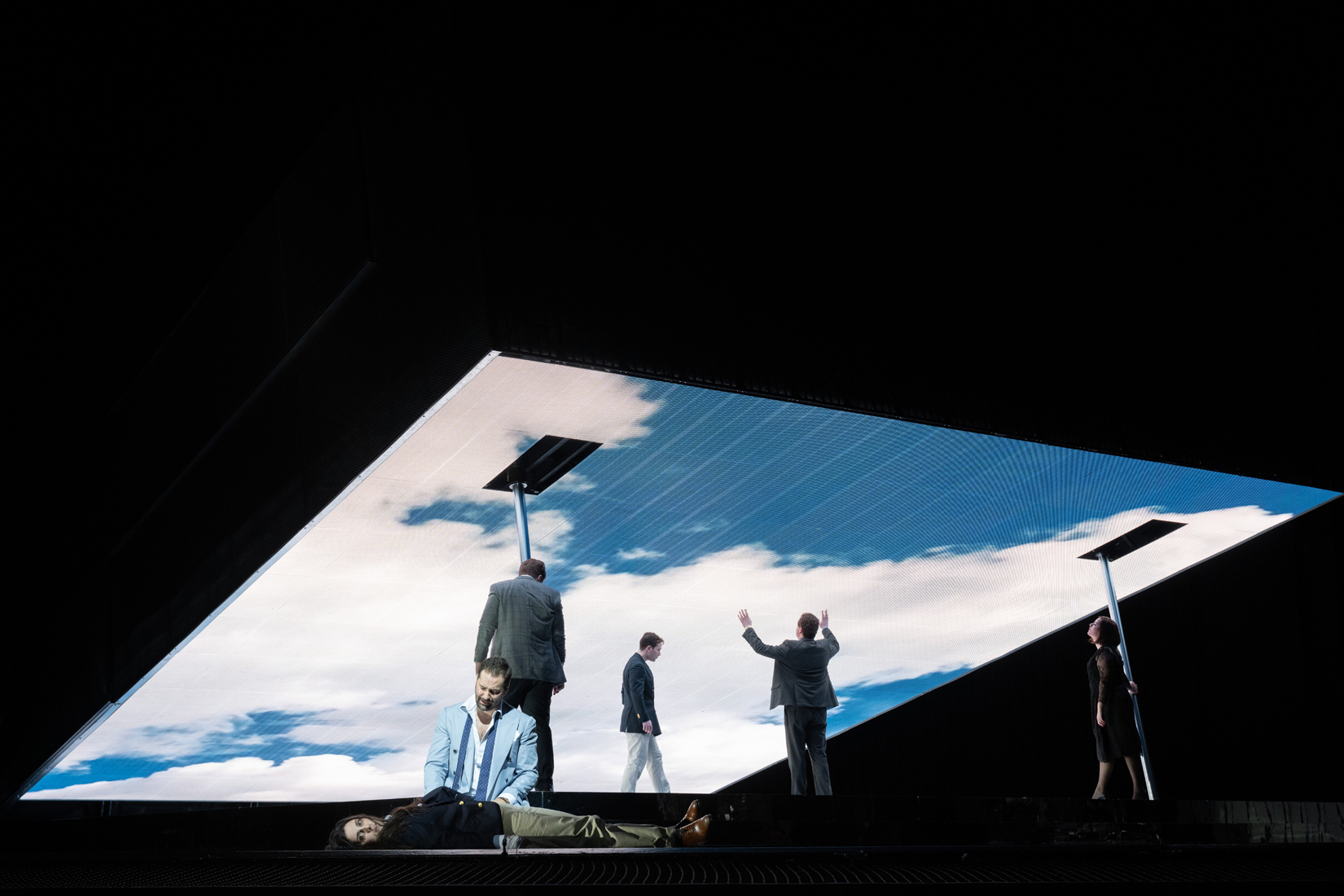
In scene
In Händel's operatic production, Giulio Cesare is a rarity in a positive sense, as it is the only one of his titles that has had historical continuity over four centuries. While some works had to wait until the 21st century to be unearthed from the archives, this one was not only the most performed during Händel's lifetime, but also reappeared regularly in the 19th century, became the glorious emblem of the composer's assertion as one of the greats of opera in the 20th century, and remains his most emblematic title in the 21st century. With an added and positive circumstance: it now competes fiercely with Alcina, Ariodante, Rinaldo, or Rodelinda, other pieces that have a regular place in the global operatic circuit and that no longer belong to the category of 'rare operas'. At the same time, the fame and persistence of Giulio Cesare are factors that influence any new production: it is an opera with a broad history of conductors and singers who have extracted all its richness, who have become models of perfection. This means that every new staging must meet a standard of quality that the audience recognizes perfectly.
In the upcoming performances at the Liceu, in any case, there is nothing to fear because we are in good hands. The musical direction will be in the hands of William Christie, a true legend at this stage of his career, having just turned 80, and one of the most important specialists in Baroque music in recent decades. On this occasion, Christie will set aside the Les Arts Florissants ensemble—founded 46 years ago to revive the glories of the ancient French repertoire—and will conduct the Orquestra Simfònica del Gran Teatre del Liceu, which will have the opportunity to shine with an undisputed classic of English Baroque. Giulio Cesare was written by Händel for some of the best voices in Europe in the first quarter of the 18th century—as a producer, he was responsible for traveling and hiring the ideal singers for his company—and each role demands a level of agility and dramatic exposure that is formidable.

En the central role of Cesare will be the Barcelona-born Xavier Sabata, consolidated for more than a decade as one of the most important tenors — in his case, with a contralto tessitura — of his generation. In the equally demanding and leading role of Cleopatra, the magnificent singer of the current 18th-century repertoire, the French Julie Fuchs, a lyrical soprano with a beautiful and powerful timbre, will perform. The opera also features two particularly demanding dramatic roles: in that of Cornelia, originally written for contralto, the Italian Teresa Iervolino will take the stage, and in that of her son, Sesto — written by Händel for a castrato — the mezzo-soprano Helen Charlston will perform. The third important role written for a castrato, alongside those of Cesare and Sesto, is Tolomeo, which will be assumed by one of the emerging contraltos of the current scene, the Iranian-Canadian Cameron Shahbazi. Finally, the secondary roles of Curio, Achilla, and Nireno will be interpreted respectively by Jan Antem, José Antonio López (baritone), and Alberto Miguélez Rouco (countertenor), equally important members in an opera characterized by its balance, elegant orchestral writing, and vocal difficulty.