

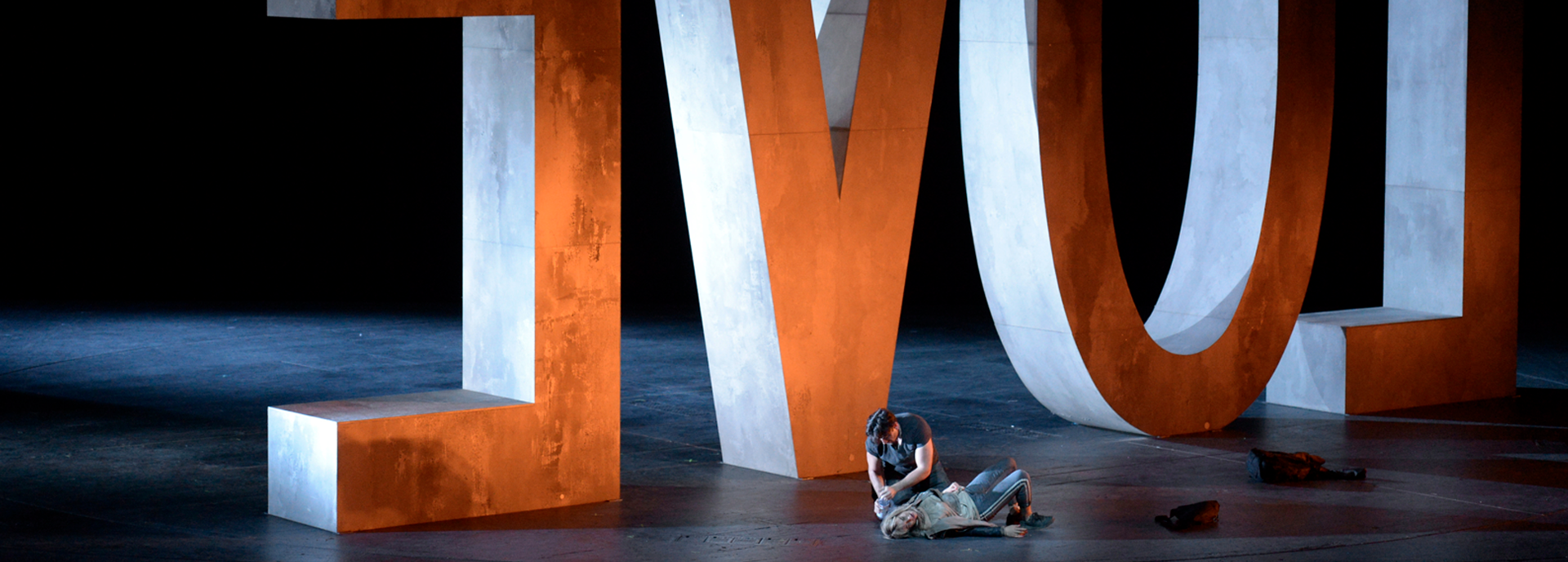
A contemporary reading of 'Manon Lescaut' brings the classic into the present and turns the protagonist into an undocumented immigrant. In a modern stage setting, dominated by the concept of 'love', the story becomes a denunciation of dehumanization, borders, and the desperate desire for a better future, where love and survival clash until final exhaustion.




The story of Manon Lescaut, as Abbé Prévost presented it in the first half of the eighteenth century, was considered a scandalous novel in its time, although today it cannot but be read as a moral tale that, in the eternal conflict between passion and reason, warns against the madness of love. The desert in which Manon Lescaut finally dies is, above all else, the desert caused by the intense fire of a love that breaks with all hierarchy and convenience.
For all these reasons, we believe it is especially important that, at first glance, it is understood that what we propose is a reading from the present. And because we wish to speak about a current reality, we have conceived a modern space, of conceptual lineage, presided over at all times by the word love in large three-dimensional letters that convey the central idea of Puccini’s opera. The conceptual centrality of love —love— allows us to develop from there the other concepts embedded in Manon Lescaut —ambition, wealth, social hierarchy, punishment, expulsion— from an explicitly contemporary perspective.
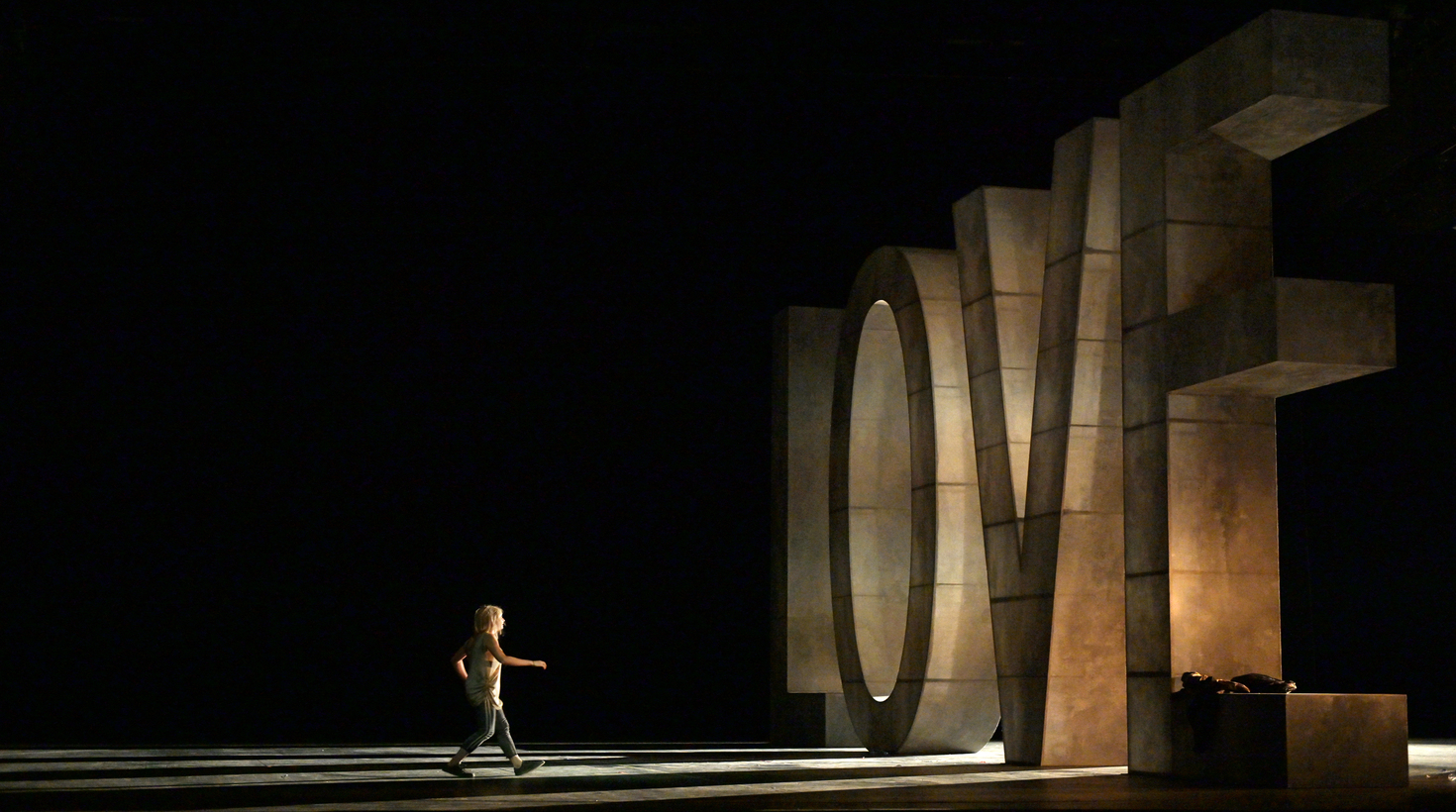
In our version, Manon Lescaut is an undocumented immigrant. She could come from anywhere in the world, fleeing poverty, war, abuse, social degradation, or simply drawn by the opportunities seen by those who view the mirage of Europe as a paradise of happiness. Around her character, we have woven a new dramaturgy that allows a contemporary rereading of the story of Manon Lescaut.
After the deportation of Manon Lescaut, the final act takes place in a desert territory. Manon’s despair is not only the despair of love. What has brought her there is the indestructible will to try again to reach Europe, a blind decision to move forward, to not fall behind, to survive at any cost. Manon dies of exhaustion, sadness, and despair. Her love, her true love, is the desperate love of someone unwilling to give up on a better future. Her true desert is the infinite sense of loneliness that overwhelms her when she is left alone before the border fence that irrevocably separates her from the future.
Manon Lescaut dies a victim of dehumanization capable of withering any landscape and turning everything into a desert, a desert of love. Love.
Àlex Ollé
Stage direction