

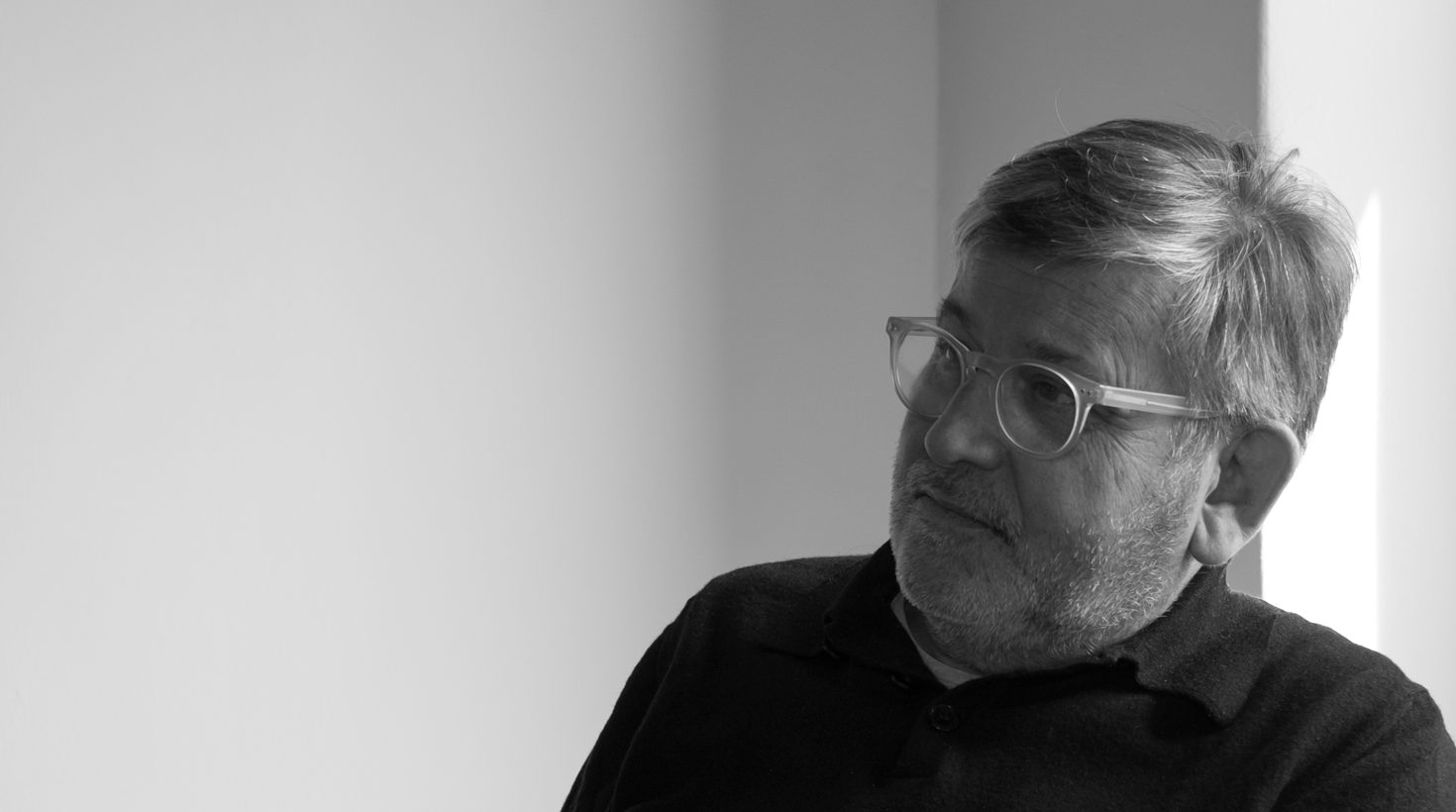
“Painting is another way of thinking the world in silence”
Narcís Comadira
The resident poet of the 2026-2027 season at the Gran Teatre del Liceu, Narcís Comadira (Girona, 1942), is an essential figure in contemporary Catalan culture. In his work, word and image coexist as complementary forms of a single act of knowledge. Poet, essayist, translator, and painter, Comadira has developed a visual practice that constantly engages with his writing and shares its rigor, restraint, and a deeply reflective gaze on reality.
His painting belongs to a tradition of critical classicism, far removed from both stridency and gratuitous gesture. Still lifes, landscapes, and architectural forms are constructed with a formal austerity that evokes permanence, sedimented time. Color—measured, restrained, often primary—acts as a space of breath, while composition reveals an almost moral attention to the weight of each element. In Comadira’s work, painting is an exercise in order, a way of establishing just relationships between things.
Far from any idealized nostalgia, his pictorial work offers a lucid gaze on the world, aware of its fragility. In his images there is a constant tension between presence and absence, between what is visible and what is only suggested. This economy of means gives painting a silent density, in which each form seems to contain a latent memory, like a verse that continues to resonate beyond the page.
The relationship between poetry and painting is not, in his case, a simple transposition of languages, but a shared search: for precision, measure, and the truth of gesture. If language allows him to think the world through the music of words, painting offers a space of contemplation in which time slows down and perception becomes more acute. Both practices converge in a shared ethics of form, grounded in clarity and expressive responsibility.
In the Hall of Mirrors of the Gran Teatre del Liceu, a selection of Narcís Comadira’s pictorial work, far from competing with the space itself, introduces a pause, a moment of reflection that invites attentive contemplation. In this encounter, painting becomes silent word and silence becomes a profound form of listening.