

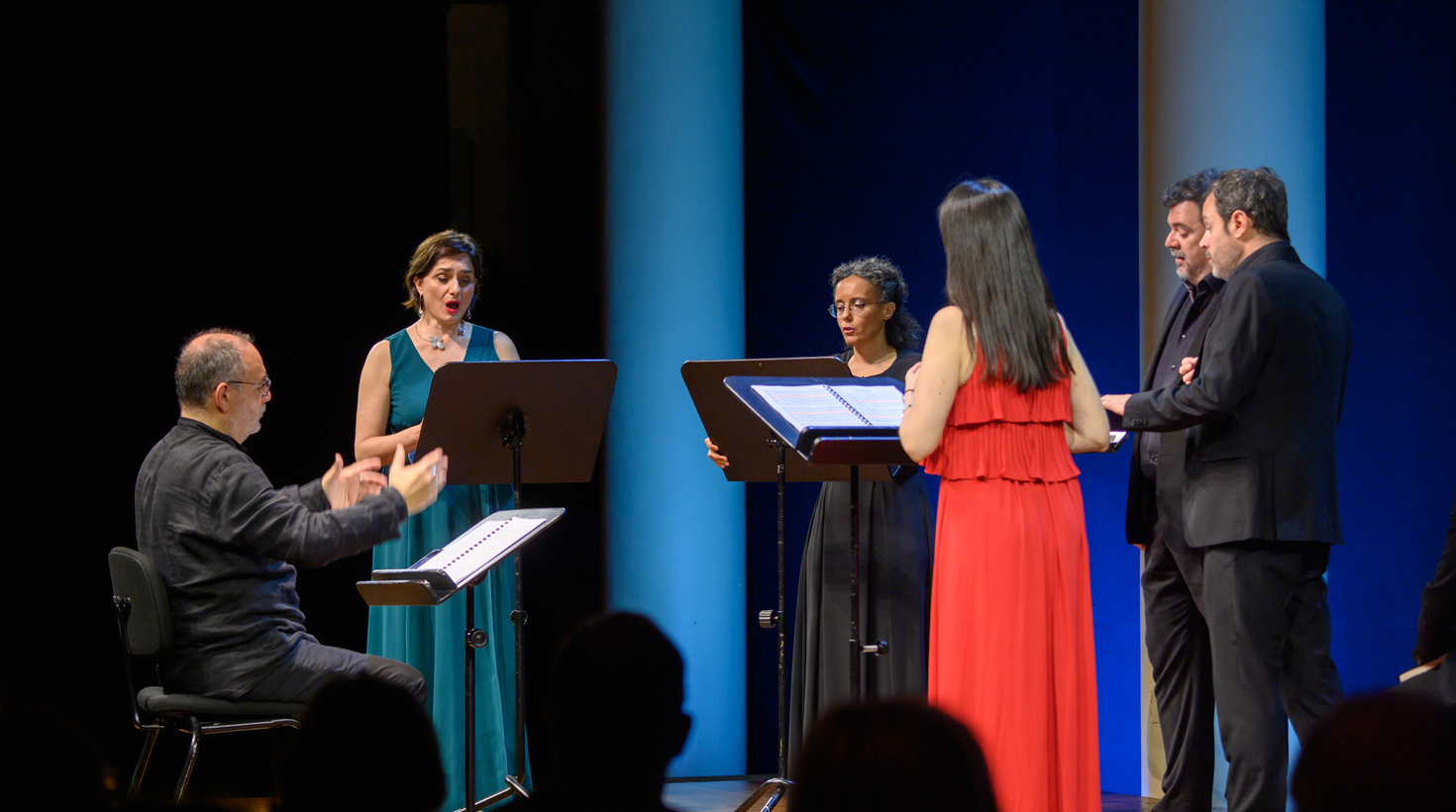
Rinaldo Alessandrini, regarded as one of today’s leading figures in early music, returns to the Gran Teatre del Liceu to take on a new challenge: the performance of Il terzo libro de madrigali (1592), on May 14 at the Sala Foyer. Alessandrini leads Concerto Italiano, the vocal and instrumental ensemble he founded in 1984, which has established itself as one of the most prestigious groups in the field of Renaissance and Baroque music.




The madrigals of Claudio Monteverdi (1567–1643) are an essential catalogue in the history of music and represent the culmination of a genre. In their evolution, however, they also pave the way for the birth of a new one: opera. Grouped into nine books published between 1587 and 1651 —the last one posthumously— the madrigal cycle is a fascinating and poetic journey into the origins of opera, which the Liceu began in the 2021/22 season. After presenting two concerts in the 2021/22 season (I-II), two more in 2022/23 (III-IV), and one in 2023/24 (V), Alessandrini and Concerto Italiano now take on the concert Monteverdi’s Madrigals VI, corresponding to the third book.
With the terzo libro de madrigali, published in Venice in 1592 by Riccardo Amadino, Claudio Monteverdi consolidates his maturity as a composer and begins a new chapter in his artistic career. This book also provides the first documented evidence of his stay in Mantua, where he worked as a viola player at the court of Vincenzo Gonzaga. The collection fully reflects the city’s cultural environment and the tastes of his patron, incorporating literary texts by authors associated with the refined court of Ferrara, such as Giovanni Battista Guarini and Torquato Tasso.
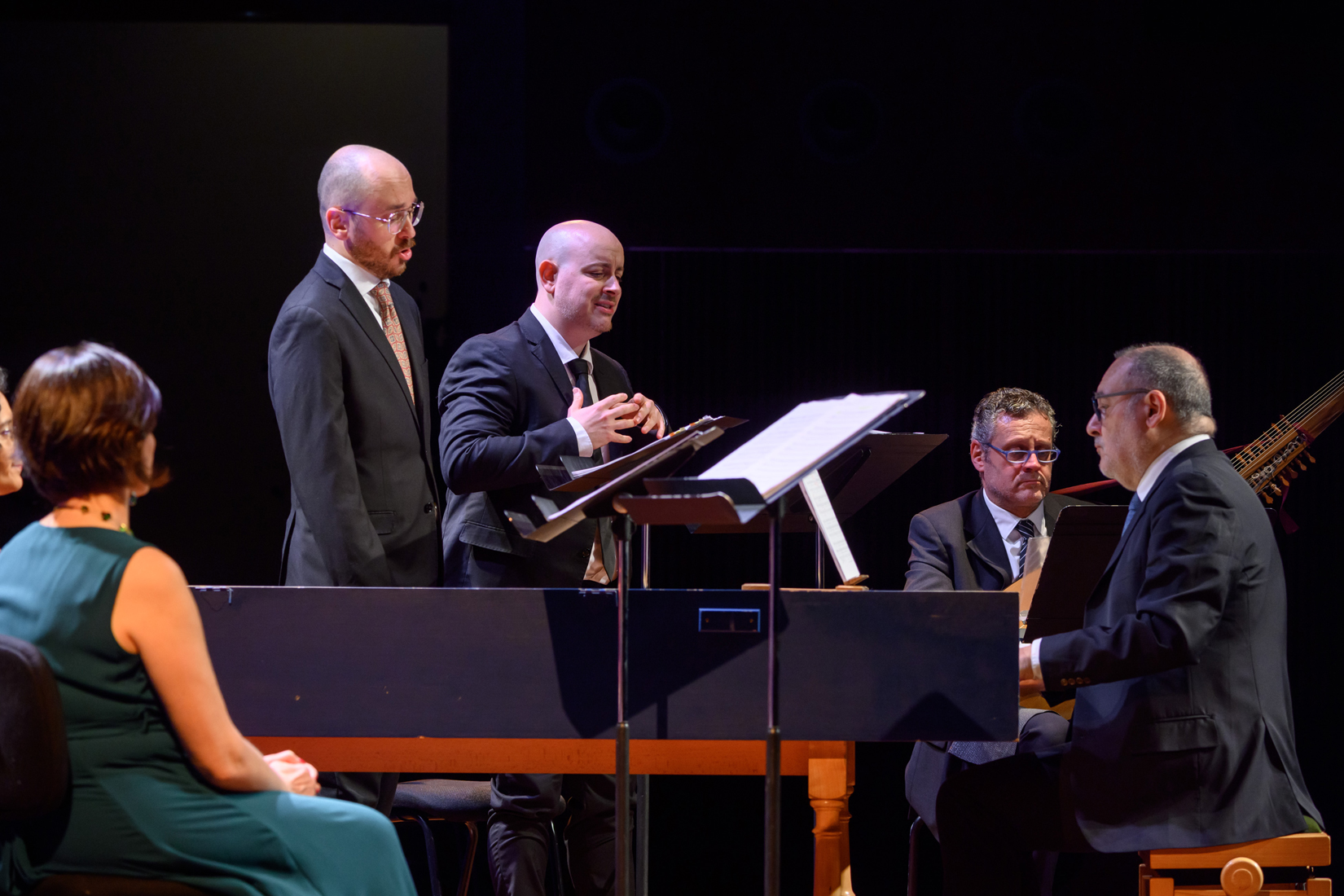
In this third book, Monteverdi delves deeper into the exploration of the relationship between music and text, with a new sensitivity that allows him to capture and amplify the emotional and expressive dimension of the poems. Each madrigal thus becomes an exercise in poetic introspection, where the music highlights emotional contrasts, rhetorical turns, and textual subtleties. At the same time, the work showcases the richness of the contrapuntal language inherited from the prima prattica, with madrigals that reveal extraordinary command of vocal writing and a singular ability to balance tradition and innovation.
This balance, combined with the formal ambition of certain pieces and the communicative power of the whole, ensured the book’s notable success — to the extent that it was reprinted five times within just two decades. The third book thus becomes a vital testament to Monteverdi’s evolution and his role as a bridge between the Renaissance and the Baroque, and between established conventions and the new expressive paths that would transform European music.
Rinaldo Alessandrini
Born in Rome in 1960, Rinaldo Alessandrini is an energetic and multifaceted musician, harpsichordist, organist, and pianist, conductor of orchestra and choir, as well as the founder and director of the prestigious Concerto Italiano. With a career spanning more than forty years in the field of early music, he combines his leadership of Concerto Italiano with solo recitals at festivals around the world.
Alessandrini has made significant contributions to the recovery of the madrigal heritage of the early 17th century, a research endeavor he has also extended to Roman religious music, opera, cantatas, motets, and oratorios. His passion for Italian music has made him one of the finest interpreters of Monteverdi, through a complete cycle of his works, which has been performed at the Teatro alla Scala in Milan in co-production with the Opéra National de Paris, conducted by Robert Wilson.
In his role as conductor, he has led numerous ensembles, such as the Orchestra del Maggio Musicale Fiorentino, Orquesta Ciudad de Granada, Detroit Symphony Orchestra, Orchestra della Toscana, Scottish Chamber Orchestra, Simfonia del Nord, Orchestra of the Age of Enlightment, Boston Handel & Haydn Society, Freiburger Barockorchester, and Orchestre Symphonique de La Monnaie, among others. He debuted at the Gran Teatre del Liceu in the 1998/99 season with Alcina, and has since returned four more times, always in the context of the madrigal cycle of Monteverdi.
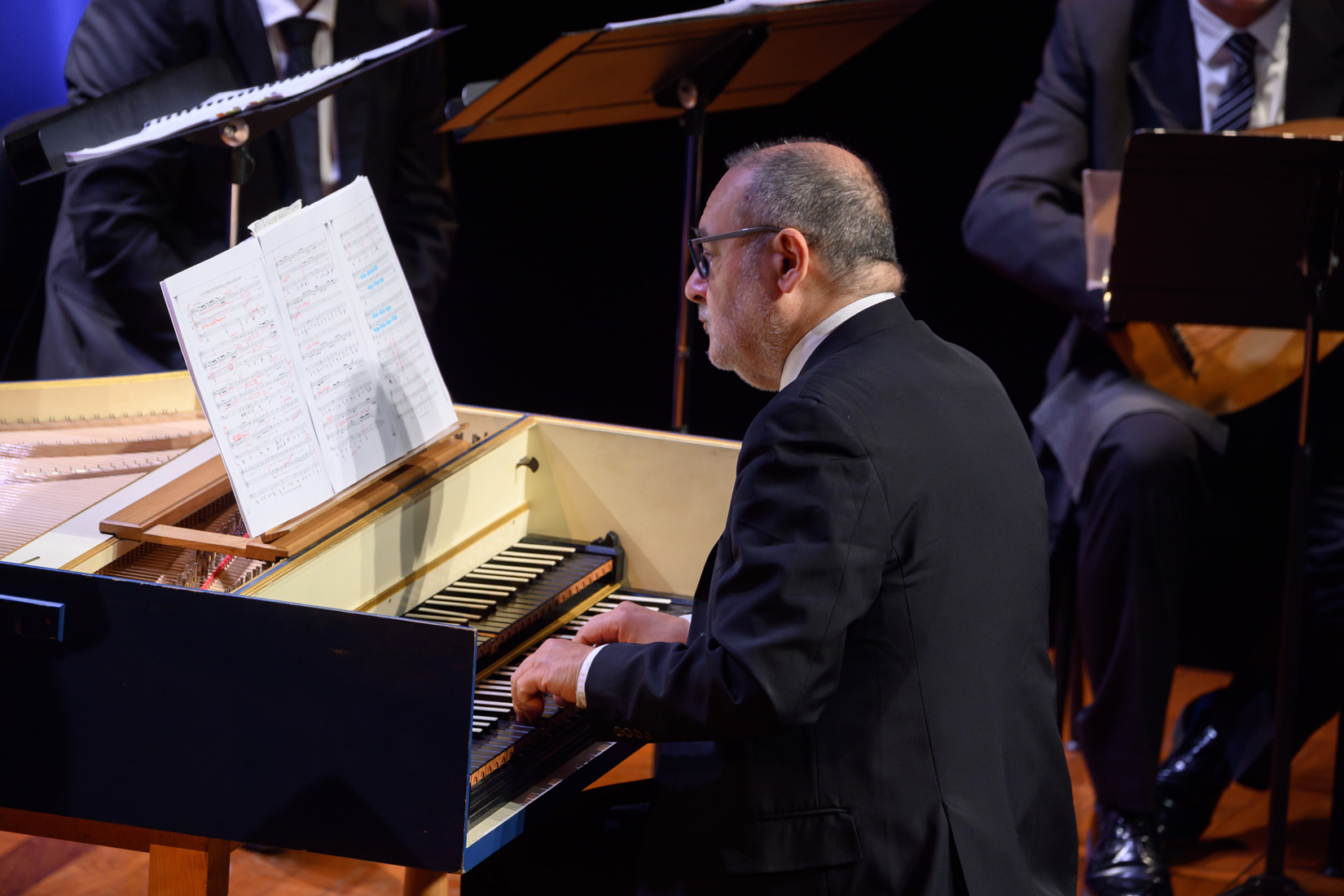
Concerto Italiano
Founded in 1984, its history coincides with the revival of early music in Italy. Monteverdi, Bach, and Vivaldi were the main pillars upon which the Italian ensemble was able to renew the language of early music, discovering completely innovative aesthetic and rhetorical aspects at the time. After decades of work, the recordings of Concerto Italiano maintain their status as reference versions. The ensemble has visited theaters, auditoriums, and festivals around the world.
Concerto Italiano created the Monteverdi trilogy at the Teatro alla Scala in Milan and at the Opéra National de Paris, conducted by Bob Wilson between 2009 and 2016. It has received notable distinctions, including four Gramophone Awards (1994, 1998, 2002, and 2004), three awards from the German music critics, the Premio Cini, five awards at the Midem in Cannes, as well as two Disque de l’Année (1998 and 2005) and Enregistrement de l’Année by Amadeus (1998), among others. In 2002, it received the Premio Abbiati for its entire body of work.
With the support of:

| 
|