

'The Cunning Little Vixen' is one of the works composed by Leoš Janáček in his old age, just before turning 70. Initially inspired by a charming Czech children's tale, the composer decided to adapt the original story to address philosophical concerns that preoccupied him at that stage of his life: the relationship between human beings and animals, and the cycle of nature, which always demands the necessary passage through death in order to be reborn and renewed. Written in a harmonic language rooted in Romanticism and the finest Modernism, it is one of the great operas of the entire 20th century.




As an opera starring animals —and one of the very few in the entire repertoire with this feature— The Cunning Little Vixen has often been considered easier for a child or youth audience to grasp, or at least not as demanding as other more "adult" titles. This view is understandable when the story's characters include frogs, a badger, a dog, mosquitoes, hens, a woodpecker, an owl… And as in the classic fables of Aesop or La Fontaine, the personification of animals helps lower an initial barrier for younger audiences —as also happens in some classic Walt Disney films—; yet, none of this hides the fact that the intellectual depth of this opera is far more profound. The two main themes Janáček wanted to explore in The Cunning Little Vixen are: first, the relationship between human beings and animals —sometimes symbiotic, but almost always impossible due to the eternal conflict between civilization and wild nature—; and second, a reflection on the eternal cycle of life, which always involves the rite of passage through inevitable death, but also rebirth. That is why the protagonist of this opera, the vixen Bystrouška, dies in the end —but she does so without pathos or heroism. Death simply comes, and one must accept it, in whatever form it arrives.
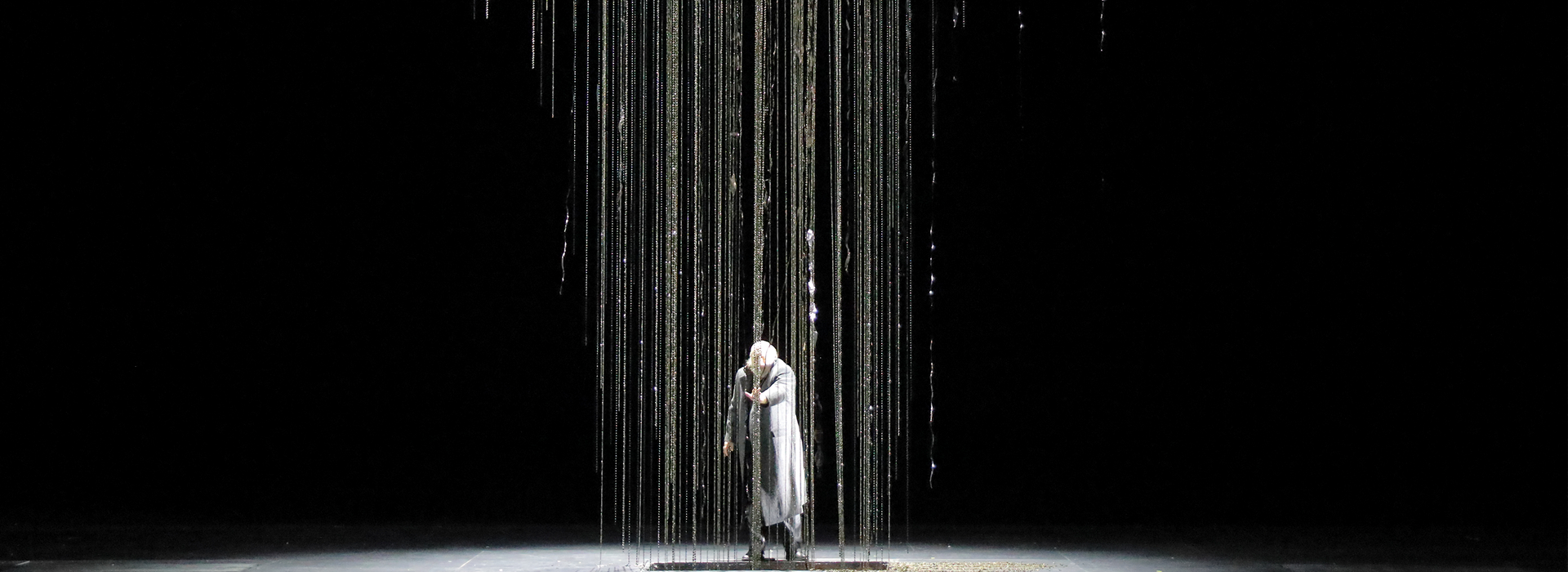
The production directed by Barrie Kosky, which premiered at the Bayerische Staatsoper in Munich —co-producing the staging alongside the Liceu— follows, in fact, Janáček’s wishes to the letter: it respects the central themes and treats the work as an intelligent, serious, and mature piece. Indeed, the first thing the audience sees when the curtain rises is a funeral: a group of men —later seen in the opera as the Forester, the Poacher, or the Innkeeper— dressed in somber black and wrapped in the dim lighting of a nearly unlit stage, throw soil into a hole, which becomes a recurring scenic element. In a clear connection to the end of the opera, they are burying the cunning little vixen. But after death comes a new cycle: in the first scene, the lush nature described in the libretto emerges in a forest clearing, where all kinds of animals appear. And here lies the first major technical innovation of Barrie Kosky’s staging concept: instead of recreating the forest —and the other settings— with traditional sets, he uses a dense curtain of lights that fills the entire stage both horizontally and vertically, helping to build the locations of the story. This flexibility also allows the opera to be performed without any intermissions, uniting the three acts into a continuous 100-minute arc.
"Renowned for his comic approach to opera, Barrie Kosky minimizes the humorous elements in this production and delves into the philosophical and moral aspects."
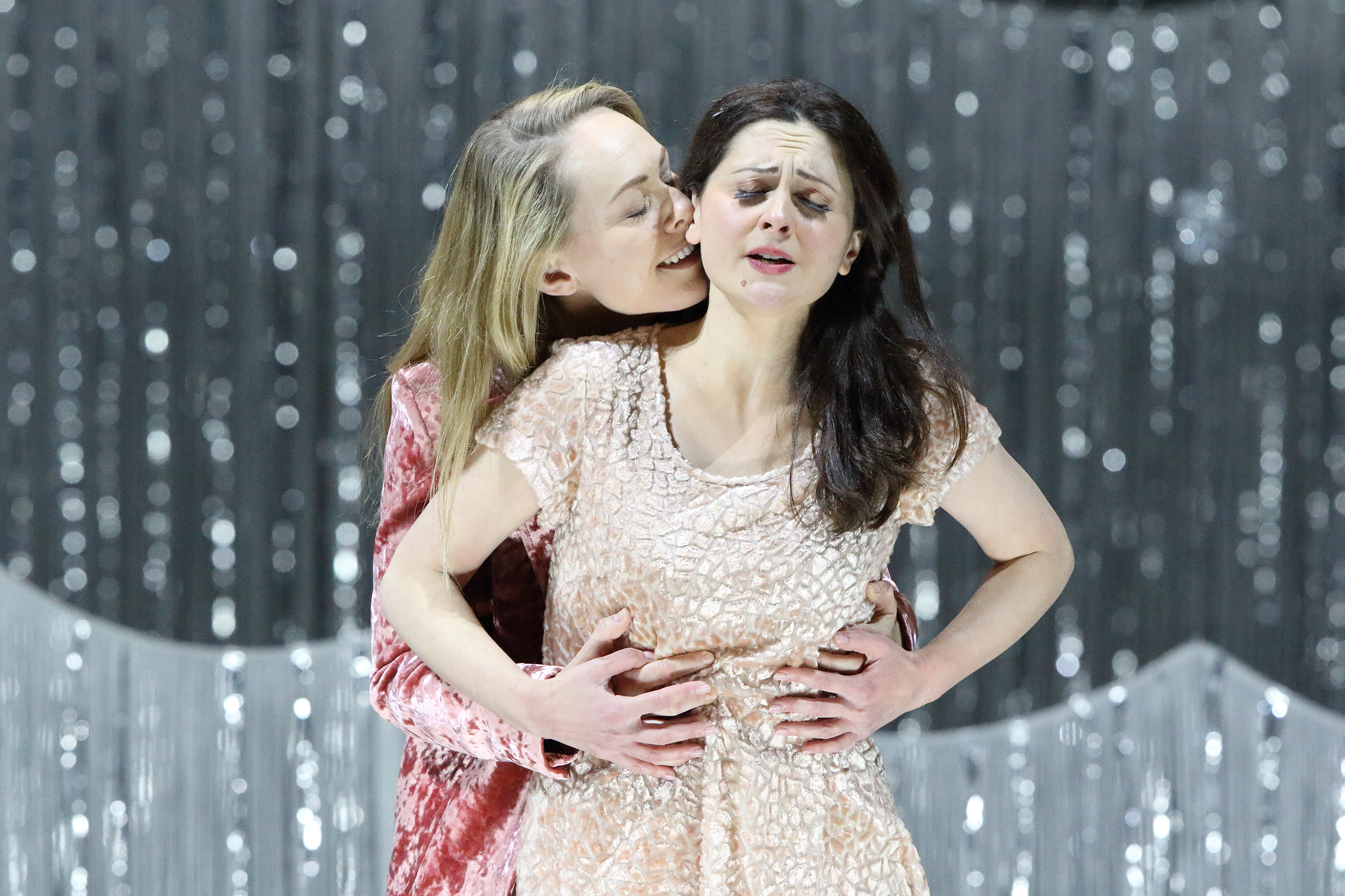
Kosky has earned a strong reputation in 21st-century opera as one of the leading stage directors with a flair for humor and a tendency to find original solutions to complex situations —Liceu audiences with several seasons behind them will no doubt recall his production of Mozart’s The Magic Flute, which used elements of silent cinema. However, in his staging of The Cunning Little Vixen, the German director has aimed to stay true to Janáček’s intent, and humor appears only occasionally, while he consciously avoids the temptation to present the opera as a piece especially aimed at younger audiences. As expected, Kosky doesn’t entirely abandon his style: for instance, the scene where the vixen escapes from the Forester’s house at dawn, after freeing the hens and eating them, is close to the aesthetic of variety theatre and reinforces the pantomime idea specified by the composer. But overall, the staging is sober and symbolic. The concept that humans and animals belong to different worlds that should not be mixed is expressed through the costumes: no character is directly costumed as an animal, but while the humans wear strict black clothing, the animals wear light garments that reflect the stage lighting, surrounded by a magical aura.
And, in the end, everything leads back to the central idea of the story: life is an eternal flow that demands a constant cycle of renewal—what is born must die so that it can be born again; and no one in this opera is exempt from this cycle or can avoid taking part in it. Humans capture and kill the vixen, and at the same time the vixen —and the other animals— do everything they can to survive, whether by deceiving, killing to eat, or sucking the blood of the sleeping Forester, as the mosquito does. Janáček’s thesis is that living nature cannot be judged by moral standards, which is why his human characters are also ambiguous, capable of both the worst and the best.
"Animals and humans are differentiated in Kosky’s vision: the former are wrapped in light and wear light-colored clothing, while the latter are dark and dressed in black."
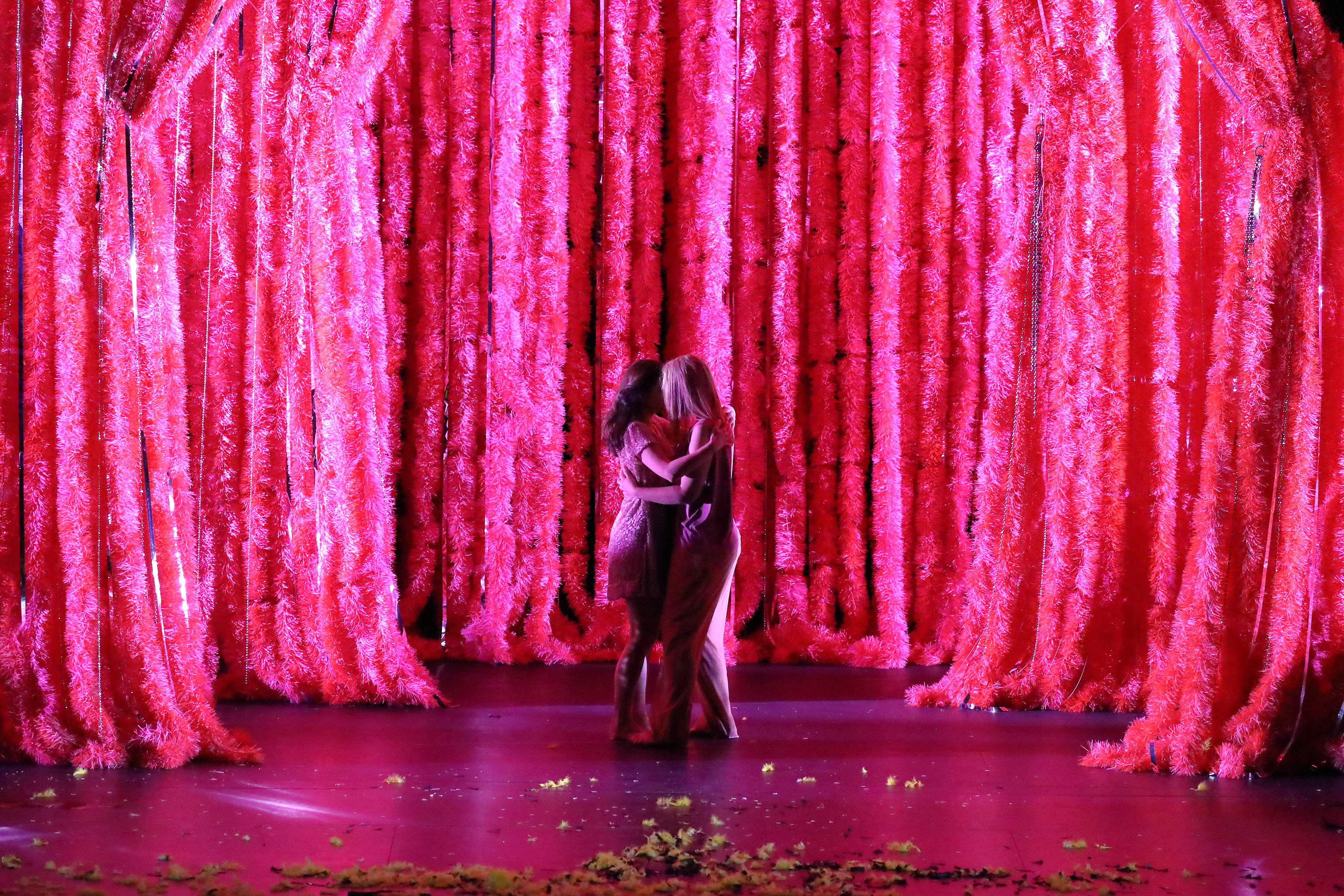
In his production, Barrie Kosky has replaced direct humor with the charm of a stage design flooded with light, which expands like lush vegetation when life is at its peak, and which leaves room for the action during the most decisive narrative moments: the love between the cunning little vixen and the golden-feathered goldfinch, the death of the protagonist, and the two scenes with the Forester at the beginning and the end, when the cycle of nature continues to maintain the process of cyclical change. In the end, The Cunning Little Vixen is not an opera for children, but Kosky also does not give up on having us see (and hear) it with the innocence and capacity for wonder we would have if we were discovering, at that very moment, both cruelty and beauty.