

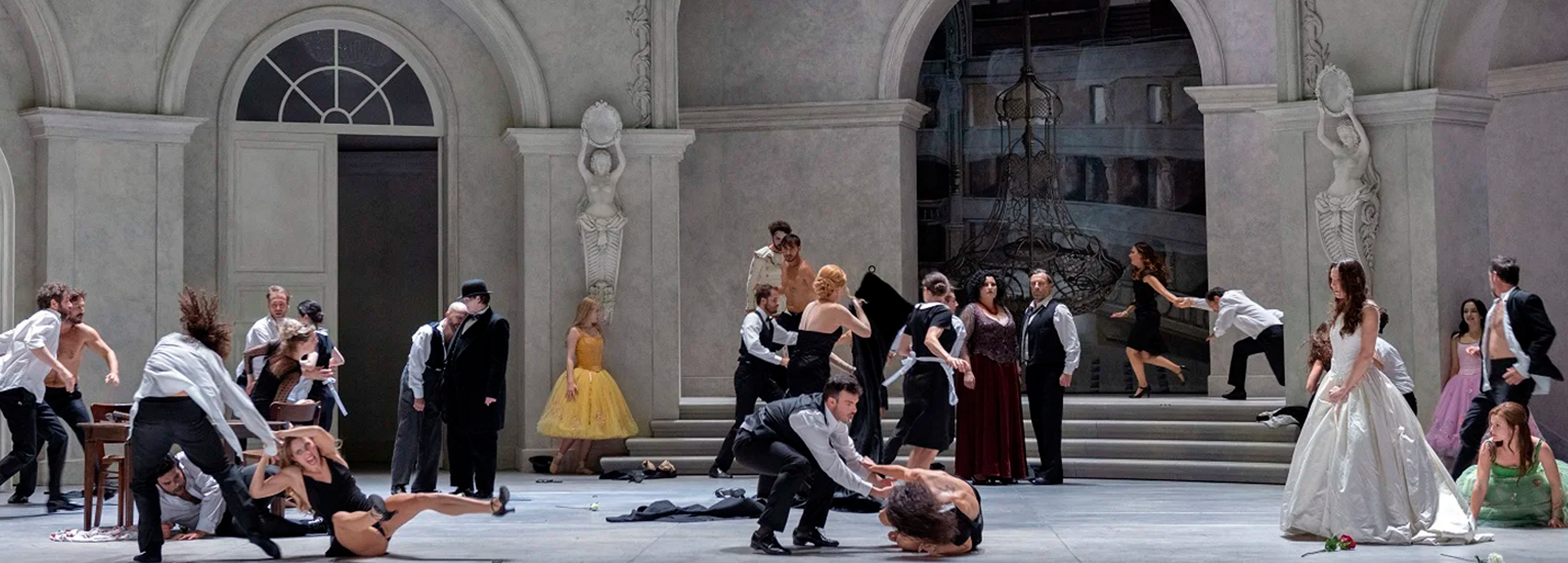
Rusalka is a popular opera, though not performed as often as it deserves, returning to the Liceu for the third time in just over a century, in a symbolic production by Christof Loy and featuring a dazzling cast of major international lyrical voices.




The kind of mythical being that Rusalka represents —a water nymph with supernatural qualities such as immortality— appears in all Western mythologies, from Greco-Roman to Celtic, including Germanic traditions. Over time, these creatures have evolved into mermaids, fairies, undines, Disney princesses and, in the operatic world, even the three Rhinemaidens in Wagner’s Der Ring des Nibelungen (The Ring of the Nibelung). In Slavic folklore, which greatly fascinated Antonín Dvořák, these beings always had a benevolent aspect: they could change the world once a year, interact with humans and seduce them, but if they failed in their one attempt, they were doomed never to return to their original state and had to accept mortality. In other words, behind the fantastical aura surrounding the story of Rusalka lies a deeply human conflict that resonates in many ways. After all, this opera is also about exile, irrational passion, broken trust, and the frustration of not finding one’s place in the world. Ultimately, it speaks of life itself.
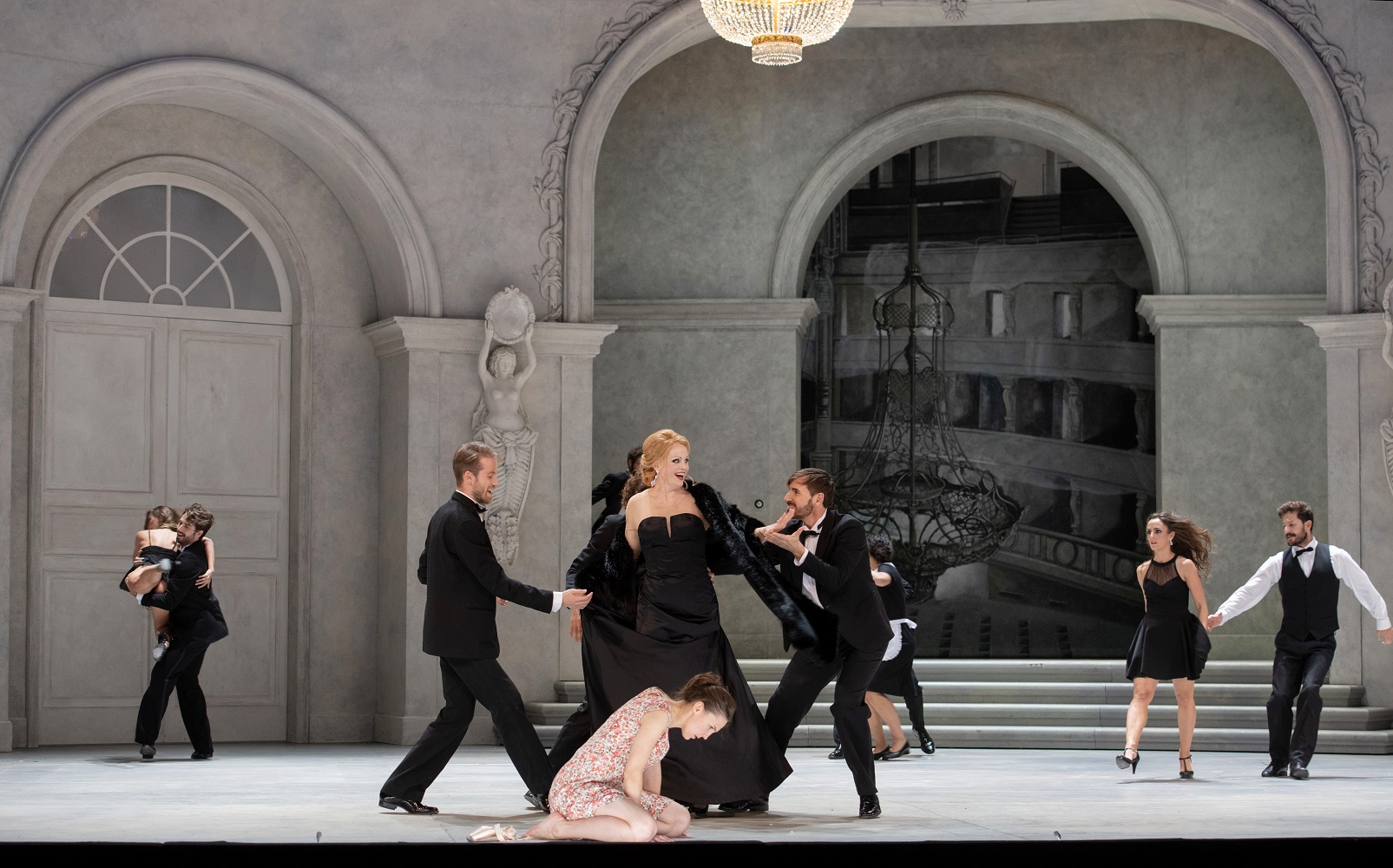
In the staging directed by Christof Loy, now arriving at the Liceu —a co-production with Madrid’s Teatro Real, Valencia’s Palau de les Arts Reina Sofía, and the Dresden Staatsoper— Dvořák’s opera sheds its purest (and most obvious) fantastical frameworks to operate on a symbolic level, speaking above all of misunderstood individuality and the high price paid when one does not conform to social conventions.
The German director’s concept starts with this premise: in this production, Rusalka is an artist without an assigned role who has yet to discover where she belongs. Vodník’s world —the genius father of the protagonist— is a symbolic lake where serenity has given way to the wear and tear of time, inhabited by all kinds of artists who once saw better days: jugglers, actresses, comedians.
Every creature in this realm once had the supernatural ability to create art and alter emotions. But not Rusalka, who longs to escape and transcend her condition, as she is at a disadvantage: a physical injury prevents her from walking properly, and she must rely on two crutches.
This imaginative world borders that of humans, and Rusalka believes it may be where she belongs: she has fallen in love with the Prince and embarks on her journey to become a human woman. But her fantastical nature does not fit into this other, more prosaic, vulgar, and instinct-driven world. She wants to transform it through art and love (which might be the same thing), but ultimately, she fails.
«Christof Loy’s production reflects on the state of disconnection and emptiness we fall into when art ceases to function as the driving force of life.»
Christof Loy’s proposal —from a director who always seeks to construct a symbolic plane beyond the literal reading of opera librettos and who invites reflection on the complex nature of humanity— ultimately raises several questions: can absolute art and love truly exist, or are they ideals that clash with a world in which we are all imperfect? What happens when art is no longer able to change the world for the better? And what role remains for artists who cannot find their place?
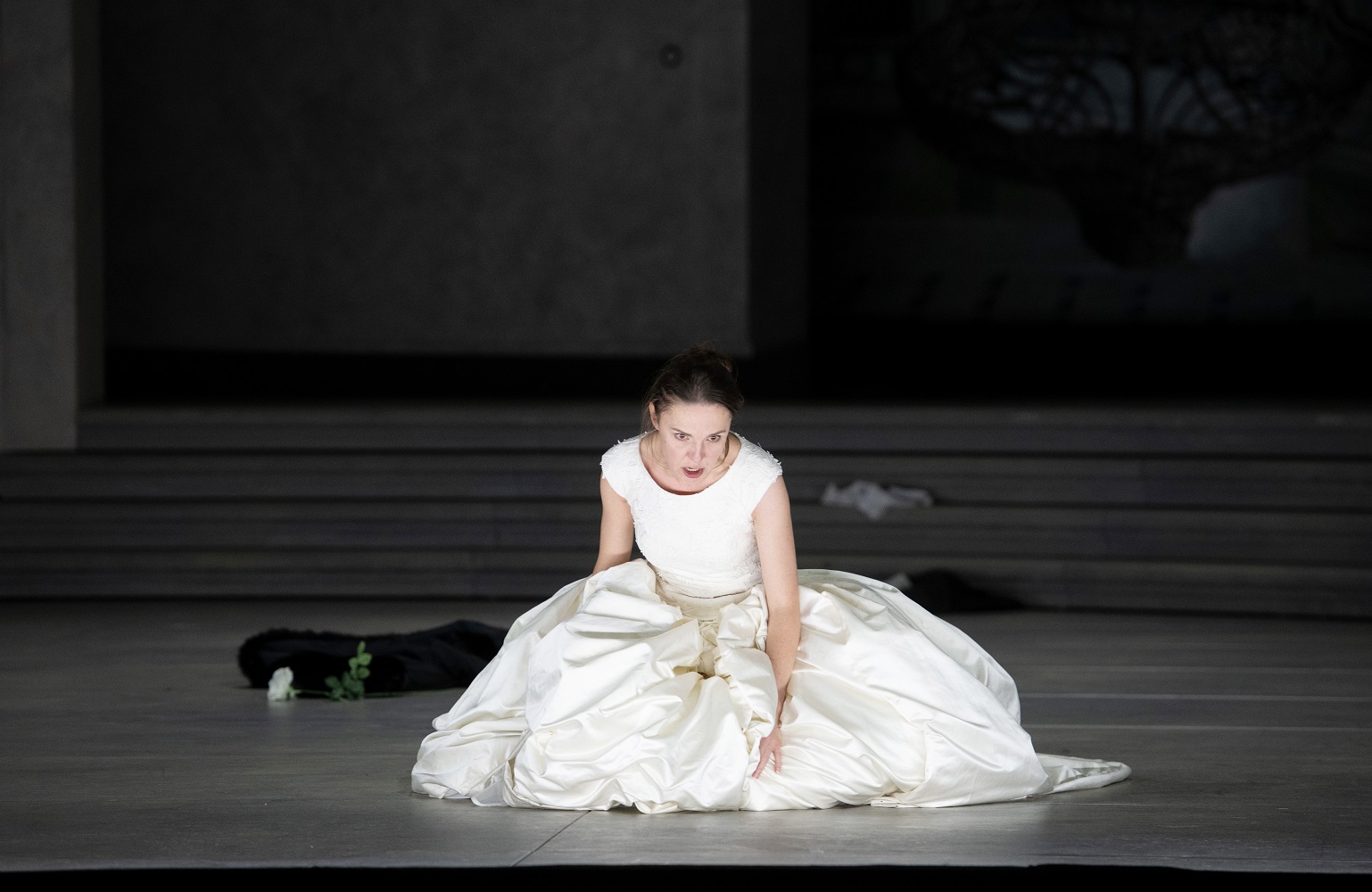
The character of Rusalka, who spends the entire opera in a state of permanent disconnection and anxiety, is a figure in constant torment: she cannot walk, she cannot speak —at least not since the witch Jezibaba gives her a magic potion that turns her into a woman, with effects as destructive as those suffered by Isolde in Wagner’s opera, a composer Dvořák greatly admired— and she cannot go back or repent her decisions.
Her path, like that of art, is a lifelong commitment in which one must accept the consequences of one’s choices and withstand all adversity. In the end, as in Greek tragedy, Rusalka brings about her own catharsis and fulfils her creative purpose —but remains alone forever.
All the action in the opera unfolds within a single space. In the original libretto, the first act takes place in the fantastical realm of Vodník, and the final scene leads us to the prince’s forest, while the second act is set entirely in the castle and the third returns to the lake from which the water nymph Rusalka first emerged. In this production, the two worlds —fantastical and earthly— overlap in a liminal space that blends lake, castle, and theatre, allowing characters and ideas to circulate freely.
Within this flexible framework, Christof Loy is able to tell the fairy tale —fantasy does not disappear in this production, but instead seeps insidiously into reality— using an adult language, which has always been the true function of this kind of literature: to address complex, morally conflicted human issues through a deceptively simple form with harrowing inner depth.
For silencing, discrimination, bullying, and the denial of support are serious issues also addressed in this production, which transforms an apparently simple story into a complex exploration of human relationships.