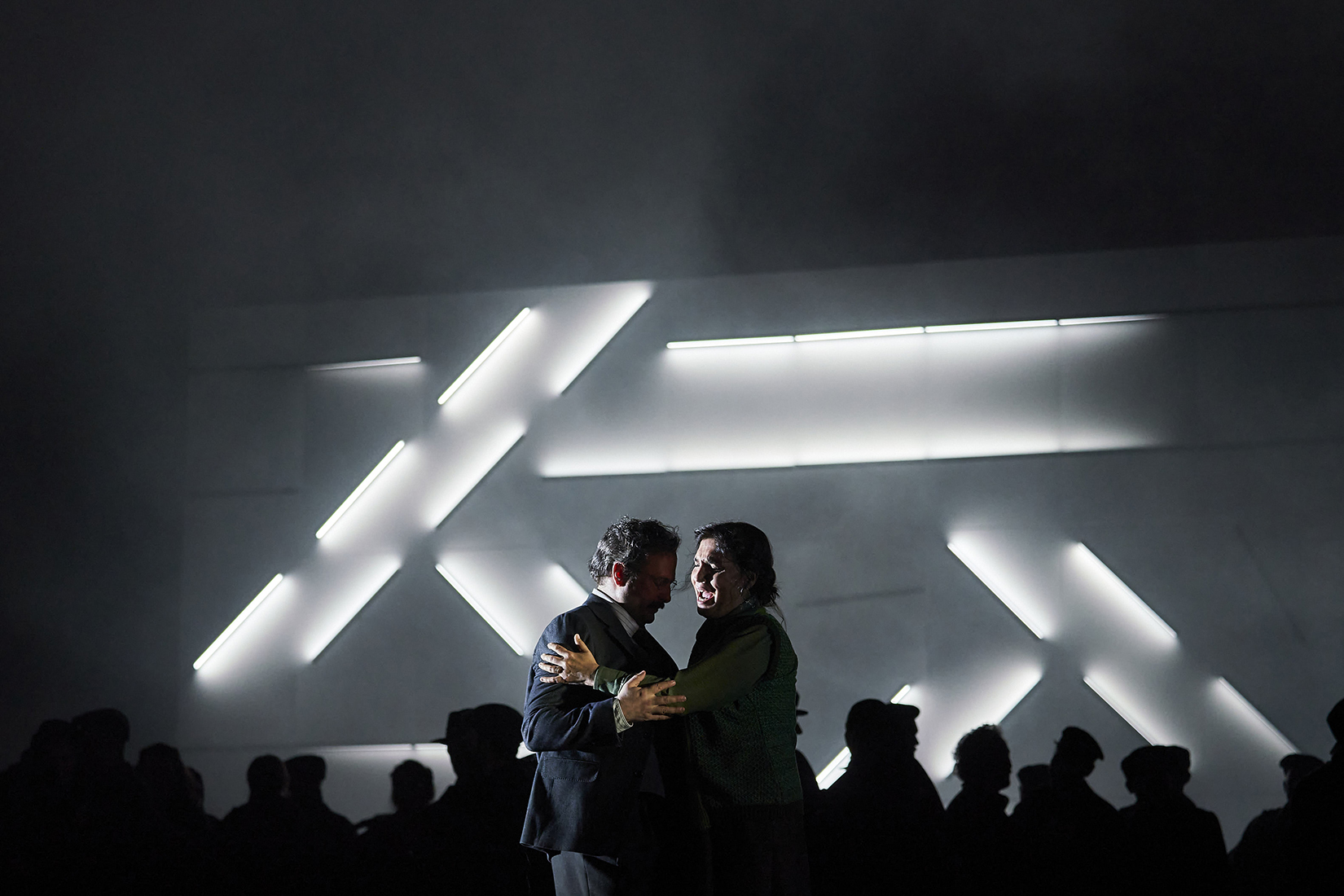
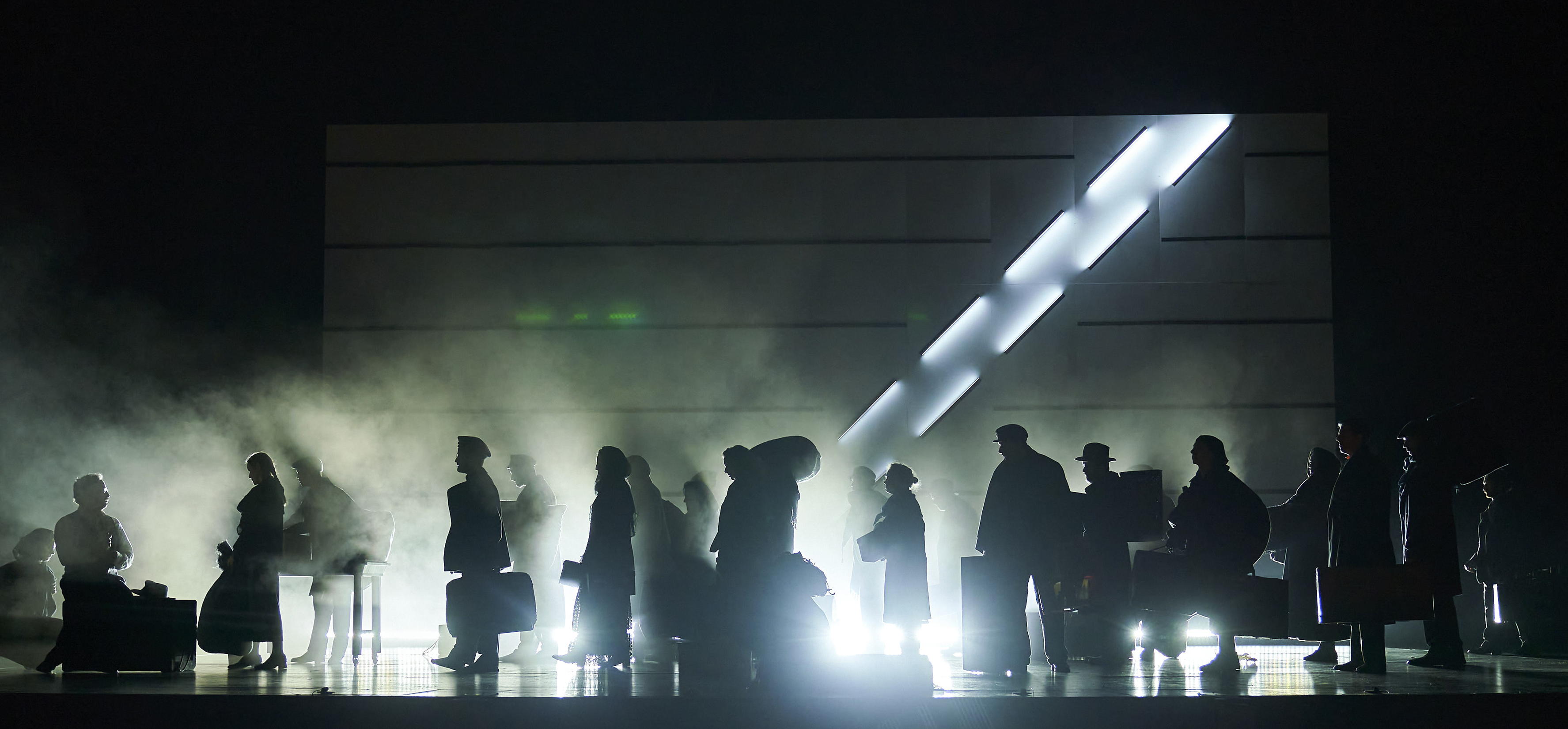
Walter Benjamin died in Portbou in 1940 while fleeing occupied France. This suicide inspired an opera with a libretto by Anthony Madigan, which explores his intellectual and mystical life. The music, conducted by Ros-Marbà, evokes the European modernist avant-garde with a Mediterranean touch. Discover this opera about Walter Benjamin and his connection to Portbou.




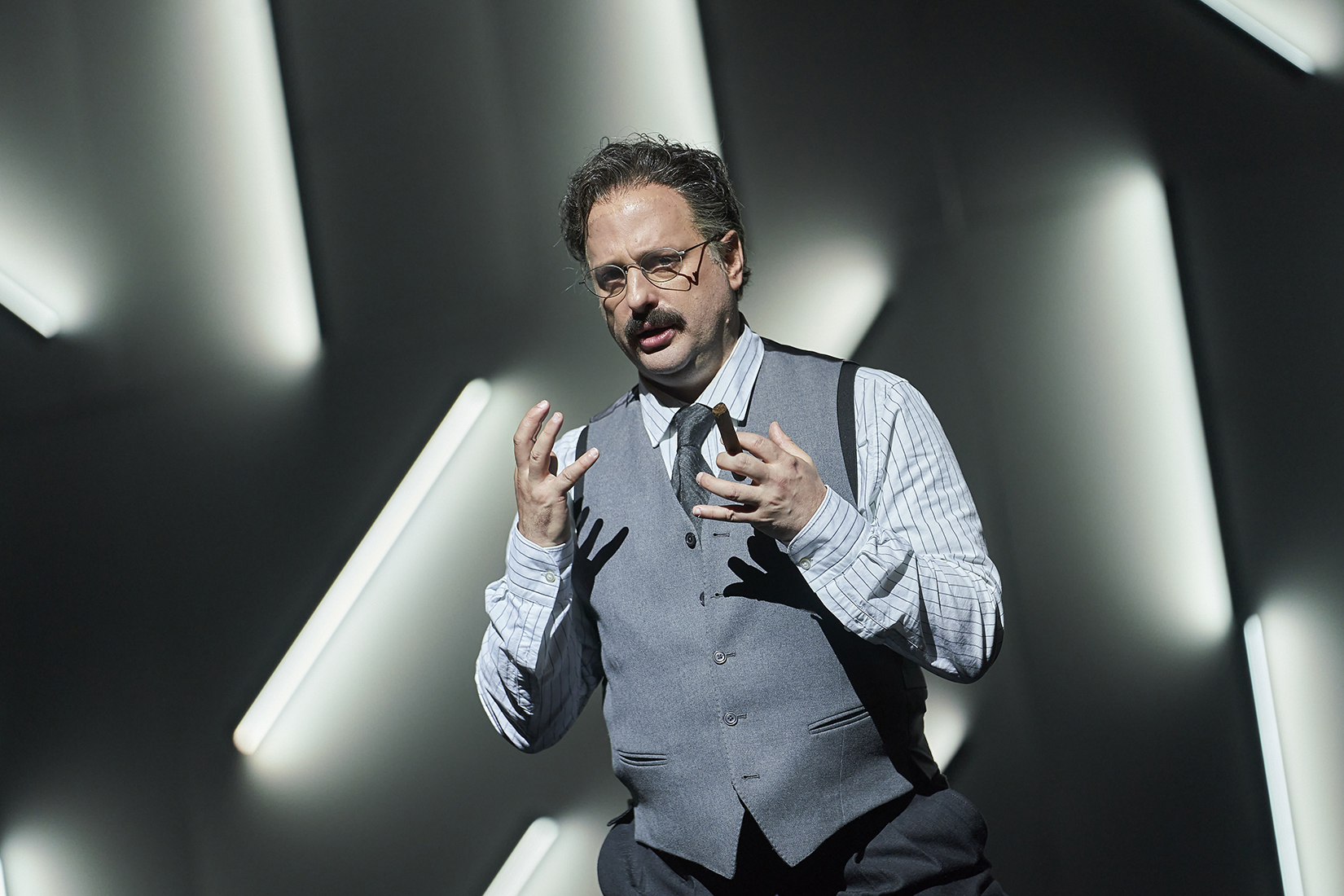
The German philosopher Walter Benjamin took his own life in Portbou on September 26, 1940, after ingesting a lethal dose of morphine. The day before, accompanied by the guide Lisa Fittko, he had crossed the border between France and Spain along with other Jewish exiles while fleeing the Nazis —known as the Líster route— after abandoning Paris when it was occupied by the Germans at the start of World War II. His hope was to reach Lisbon to embark for America, but he became trapped in a thorny bureaucratic labyrinth: Benjamin’s visa did not allow him to leave the town and enter Spain. Had he returned to France, he would have been arrested by the Gestapo. Benjamin did not know that the border restrictions would be relaxed days later, which makes his decision even more tragic, although it is also true that at that point in his life, tired and suffering from a heart condition, he had little hope for the future. In any case, the premature death of one of the most influential thinkers of the first half of the 20th century marked a tragic episode in European history, both because of the work he never completed —the Arcades Project remained unfinished, and the suitcase full of papers he carried was lost— and as a clear example of the ruthless barbarity of war and one of its worst consequences, exile.
The work focuses on the thoughts, loves, and spirituality of the philosopher Walter Benjamin, based on the last episode of his life—his suicide in Portbou in 1940.
This episode marks the beginning and the end of the libretto that Anthony Carroll Madigan began writing over 15 years ago. Madigan was an important singer, pianist, educator, actor, and arts promoter with a close connection to Barcelona and Madrid, the city where he died in 2020 at the age of 71. He was born in New York but arrived in Spain at a very young age and developed most of his professional career here—he founded a comic theater company inspired by 18th-century commedia dell’arte, taught singing lessons, and acted in television series—and all of this brought him, at a certain point in his life, closer to maestro Antoni Ros-Marbà, a few years his senior, with whom he forged a long friendship. Madigan and Ros-Marbà collaborated on a book of conversations, An Act of Freedom, and also on their first joint opera project, which ultimately became Benjamin at Portbou.
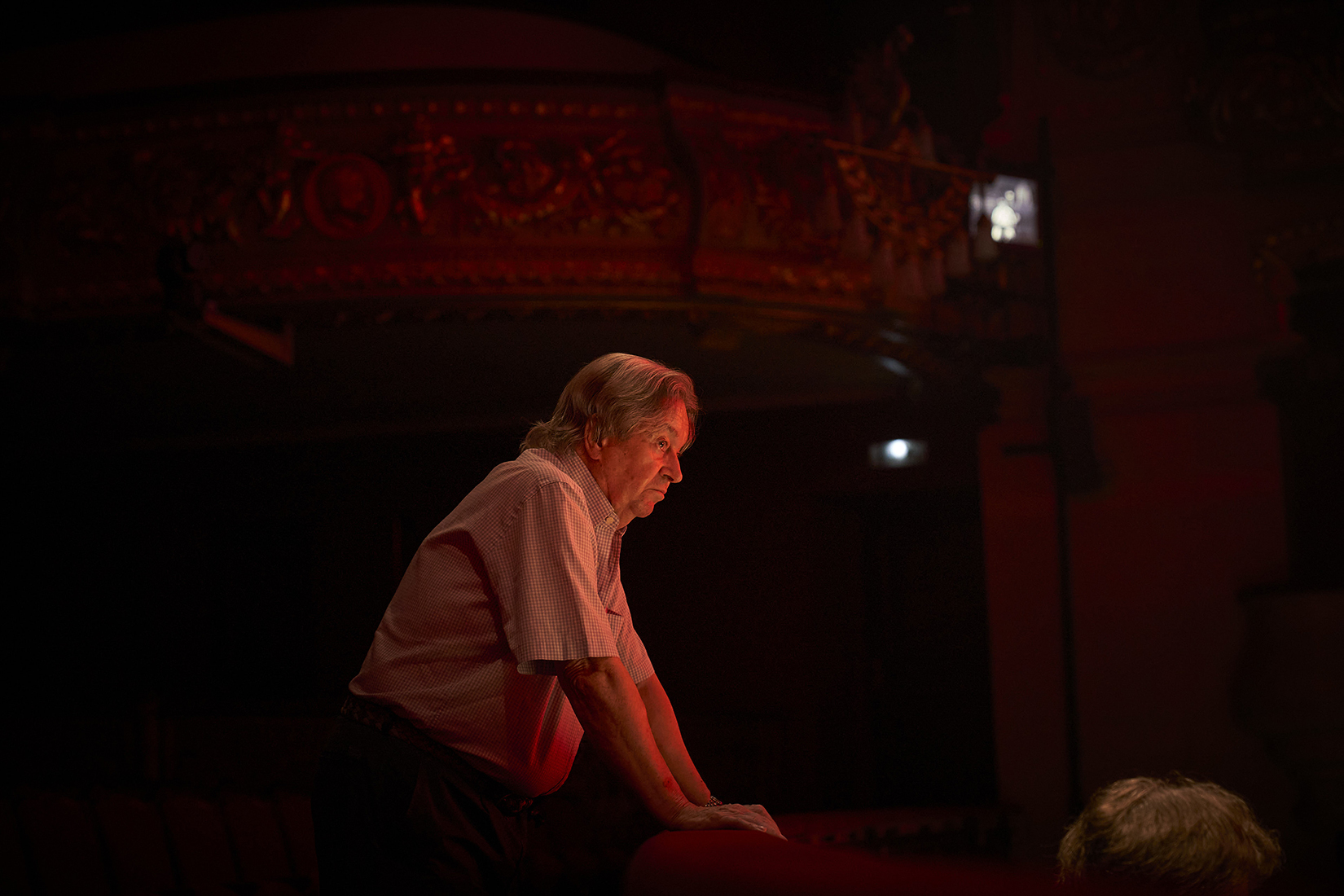
After researching the life and work of Walter Benjamin, Madigan wrote a libretto in English—with parts in German and French—that tells the philosopher’s final days on the Costa Brava, and also offers a series of flashbacks explaining various episodes from his intellectual and emotional life. The opera is divided into two acts and 13 postcards or scenes—Benjamin was an avid postcard collector and the number 13 held symbolic importance for him, hence Madigan’s choice of title and structure—and throughout its narrative development, we witness theoretical disputes—with his friend Gerhard Scholem, his cousin Hannah Arendt, and the playwright Bertolt Brecht—family problems, romances—with his Russian lover, Asja Lascis—and the flight from Paris, as well as several mystical flashes in which two symbolic characters who also appear throughout Benjamin’s work, the Hunchbacked Dwarf and the Angelus Novus, make their appearance. Overall, it is a vivid impression of the intellectual triumph and tragic life of a key 20th-century philosopher, still one of the most studied today.
“The composer himself will conduct the two scheduled performances, which will be presented in a semi-staged version supported by a lighting installation from the Playmodes studio.”
Antoni Ros-Marbà has devoted most of his professional career to conducting and is undoubtedly the most important Catalan maestro of the second half of the 20th century; but he is also significant as a composer, although his catalogue is less extensive than it deserves to be. Ros-Marbà has always had one foot in tradition and popular culture — he has composed sardanas and arranged the anthems of Catalonia and the centenary anthem of FC Barcelona, for example — and the other foot in the post-Schönberg avant-garde, and the score of Benjamin a Portbou reflects this dual activity. Ros-Marbà had composed cantatas such as Tirant lo Blanc, but never an opera: in his own words, he tried to find the meeting point between the German modernism of Benjamin’s era — there are dodecaphonic passages, others expressionist, the singing style is mostly part of the recited expression known as sprechgesang — and a Mediterranean air he cannot and does not want to abandon. The score was completed in 2015 and, finally, after many delays and sad news such as Madigan’s death and a pandemic that forced the postponement of the initial plans for its premiere, it will debut worldwide at the Liceu, with Antoni Ros-Marbà himself conducting from the podium at age 88, in what is surely the longest, most complex, and personal work of his life.