

This event has already taken place.
We invite you to explore the current schedule.
Opera in semi-staged version
"Now lost in the high sea of sorrow, the wave of your existence breaks; forgive the timid song, the most forgotten love; this scatters from the silenced lips of the fool."
Walter Benjamin, Sonnet VI
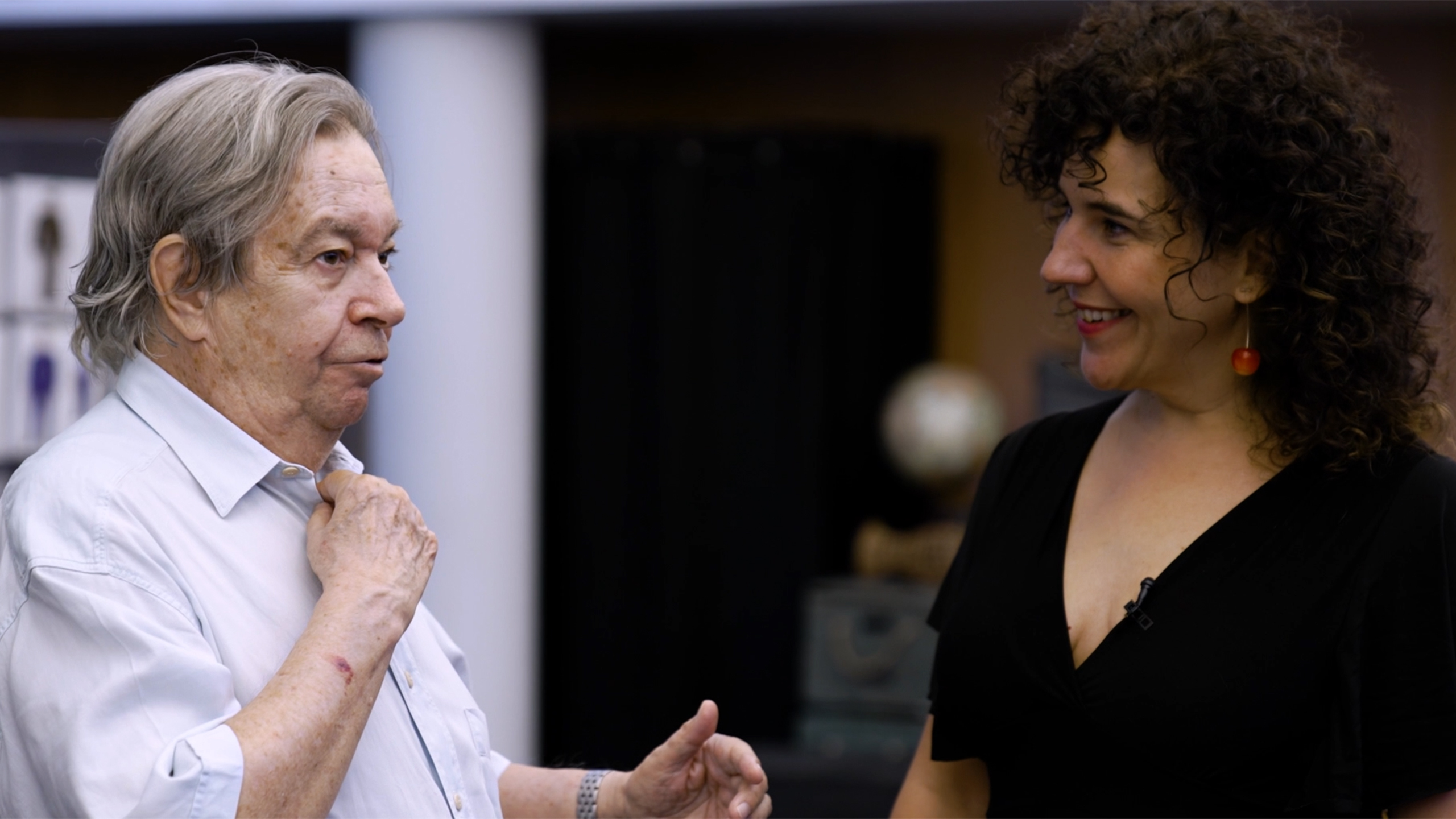
Benjamin in Portbou is an opera commissioned by the Gran Teatre del Liceu from maestro Antoni Ros-Marbà. Written in two acts and 13 scenes, with a libretto by Anthony Carroll Madigan, it focuses on the life of philosopher and literary critic Walter Benjamin.
Ros-Marbà considers composition an essential pillar of his life; in fact, he composed before he ever conducted. Thinking about music and analyzing it is one and the same—whether in front of an orchestra or with pencil on manuscript paper: sound must be created. His compositions are a dialogue with the environment and a reflection of the moment lived; they become an immersion into transcendent spaces filled with inescapable biographical and personal traces. For Ros-Marbà, writing this opera was like fulfilling an unfinished chapter in his long musical career. The opera’s libretto, written by the scholar Tony Madigan, is a literary work of art that begs to be set to music and brought to the stage, thanks to the author’s deep knowledge of the life and work of Walter Benjamin (Berlin, 1892 – Portbou, 1940).
Benjamin was born into a Jewish family and studied at the universities of Berlin, Freiburg, and Munich, where he took part in anti-war student movements. In 1915, he befriended Gershom Scholem, a scholar of Jewish mysticism, and in 1918, in Bern, he met Ernst Bloch, the theorist of utopia. In 1917, he married Dora Sophie Pollack and, after the war, returned to Berlin, where he wrote Critique of Violence and The Task of the Translator. In 1923, in Frankfurt, he befriended Theodor W. Adorno and Gretel Karplus, his wife, with whom he would maintain a rich correspondence over the years, though one of his strongest friendships would be with Bertolt Brecht.
With the rise of Nazism in 1933, Benjamin was forced into exile, first to Ibiza and then to Paris, later to Svendborg (Denmark)—together with Brecht—and subsequently to San Remo. When war broke out, he declined Adorno’s invitation to move to California, arguing that “there are still positions to defend in Europe,” and was interned for three months in the Nevers camp, until a visa obtained by Horkheimer allowed him to plan a move to the United States.
During those months, he worked on the Theses on the Philosophy of History (1940). Stripped of German citizenship since February 1939 and without an exit permit from France—while German forces advanced across French territory—he sought freedom by crossing the Pyrenees on foot with a group of refugees. But in Portbou, they were met with the threat of being handed over to the Gestapo. On the night of September 26, he took a lethal dose of morphine in a small border hotel in Portbou and died, as if he had lost the game, in the early hours of the following morning—thus sparing his fellow exiles. His remains rest in the Portbou cemetery.
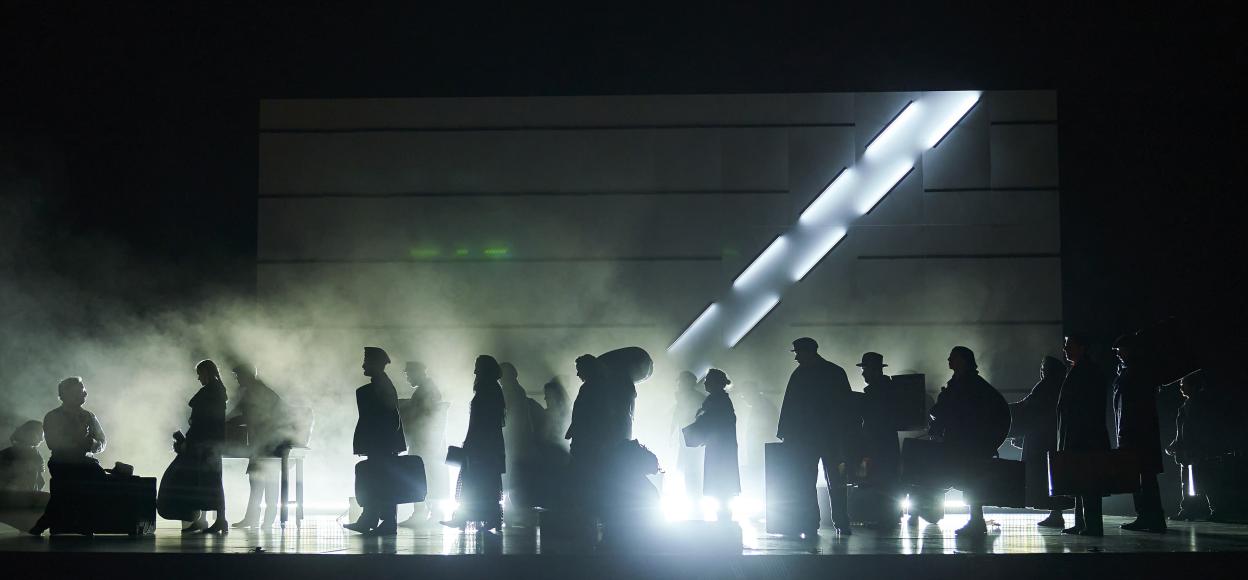
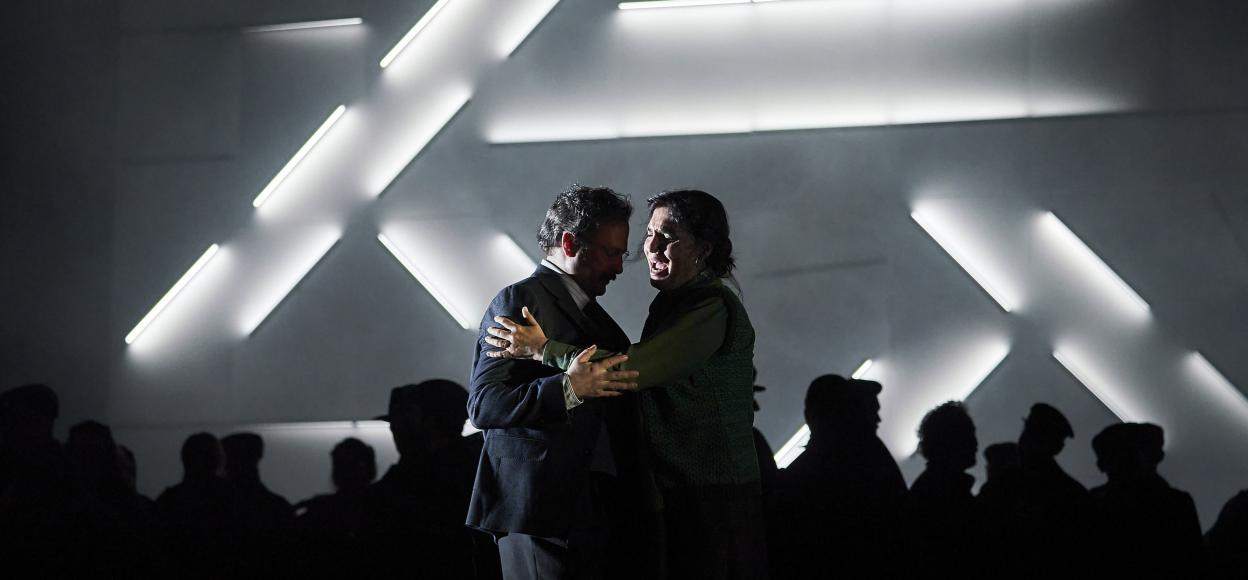
A semi-staged production directed by Anna Ponces, featuring the participation of Playmodes, the audiovisual research studio from the Girona region. Through their creative, immersive work—projection mapping, lighting, digital scenography, and sound design—they will help visually narrate the final chapter in the life of this distinguished philosopher, literary critic, translator, and essayist: a sensitive idealist and a fighter for a free Europe, yet also a victim of a world that pursued him with hostility.
Opera in two acts
Libretto by Anthony Carroll Madigan
- World premiere
With the support of:

With funding from the Ministry of Culture as part of the Cultural Capital of Barcelona initiative, promoted by the Ministry of Culture and the Barcelona City Council.

| 
|
Dates and tickets
| Subscription F | |||||
| Subscription A |
NOTICE
The performance Benjamin in Portbou includes strobe lighting, which may cause discomfort to photosensitive audience members.
- First act 1h 10min
- Interval 30min
- Second act 50min
Artistic profile
- Stage direction
- Anna Ponces
- Scenography and lighting
- Playmodes Studio and Andreu Fàbregas
- Production
- Gran Teatre del Liceu
- Costume design
- Adriana Parra and Sílvia Delagneau
- Gran Teatre del Liceu Choir
- Pablo Assante, director
- Symphony Orchestra of the Gran Teatre del Liceu
- Conductor
- Antoni Ros-Marbà
Cast













Cast change
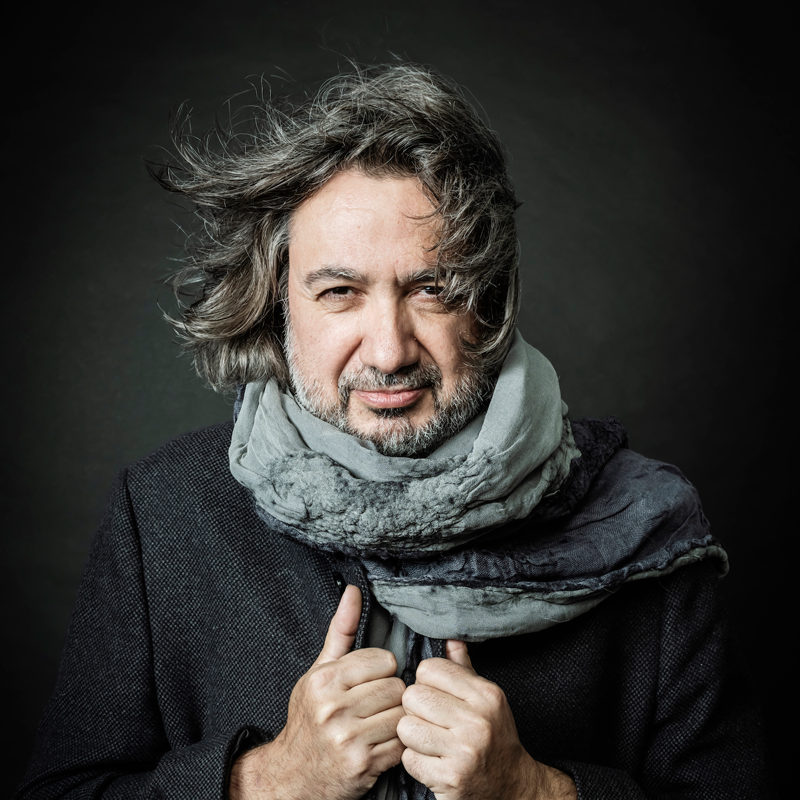
- Mezzo-soprano Laura Vila performs the role of Dora Pollack, replacing Marta Infante, who will ultimately be unable to sing in the production due to her new professional responsibilities.
Hand program